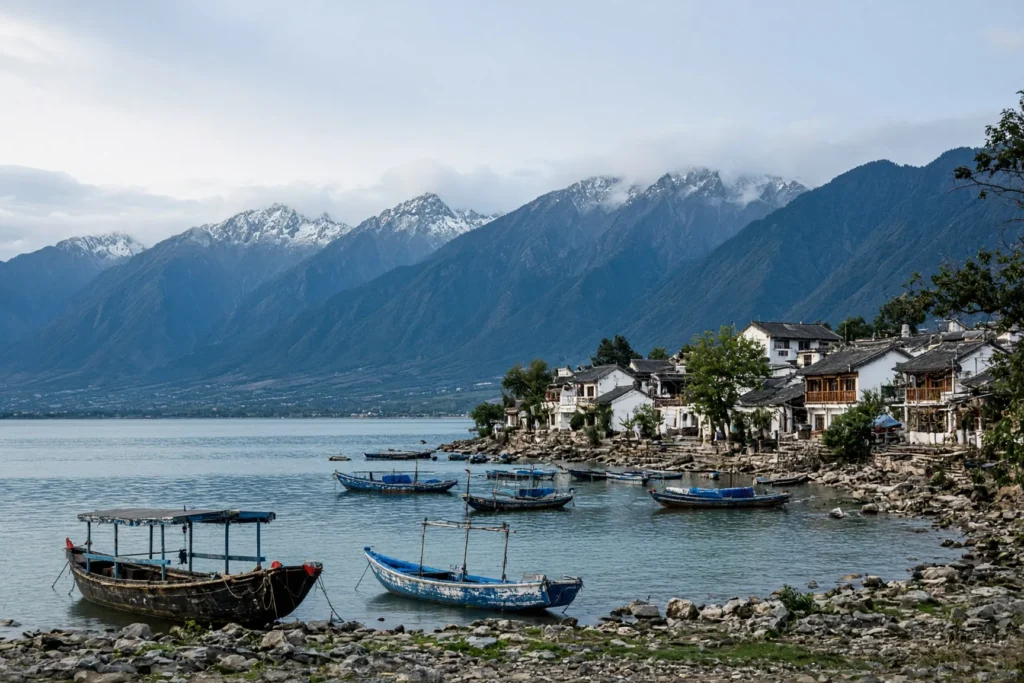
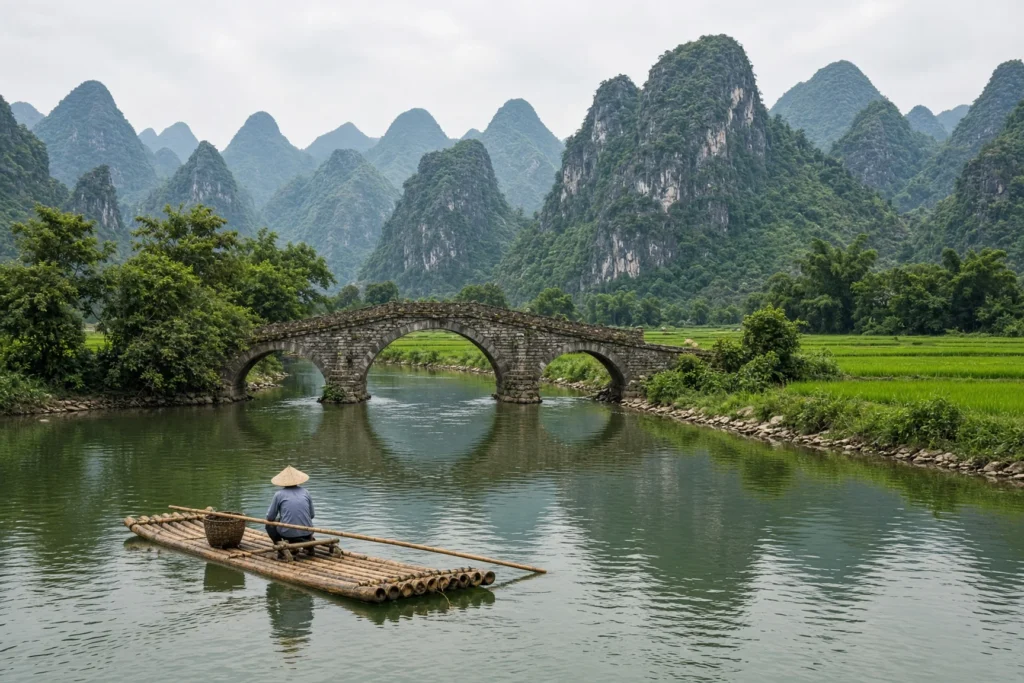
Fifteen days that follow China’s story from the imperial capitals of Beijing, Luoyang and Xi’an west along the Silk Road to Lanzhou and the desert oasis of Dunhuang, finishing in Shanghai. The pace is steady, with fast trains between cities and time for caves, temples and local homes along the way.
The journey runs from Beijing south to Luoyang and Xi’an, then west by train through Lanzhou to Dunhuang, before a flight to Shanghai. Cave art and Silk Road history are the thread that runs through it, balanced with local family visits, food streets and the great sights of the east. Every part of it can be adjusted: add a night, swap a visit or change the hotel class, and we will shape the plan around you.
Welcome to the capital, where your Silk Road journey begins.
Your private guide meets you in the arrivals hall and your driver takes you to your hotel in Beijing. On the way, your guide will talk you through the days ahead and answer any questions about money, phones and getting around.
The rest of the day is yours to rest after the flight. If you feel like stretching your legs, a walk around the streets near your hotel is an easy way to get a first taste of the city.
Accommodation: Hotel in Beijing.
The ceremonial heart of imperial and modern China.
Begin at Tiananmen Square, one of the largest public squares in the world, framed by the Great Hall of the People, the National Museum and the Gate of Heavenly Peace. Your guide explains how this space has been the stage for many of the defining moments of modern Chinese history.
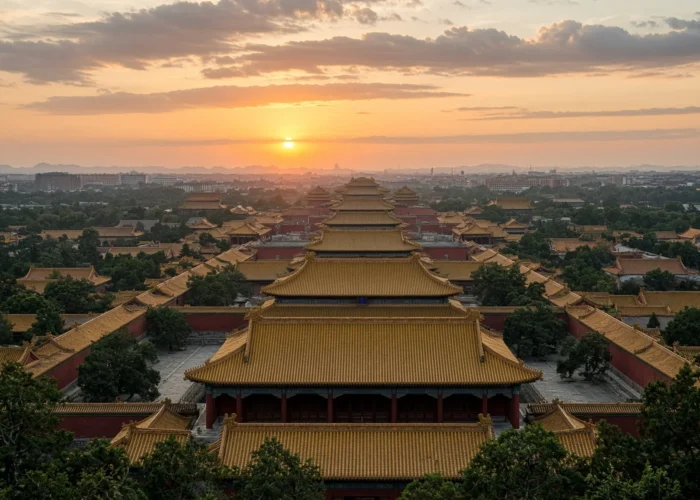
Pass through the Gate of Heavenly Peace into the Forbidden City, home to the emperors of the Ming and Qing dynasties for nearly five hundred years and a UNESCO World Heritage site. Walk the great ceremonial courtyards, then slip into the quieter side palaces where the imperial family actually lived. Lunch is at a local restaurant.
Cross the road to Jingshan Park and climb the small hill behind the palace. From the pavilion at the top, the golden roofs of the Forbidden City spread out below you in perfect symmetry, one of the finest views in Beijing.
Meals: Breakfast, Lunch. Accommodation: Hotel in Beijing.
A morning on the Great Wall and an afternoon in the old lanes of the city.
Drive out of the city to Mutianyu, a section of the Great Wall built and rebuilt under the Ming dynasty, with watchtowers strung along a forested ridge. Ride the cable car up, then walk along the ramparts at your own pace, stopping to look out over the folds of the hills. Mutianyu is less crowded than some sections closer to the city and is especially lovely in spring and autumn.
Return towards Beijing for lunch at a local restaurant.
Spend the afternoon in the hutongs, the narrow lanes of courtyard houses that once covered much of old Beijing. Your guide leads you past the former residences of notable historical figures and tells the stories of the people who lived behind these grey walls. It is a quiet, human contrast to the grand monuments of the city.
Meals: Breakfast, Lunch. Accommodation: Hotel in Beijing.
Tai chi in an imperial park, then south by train to one of China’s ancient capitals.
Head to the Temple of Heaven, where the Ming and Qing emperors came to pray for good harvests. In the park around it, local residents gather each morning to exercise, sing and play cards. Join a group for a short tai chi session, then walk to the Hall of Prayer for Good Harvests, a round, triple-roofed hall of deep blue tiles that is one of the masterpieces of Chinese architecture.
Transfer to the station for the train to Luoyang, a journey of about four and a half hours. Luoyang served as the capital of many dynasties over more than a thousand years and is famous today for its peonies and its Buddhist cave art.
Your guide meets you on arrival and takes you to your hotel in Luoyang. The evening is at leisure.
Meals: Breakfast. Accommodation: Hotel in Luoyang.
A day among the monasteries and pagodas of Mount Song.
Drive to the Shaolin Temple at the foot of Mount Song, revered as the birthplace of Chan Buddhism, known in Japan as Zen, and of Shaolin kung fu. Walk through its halls and courtyards, then watch a kung fu performance by young martial artists, a display shared with other guests.
Stop for lunch at a local restaurant near the temple, a chance to try the hearty wheat-based dishes of Henan province.
Visit the Songyue Pagoda, a twelve-sided brick tower often described as the oldest surviving brick pagoda in China, and the Songyang Academy, one of the great Confucian academies of the past, shaded by ancient cypress trees. These sites are part of the Historic Monuments of Dengfeng, listed by UNESCO. Return to Luoyang in the late afternoon.
Meals: Breakfast, Lunch. Accommodation: Hotel in Luoyang.
Thousands of Buddhas carved into a riverside cliff, then on to Xi’an.
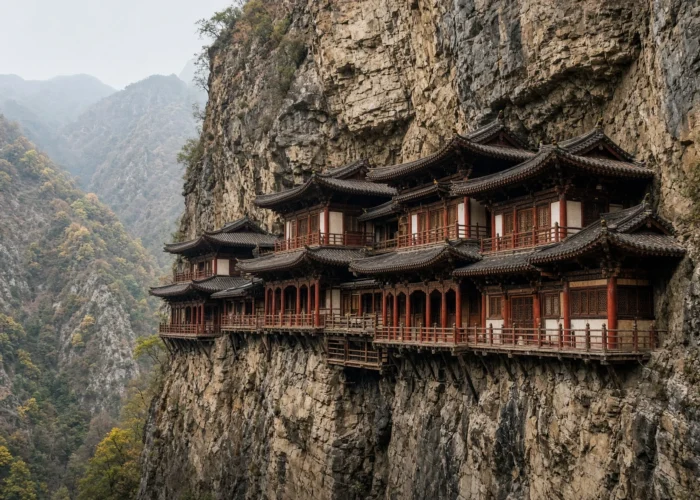
Visit the Longmen Grottoes, a UNESCO World Heritage site where tens of thousands of Buddhist statues were carved into the limestone cliffs along the Yi River, mainly between the Northern Wei and Tang dynasties. The highlight is the great seated Vairocana Buddha, watched over by disciples and guardian figures, whose calm face is said to have been modelled on the Empress Wu Zetian.
After lunch, take the high-speed train to Xi’an, about an hour and a half. Your guide meets you and takes you to your hotel. Xi’an, once called Chang’an, was the eastern end of the Silk Road and capital of the Tang dynasty at the height of its power.
The evening is at leisure. A good choice is the Datang Everbright City, a long pedestrian boulevard of Tang-style buildings and sculptures that comes alive with lights and street performers after dark.
Meals: Breakfast, Lunch. Accommodation: Hotel in Xi’an.
An emperor’s clay army and an evening in Xi’an’s liveliest food street.
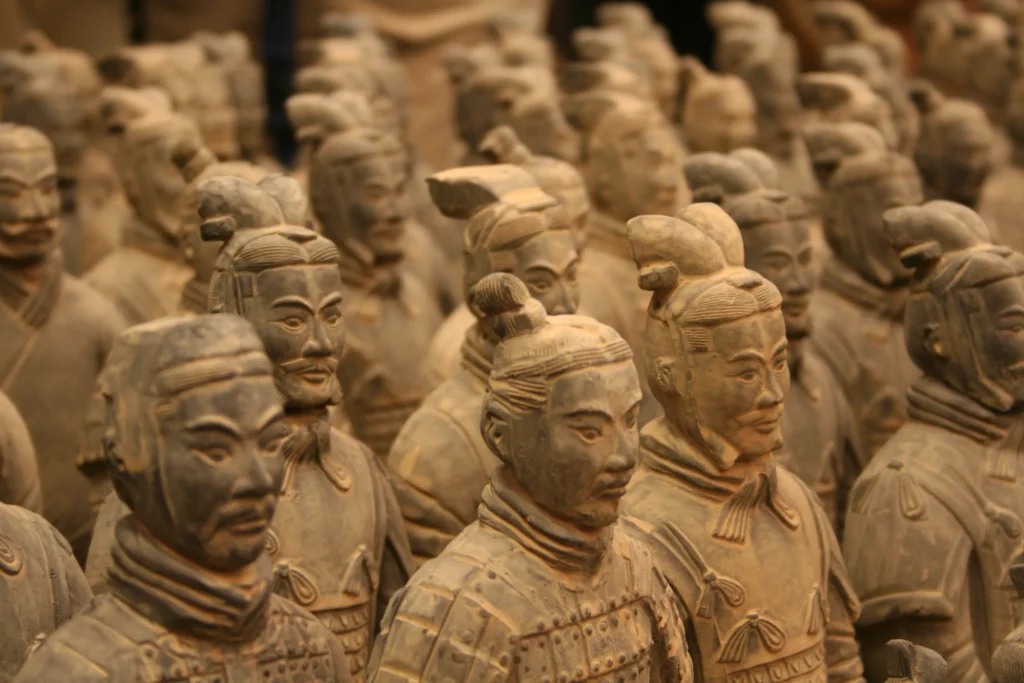
Drive out to the Terracotta Army, discovered by farmers digging a well in 1974. Thousands of life-size soldiers, archers and horses were buried to guard the tomb of Qin Shi Huang, the first emperor to unify China, and each face is different. Walk the vast pits with your guide, who explains how they were made and how the excavation continues today.
Lunch is at a local restaurant, then visit the museum displaying the two bronze chariots found near the tomb, astonishingly detailed models in half life size, complete with horses, drivers and canopies.
Back in the city, stroll into the Muslim Quarter, home to Xi’an’s Hui community for centuries. The lanes are lined with stalls selling roujiamo, lamb skewers and persimmon cakes, and the smell of cumin and fresh bread drifts through the evening air.
Meals: Breakfast, Lunch. Accommodation: Hotel in Xi’an.
West along the Silk Road to the city on the Yellow River.
Take the high-speed train to Lanzhou, about three hours. Lanzhou grew up as a crossing point on the Yellow River and a gateway to the Hexi Corridor, the narrow route that carried Silk Road caravans west.
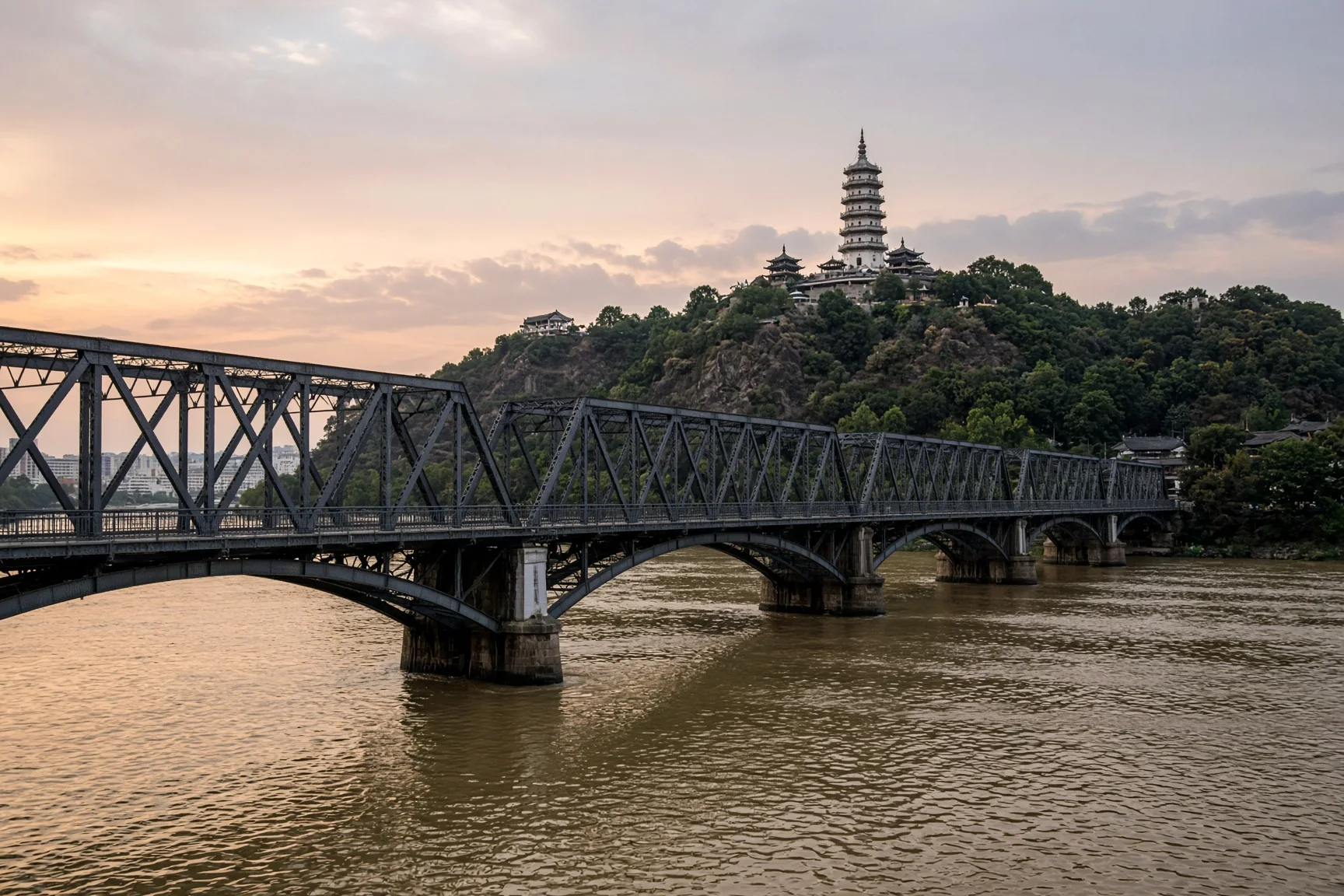
Walk across the Zhongshan Iron Bridge, the first permanent bridge across the Yellow River, built in the early twentieth century. Nearby, the Mother Yellow River statue shows a woman cradling a child, a symbol of the river as the cradle of Chinese civilisation.
Cross to Baita Shan Park and climb to the summit, crowned by the White Pagoda. From the top, the muddy river curves through the city below, framed by bare, dusty hills. The evening is at leisure, perhaps for a bowl of Lanzhou beef noodles, pulled by hand to order.
Meals: Breakfast. Accommodation: Hotel in Lanzhou.
A boat journey across a reservoir to a remote canyon of Buddhist art.
Drive to the Liujiaxia reservoir and board a boat across the Yellow River waters, passing striking red sandstone cliffs and pinnacles. The ride itself is one of the pleasures of the day.
Arrive at the Bingling Temple Grottoes, where Buddhist caves and niches have been carved into the canyon walls since around the fourth century. The grottoes are part of the Silk Road sites listed by UNESCO. The great seated Maitreya Buddha, carved into the cliff, gazes out over the water.
After lunch, explore the smaller caves with your guide, who points out the paintings and sculptures that show how Buddhist art changed as it travelled east. Return by boat and car to Lanzhou for the evening.
Meals: Breakfast, Lunch. Accommodation: Hotel in Lanzhou.
A long, scenic train journey through the Hexi Corridor to the desert oasis of Dunhuang.
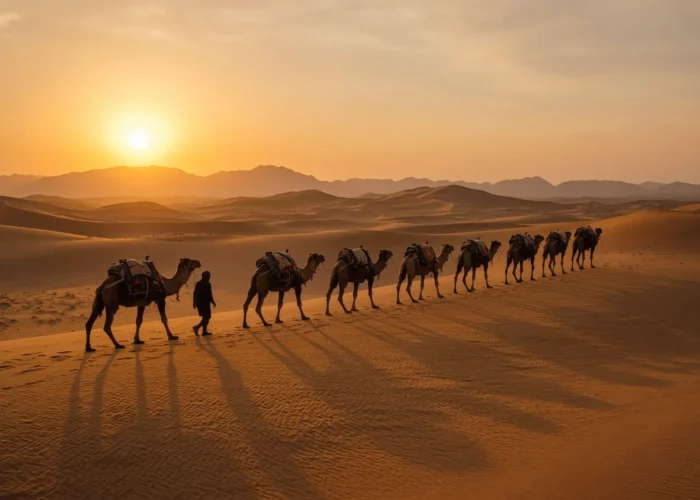
After breakfast, take the high-speed train to Dunhuang, a journey of around seven to eight hours. A flight is possible if you prefer. From the window, watch the land change from green farmland to wide gravel plains, with the snowy Qilian Mountains often visible to the south. Settle into your seat with a book or simply watch the scenery; the train is comfortable, with a dining car for snacks and drinks.
This is the classic Silk Road route, followed for centuries by merchants, monks and envoys, and your guide can point out fortress towns and stretches of old wall along the way.
Arrive in Dunhuang, where your local guide meets you and takes you to your hotel. The evening is at leisure.
Meals: Breakfast. Accommodation: Hotel in Dunhuang.
Silk Road art at its finest and a desert spring among the dunes.
Visit the Mogao Caves, a UNESCO World Heritage site and one of the greatest treasure houses of Buddhist art in the world. Over about a thousand years, from the fourth century onwards, hundreds of caves were carved into the cliff and painted with murals of Buddhas, heavenly musicians and scenes of daily life. Your visit includes a selection of original caves with your guide and the visitor centre’s introduction.
After lunch, head to the Singing Sand Dunes, where the wind makes the sand hum, and Crescent Spring, a small, curved pool that has survived among the dunes for centuries. Climb the dunes for the view, or try one of the optional activities: a camel ride, sand sliding or paragliding.
Finish at a reconstructed Song dynasty town built as a film set outside the city, where you can wander streets of old-style gates and shops in the low desert light.
Meals: Breakfast, Lunch. Accommodation: Hotel in Dunhuang.
Local life and lesser-known cave art in the oasis.
Start at the Dunhuang Museum, which tells the story of the oasis as a frontier town and Silk Road crossroads, from Han dynasty watchtowers to the trade that passed through.
Visit a local farming family on the edge of the oasis. Help out in the fields or orchard, learn how to make hand-pulled noodles, then sit down together for a home-cooked lunch. It is a warm, unhurried way to understand how people live in this dry corner of China.
Continue to the Western Thousand Buddha Caves, a smaller and quieter group of grottoes cut into the bank of the Dang River. The murals here are fewer than at Mogao, but the setting is peaceful and you often have the caves almost to yourself.
Meals: Breakfast, Lunch. Accommodation: Hotel in Dunhuang.
From the desert to China’s great coastal city.
Transfer to Dunhuang airport for your flight to Shanghai.
Your Shanghai guide meets you on arrival and drives you to your hotel.
The rest of the day is at leisure. After the quiet of the desert, Shanghai’s skyline and energy can feel like another world, and a walk along a nearby street or a drink with a view is a good way to settle in. If you would rather stay out, your guide can point you towards a riverside promenade or a quiet café to ease into the city.
Meals: Breakfast. Accommodation: Hotel in Shanghai.
Old and new Shanghai, from Ming gardens to tree-lined avenues.
Begin on the Bund, the riverside promenade lined with banks and trading houses from the early twentieth century, facing the towers of Pudong across the Huangpu River. Then visit the Shanghai Urban Planning Exhibition Center, whose huge scale model of the city shows just how fast Shanghai has grown.
After lunch, explore Yu Garden, a classical garden first laid out in the Ming dynasty, with rockeries, ponds and pavilions linked by winding corridors. The bustling bazaar around it is a good place for snacks and souvenirs.
Stroll through Xintiandi, where old shikumen stone-gate houses have been turned into cafés and shops, then continue into the former French Concession. Plane trees shade the streets and villas here, and Fuxing Park is full of locals dancing, playing cards and practising tai chi.
Meals: Breakfast, Lunch. Accommodation: Hotel in Shanghai.
Farewell to China.
Enjoy a last breakfast and some time at leisure, depending on your flight.
Your guide and driver take you to the airport for your flight home.
Meals: Breakfast.
Accommodation in your chosen hotel class, with daily breakfast
Meals as listed in the itinerary
Private air-conditioned vehicle with driver for all transfers and touring
Private English-speaking local guide in each destination
Domestic flights, high-speed trains and river cruises as listed in the itinerary
All entrance fees, performances, boat trips and excursions as listed
Bottled water during touring
International flights
China visa fees, where a visa is needed for your nationality
Travel insurance
Tips for guides and drivers
Drinks and personal expenses
Meals not listed in the itinerary
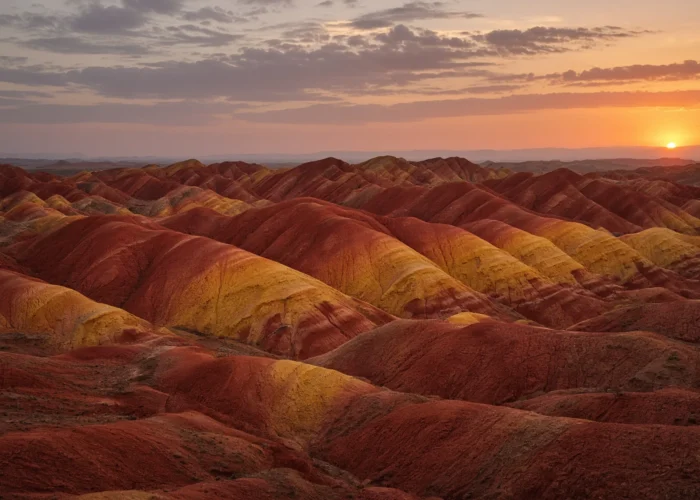
Indulge in a vivid, sensory panorama of our cherished destinations, carefully curated to ignite your wanderlust and craft a tantalizing prelude to your forthcoming journey!
Free quote, no obligation
Are you looking for an unforgettable experience in Southeast Asia? Look no further! Our company offers tours that will take you on a journey through the beautiful landscapes and rich cultures of this region. Join us for an adventure of a lifetime!
“The journey with Orient Charm and the Team was impeccably organized from dawn till dusk, turned our adventure into a breezy, carefree escapade.”
“...everything showcased online was even better in reality. Outstanding service, delectable food, splendid hotel rooms, and the highlight was the personnel.”
“Our travel maestro, Khunie, delivered a performance par excellence, presenting us with an exquisite welcome gift right on day one in the bustling metropolis of Hanoi.”
Tailor-made
Tailor-made
Tailor-made
Tailor-made
Tailor-made
Tailor-made
Tailor-made
Tailor-madeThree quick questions and we will match you with the right journeys.