When Traveling Is Caring ❤️

北京Northern China39.90° N · 116.40° E
Six centuries of imperial palaces, quiet hutong lanes and the Great Wall an easy drive away. Here is what to see, eat and know before you go.
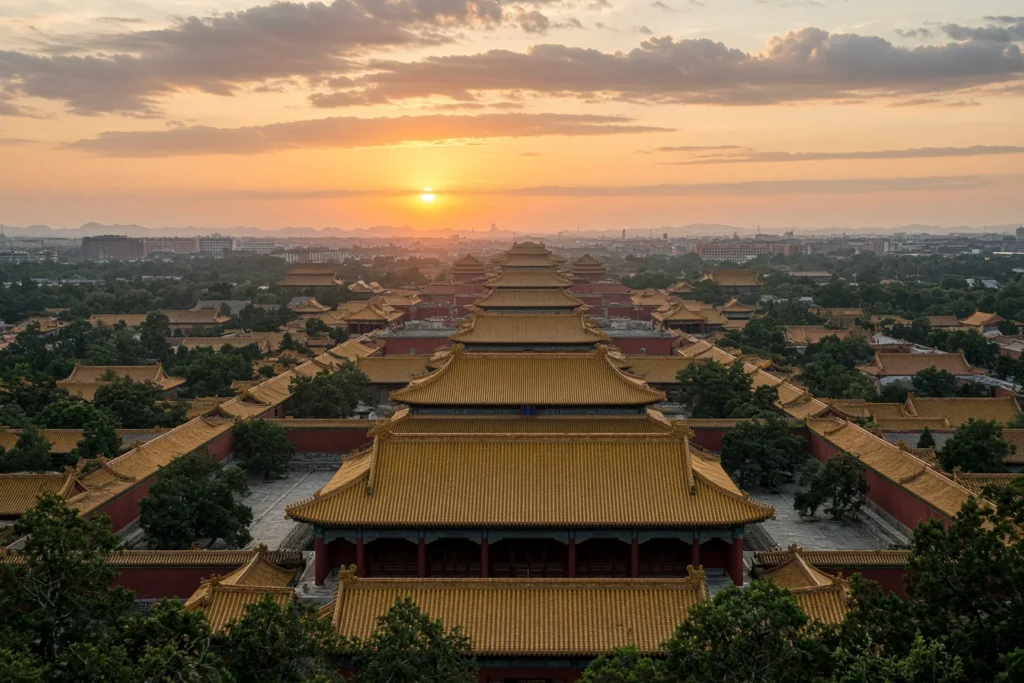
Beijing has been China's capital for most of the last 800 years, and the Ming emperors who rebuilt it in the early 15th century laid it out on a grand scale. At its heart sits the Forbidden City, the vast palace of red walls and golden roofs completed in 1420, with Tiananmen Square to the south and Jingshan Park to the north. Around this central axis spread altars, lakes and imperial gardens, including the Temple of Heaven and the Summer Palace.
Between the landmarks lie the hutongs, the narrow grey-brick lanes of courtyard houses where many Beijingers still live, shop and play cards on the pavement. Wander the lanes around Shichahai lakes and the Drum and Bell Towers and you see the city at its most human. Then there is the food: Peking duck carved at the table, hand-pulled noodles, dumplings and skewers of cumin lamb from a street grill.
Most visitors come for the Great Wall, and with good reason. Several restored and wild sections lie within two or three hours of the centre, and choosing the right one shapes your whole day. Three or four nights lets you see the palaces, walk the Wall and still have time for the hutongs. This guide covers what to see, what to eat, where to stay and when to come.
Every journey below is private and tailor-made, with your own guide and driver, so you can choose your Great Wall section and set your own pace in the city.
We tailor every trip. Want more time in Beijing, a different pace or a mix of places? Design my trip →
How our local guides would spend one full day in the capital, from early morning in an imperial park to a hutong evening by the lakes.
Arrive as the park gates open to see locals practising tai chi, dancing, singing and playing cards among the old cypress trees.
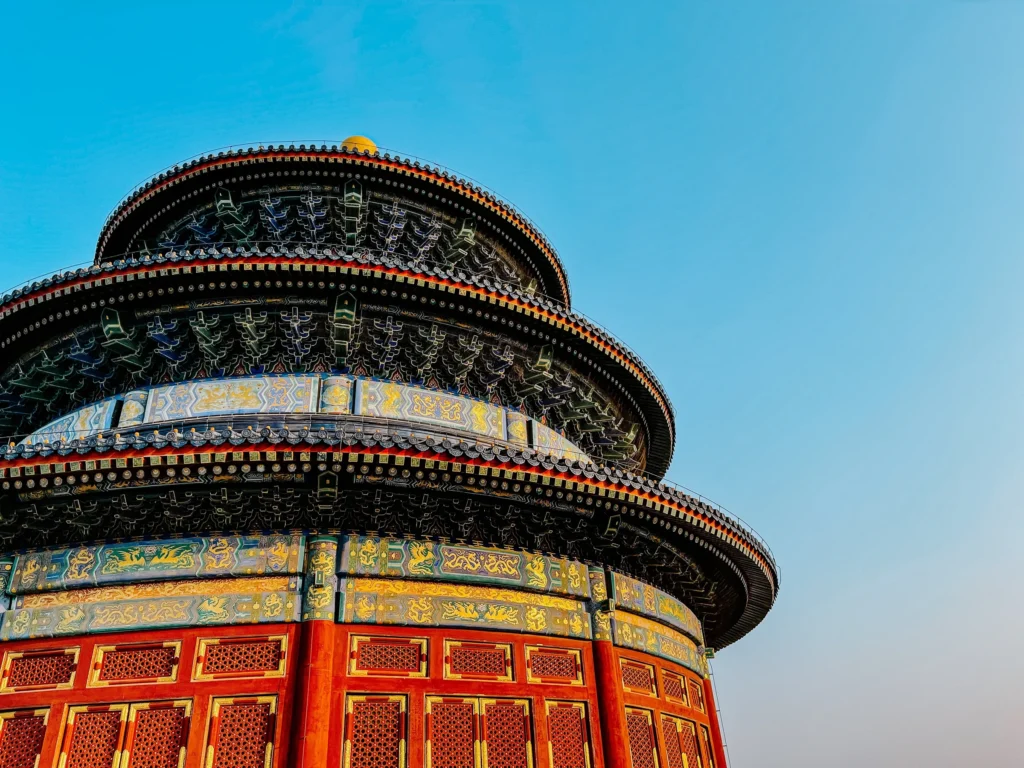
Walk the long ceremonial axis to the round triple-roofed hall where emperors prayed for good harvests.
Enter through the Meridian Gate and follow the great halls north, then step aside into the quieter eastern and western courtyards.
Climb the small hill opposite the north gate for the classic view over the golden roofs of the palace.
A bowl of zhajiangmian, Beijing's own noodles with savoury bean sauce, in a busy local spot.
Explore the lanes around Shichahai, peek into a courtyard house and see the Drum and Bell Towers.
Stroll the lakeshore as the light fades and the bars and lanterns come on along the water.
End the day with the city's signature dish, carved at the table and wrapped in thin pancakes.
The Great Wall around Beijing is not one place but many sections, each with a very different feel. Here is how our team chooses.
A beautifully restored section about 1.5 hours from the city, with forested hills, many watchtowers and a cable car up. It suits most first visits and families.
Partly restored and partly original, with dramatic towers along a long ridge. Further out, so it sees fewer visitors and rewards a full day.
An unrestored, steep and crumbling section loved for its wild views. It is a real hike, best done with an experienced guide and only in good weather.
The most visited section and the easiest to reach, even by high-speed train. It is impressive but very crowded, so we usually suggest Mutianyu instead.
The experiences our travellers enjoy most, in order of what we would not miss.
The imperial palace of the Ming and Qing emperors, with grand halls, courtyards and gardens. Book ahead with your passport and allow at least three hours to walk it.
Walk a restored section such as Mutianyu or Jinshanling, or hike a wilder stretch with a guide. Leave early to beat the crowds and the heat.
A UNESCO site where emperors prayed for good harvests, set in a large park that fills with locals doing tai chi and singing in the morning.
A former imperial retreat of lakes, pavilions and covered walkways in the north-west of the city. Take a boat across Kunming Lake and walk the Long Corridor.
One of the largest city squares in the world, facing the Gate of Heavenly Peace. Entry needs a reservation and passport checks, so plan it with your guide.
Explore the old lanes of courtyard houses around the lakes, the Drum Tower and the Bell Tower, on foot or by pedal rickshaw with a local guide.
Beijing's best-known Tibetan Buddhist temple, a working monastery full of incense, prayer halls and a towering standing Buddha carved from a single tree.
Climb Jingshan for the classic view over the Forbidden City, then stroll to Beihai Park with its white dagoba and lakeside former imperial gardens.
Burial grounds of thirteen Ming emperors in a quiet valley north of the city, with a long Sacred Way of stone animals. Easy to pair with the Wall.
Former factory buildings turned into galleries, studios and cafés, a relaxed contrast to the imperial sights and a good look at contemporary Chinese art.
Taste the city's famous roast duck, then try dumplings, jianbing pancakes and lamb skewers on a walk through local lanes and markets with your guide.
Spend an evening at a traditional opera or a Chinese acrobatics show, colourful performances that work well even if you do not follow the language.
Plan your private, tailor-made China trip for 2027 now and get $100 off. Tell us your travel dream and we will design it with you.
Customise My TripLocal specialities worth seeking out, and when the locals eat them. Your guide will know the best places to try each one.
Add a food experience →Each neighbourhood has its own rhythm. Pick the one that sounds like you, or let us surprise you.
Close to the Forbidden City, Tiananmen and the main shopping street, with easy metro links. The most practical base for a short first visit.
Courtyard hotels in the old lanes near the lakes and the Drum Tower. Atmospheric and walkable, though rooms are often smaller and cars cannot always reach the door.
The business district and embassy area to the east, with modern hotels, international dining and nightlife. Further from the imperial sights.
Tell us your style and our consultants will hand-pick a stay you would never find on your own.
A restored heritage house, a quiet lakeside villa or a family-run boutique: we match the hidden gem to you, and reveal it with your itinerary.
Ask for a surprise stayBeijing has two international airports: Capital (PEK) to the north-east and Daxing (PKX) to the south, about an hour from the centre. High-speed trains link Beijing with Shanghai, Xi'an and many other cities, arriving at the city's large main stations.
An extensive, signposted network that avoids traffic. Security checks at every station add a few minutes.
Best for: Getting across townThe best way to see the hutongs, parks and lakes, though the main sights are far apart.
Best for: Hutongs and parksApps such as DiDi are widely used and have an English interface. Traffic can be slow at rush hour.
Best for: Short hopsIncluded on our journeys for the Great Wall, the Ming Tombs and full sightseeing days.
Best for: Day tripsBeijing sits at the centre of China's high-speed rail network, so many of the country's great sights are a comfortable train ride away.
Spring (April and May) and autumn (September and October) are the best times, with mild days and clearer skies. Summer is hot, humid and often rainy, and winter is cold and dry but quieter at the sights. Avoid the May Day holiday and the first week of October if you can, as domestic crowds are very heavy.
A general guide. Weather varies from year to year, and we plan each route around the season.
Quick answers from our local team. Anything else, just ask your travel specialist.
Ask us on WhatsAppThree full days cover the Forbidden City, the Temple of Heaven, a Great Wall section and the hutongs at a comfortable pace. Four days lets you add the Summer Palace, the Ming Tombs or a longer hike on the Wall. Most of our journeys continue to Xi'an or Shanghai by high-speed train.
For most travellers we suggest Mutianyu: it is restored, scenic, about 1.5 hours away and has a cable car. Jinshanling is quieter and more dramatic but further out. Jiankou suits fit hikers with a guide. Badaling is the easiest to reach but by far the busiest.
Yes. Tickets are released online in advance and need your passport details, and visitor numbers are capped each day. They can sell out several days ahead in busy seasons. The palace is usually closed on Mondays, except on public holidays. Your guide will arrange the booking as part of your journey.
April, May, September and October offer the most comfortable weather and the clearest skies. Summer is hot and humid with heavy showers, and winter is cold but dry and quieter. Try to avoid the May Day holiday and the National Day Golden Week in early October, when domestic travel peaks.
Peking duck is the signature dish, carved at the table and wrapped in thin pancakes. Also try zhajiangmian noodles, jiaozi dumplings, copper-pot lamb hot pot in winter, jianbing pancakes for breakfast and cumin lamb skewers. Your guide can point you to busy local places.
Wangfujing and Dongcheng are central and convenient for a first visit. A courtyard hotel in the hutongs near Shichahai gives you more character and walkable lanes. Chaoyang and Sanlitun suit travellers who want modern hotels and nightlife. Your travel consultant will match the area to your style.
China runs on mobile payments. Visitors can now link a foreign card to Alipay or WeChat Pay, which work almost everywhere, from shops to taxis. Set them up before you travel and carry a little cash as a backup. Larger hotels and some shops accept international cards.
Capital Airport (PEK) is about 45 to 60 minutes from the centre by car, longer at rush hour. Daxing Airport (PKX) is about an hour away. Both are linked to the city by express trains, but on our journeys your guide and driver meet you with a name sign for a private transfer.
Tell us what you have in mind and a local travel specialist will design a private itinerary around you. Free, with no obligation.
Three quick questions and we will match you with the right journeys.