When Traveling Is Caring ❤️

敦煌North-West China40.14° N · 94.66° E
A desert oasis at the western end of the Hexi Corridor, home to some of the finest Buddhist art in Asia and dunes that rise straight from the edge of town. Here is how to see the Mogao Caves well, when to climb the dunes and how far the desert sights really are.
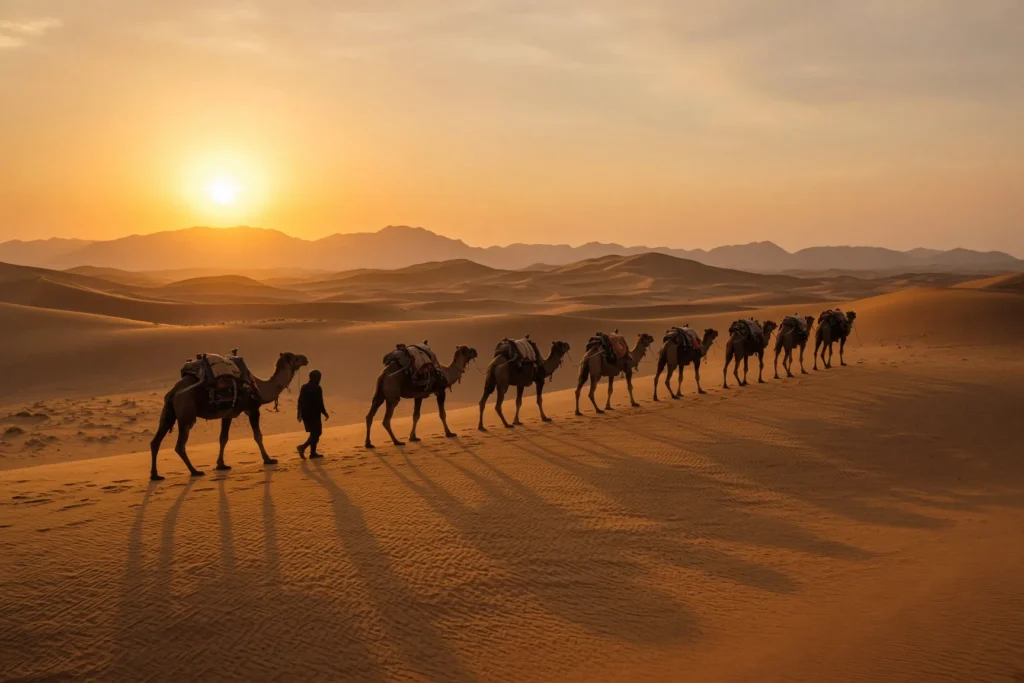
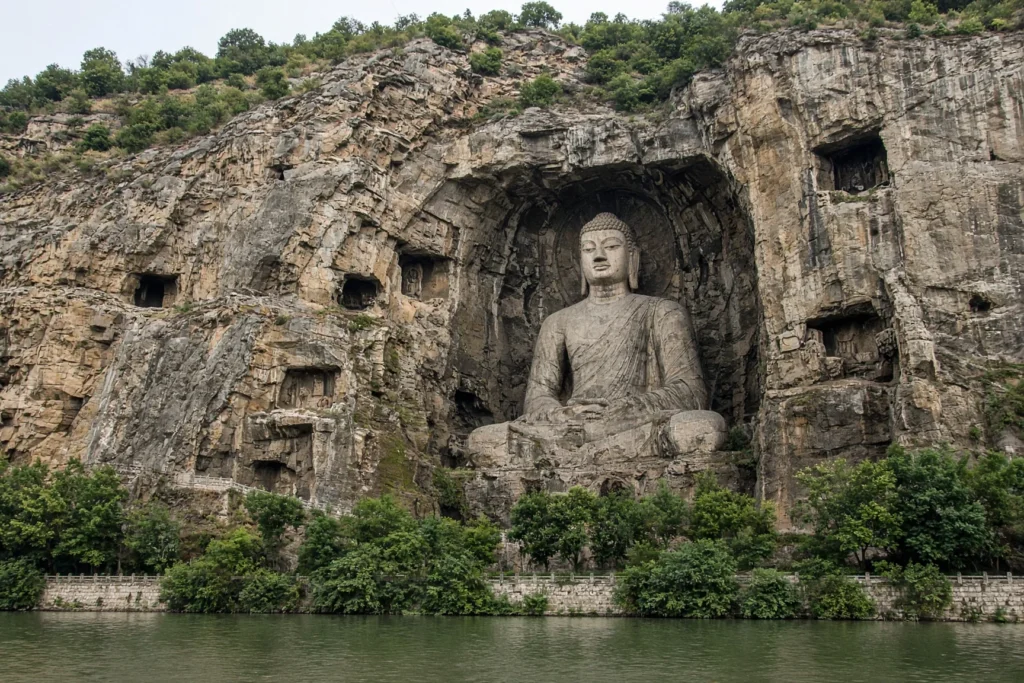
For centuries Dunhuang was the last major oasis before caravans left the Hexi Corridor and struck out across the deserts of the Tarim Basin. Merchants, monks and pilgrims passed through, and many paid for caves to be carved and painted in the cliffs south-east of town. The result is the Mogao Caves, a UNESCO World Heritage Site since 1987 and one of the great treasure houses of Buddhist art, with murals and statues spanning roughly a thousand years.
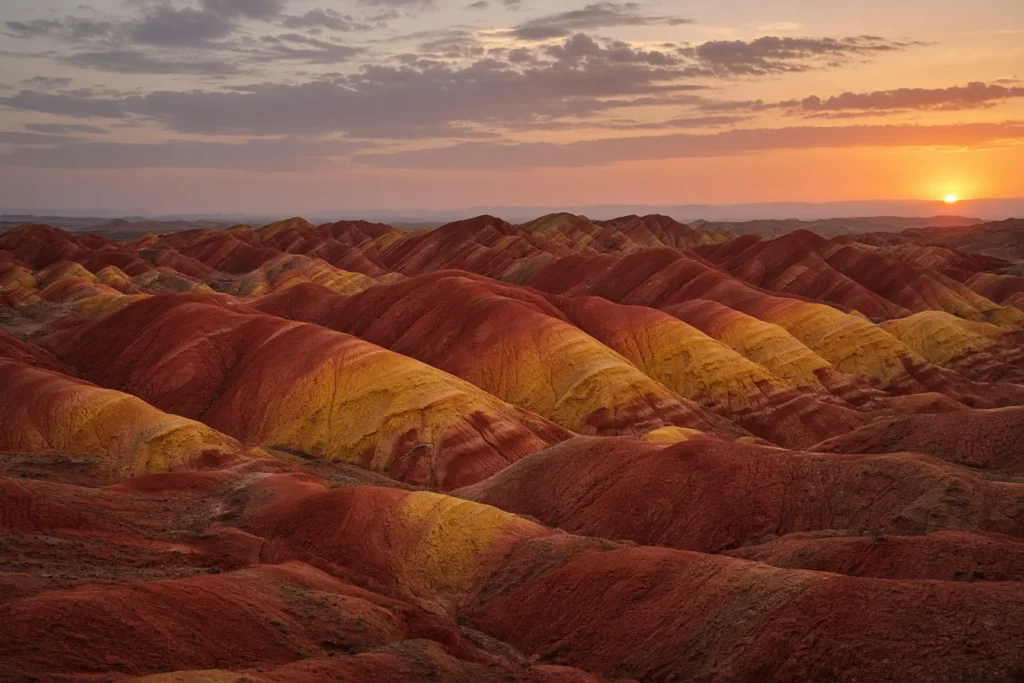
The town itself is small, relaxed and easy to enjoy. Its southern edge runs straight into the towering dunes of Mingsha Shan, the Singing Sand Mountain, where Crescent Lake sits in a hollow between the sands. Further west, across open gravel desert, lie the old frontier gates of Yumen Pass and Yangguan and the wind-sculpted rock formations of the Yardang landforms.
Dunhuang works best as a two or three night stop, either flown into from Xi'an, Lanzhou or Beijing, or as part of an overland Silk Road journey towards Turpan and Xinjiang. Plan around the cave bookings first, then fit the dunes in at sunrise or sunset when the light is softest and the sand is cool.
Our Dunhuang journeys are private and tailor-made, usually linking the caves and dunes with Jiayuguan, Zhangye or Turpan on a Silk Road route.
We tailor every trip. Want more time in Dunhuang, a different pace or a mix of places? Design my trip →
Mogao is the essential visit, but it is not the only cave site near Dunhuang. This is how we usually advise travellers to plan their time.
The main visit starts with films at the visitor centre, then a shuttle to the cliff and a guided tour of a selection of caves. Book as early as possible.
Some caves can be seen on an additional, more specialised visit. Worth it if Buddhist art is a main reason for your trip.
A smaller cave site in a river gorge to the east, with fine murals and far fewer visitors. Best combined with the drive towards Jiayuguan.
The experiences our travellers enjoy most, in order of what we would not miss.
Hundreds of caves carved into a cliff above a dry riverbed, filled with Buddhist murals and painted statues. A guided visit shows a selection of them, chosen in rotation to protect the art.
The great dunes begin at the edge of town. Climb a ridge early, before the heat and the crowds, and watch the light change across the sand. Camel rides are available at the foot.
A small spring-fed lake curved like a new moon, tucked between the dunes with a pavilion on its bank. Remarkably, it has survived in the desert for centuries.
The two old frontier gates of the Han dynasty, out in open desert west of town. Little survives beyond earthen walls and beacon towers, but the setting is powerful.
Rows of wind-carved clay ridges rise from the desert floor like a fleet of ships. Usually combined with Yumen Pass in a long day trip.
A compact museum on the oasis and its Silk Road past, with finds from the frontier and the cave sites. A good rainy-day or arrival-afternoon visit.
The lively evening market in the town centre, with lamb skewers, noodles, apricot drinks and local crafts. Pleasant for a stroll after a day in the desert.
Plan your private, tailor-made China trip for 2027 now and get $100 off. Tell us your travel dream and we will design it with you.
Customise My TripLocal specialities worth seeking out, and when the locals eat them. Your guide will know the best places to try each one.
Add a food experience →Flights connect Dunhuang with cities such as Xi'an, Lanzhou and Beijing, with more choice in summer. Dunhuang also has a railway station, and the high-speed line along the Hexi Corridor stops at Liuyuan South, about 2 hours away by road.
Essential for the caves, the passes and the Yardang landforms, which are spread across the desert; included on our journeys.
Best for: Desert sightsThe town centre and night market are compact and easy to explore on foot in the evening.
Best for: Town eveningsDiDi and taxis cover short trips around town and out to the dunes.
Best for: Short hopsPlaces that pair well with Dunhuang, with approximate travel times.
May, June, September and October bring warm days, cool nights and the clearest desert light. July and August are hot and the busiest months, especially at the caves. Winter is cold and quiet, with fewer cave visitors but some services reduced.
A general guide. Weather varies from year to year, and we plan each route around the season.
Quick answers from our local team. Anything else, just ask your travel specialist.
Ask us on WhatsAppYes. Entry is timed and the number of daily visitors is limited to protect the caves, so tickets for summer and holiday periods can sell out weeks ahead. We book the visit as soon as your dates are confirmed and build the rest of your Dunhuang days around the slot you receive.
Two full days suit most travellers: one for the Mogao Caves and Dunhuang Museum, and one for the dunes and Crescent Lake at either end of the day. Add a third day for Yumen Pass and the Yardang landforms, or for the quieter Yulin Caves.
No. Photography is not permitted inside the caves, as flash and crowds can damage the fragile murals. You can take photos of the cliff face and the grounds outside. The visitor centre films and the museum help you remember the art you see inside.
Early morning or late afternoon. The sand is cool, the light is soft and the dunes are far quieter at sunrise. Midday in summer is very hot and the main paths are crowded. Wear closed shoes or use the shoe covers offered at the entrance.
For anyone interested in art, history or the Silk Road, very much so. The Mogao Caves are among the most important Buddhist sites in the world, and the dunes are easy to reach from town. It is remote, so it suits travellers happy to fly in or travel overland for it.
Tell us what you have in mind and a local travel specialist will design a private itinerary around you. Free, with no obligation.
Three quick questions and we will match you with the right journeys.