When Traveling Is Caring ❤️

洛阳Central China34.62° N · 112.45° E
An ancient capital on the Luo River, with cliffs carved with Buddhas and the birthplace of Shaolin kung fu nearby. Here is what to see, how long to stay and how to fit it between Xi'an and Beijing.
Luoyang lies in western Henan, in the plains of the Yellow River where Chinese civilisation took shape. For long periods it served as a capital, under the Eastern Han, the Northern Wei and, alongside Chang'an, the Tang. Little of those great cities stands above ground today, and modern Luoyang is a busy provincial city, but its past is carved in stone just south of town at the Longmen Grottoes, listed by UNESCO in 2000.
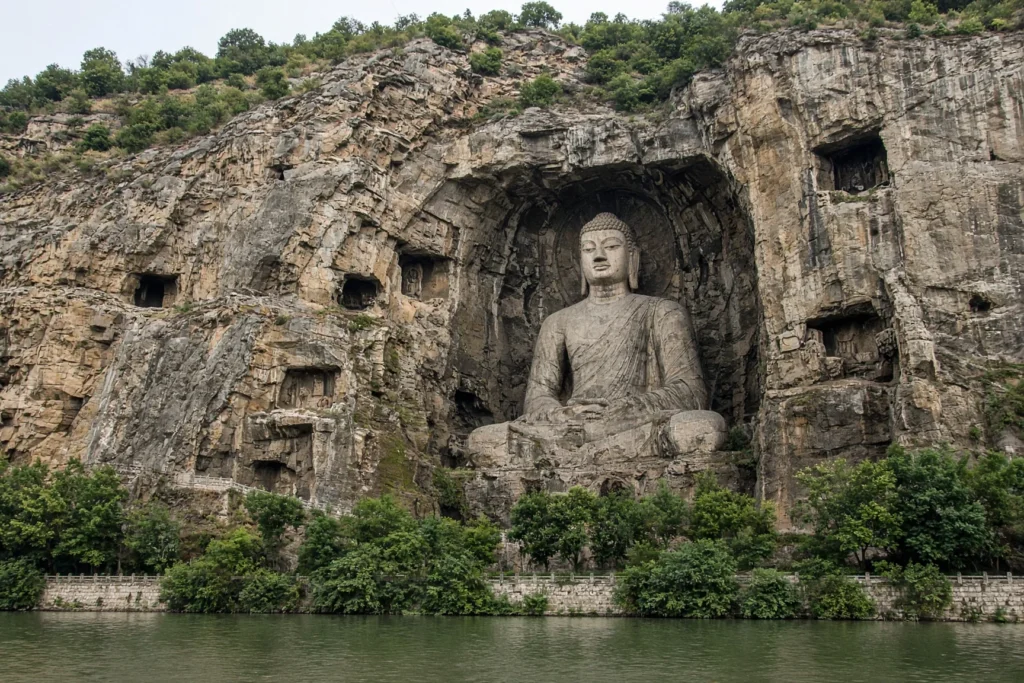
Here, from the late fifth century onwards, thousands of Buddhist figures were cut into the limestone cliffs on both banks of the Yi River, from tiny niches to the great seated Buddha of Fengxian Temple. A short drive east of the city stands the White Horse Temple, traditionally regarded as China's first Buddhist temple, and about 90 minutes away by road is Shaolin Temple on Mount Song, home of the famous martial art.
Our Luoyang journeys are private and tailor-made, usually a one or two night stop between Xi'an and Beijing, with Longmen, the White Horse Temple and Shaolin.
We tailor every trip. Want more time in Luoyang, a different pace or a mix of places? Design my trip →
The experiences our travellers enjoy most, in order of what we would not miss.
Thousands of Buddhist caves and niches carved along a kilometre of cliffs on the Yi River. Cross the bridge to the east bank in the late afternoon for the best view of Fengxian Temple.
The largest figure at Longmen, a serene seated Vairocana Buddha from the Tang dynasty, flanked by disciples and guardians. Climb the steps early in the day to see it before the crowds.
Traditionally considered the first Buddhist temple in China, founded in the first century AD. Its gardens also hold halls built in the styles of other Buddhist countries.
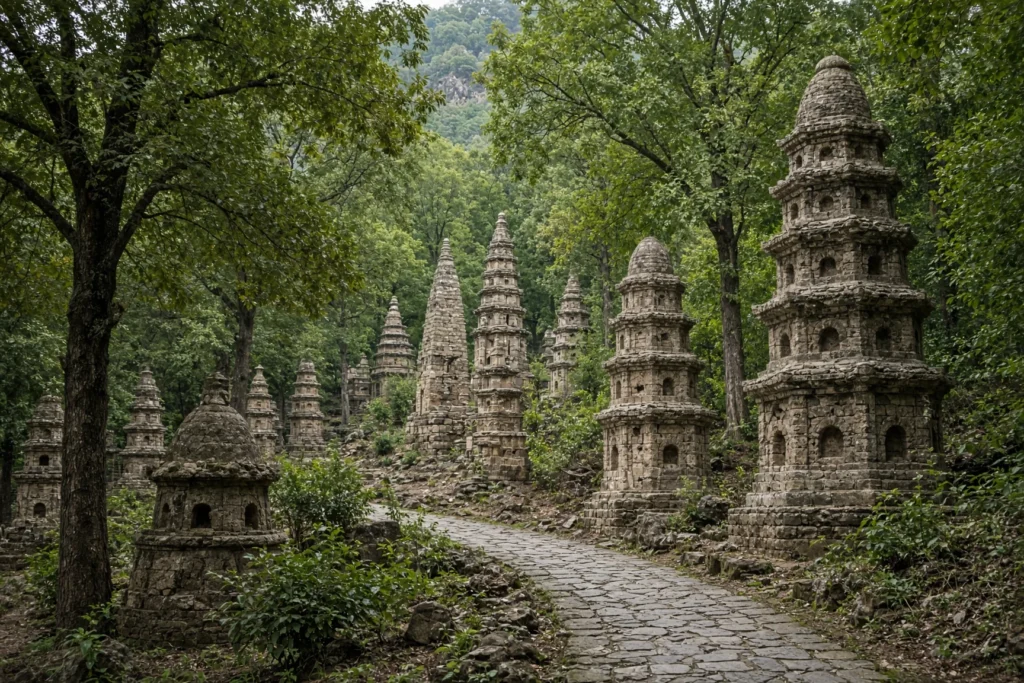
The birthplace of Shaolin kung fu and an important Chan Buddhist temple on Mount Song, about 90 minutes from Luoyang. See the Pagoda Forest, the main halls and a martial arts demonstration.
A large modern museum with bronzes, Tang tri-coloured ceramics and finds from the ancient capitals. A good way to make sense of the city's long history.
Walk around the restored Lijing Gate and the old streets nearby in the evening, when snack stalls open and the gate is lit up.
Luoyang is famous for its peonies, which bloom in parks across the city in April during the annual festival. Beautiful, but very busy at weekends.
Plan your private, tailor-made China trip for 2027 now and get $100 off. Tell us your travel dream and we will design it with you.
Customise My TripLocal specialities worth seeking out, and when the locals eat them. Your guide will know the best places to try each one.
Add a food experience →Most travellers arrive at Luoyang Longmen station on the high-speed line between Xi'an and Zhengzhou. Luoyang also has a small airport, but the train is usually the easier option.
The practical way to combine Longmen, the White Horse Temple and Shaolin; included on our journeys.
Best for: Day tripsDiDi works well for short trips around the city in the evening.
Best for: Short hopsLuoyang's metro links parts of the city, and fast trains connect it with Xi'an, Zhengzhou and Beijing.
Best for: Onward travelPlaces that pair well with Luoyang, with approximate travel times.
Spring and autumn are the best seasons, with mild days and clear skies. April brings the Peony Festival, beautiful but crowded. Summers are hot, humid and sometimes stormy, and winters are cold and dry, often with haze, though sights are quieter.
A general guide. Weather varies from year to year, and we plan each route around the season.
Quick answers from our local team. Anything else, just ask your travel specialist.
Ask us on WhatsAppYes, if you are interested in Buddhist art and Chinese history. The Longmen Grottoes are among the finest stone carvings in China, and Shaolin Temple is within reach. The modern city has few old buildings, so one or two nights between Xi'an and Beijing is usually enough.
Allow about three hours to walk the west bank, cross the bridge and see the east bank and Xiangshan Temple. It is a lot of walking and some steps. Early morning and late afternoon are quieter and the light is softer on the cliffs.
Shaolin Temple lies on Mount Song near Dengfeng, about 80 km east of Luoyang, roughly 90 minutes by road. A visit takes most of a day, so many travellers do Longmen one day and Shaolin the next, or visit Shaolin on the way to Zhengzhou.
The festival is held each spring, with peonies usually at their best in mid April, though timing depends on the weather. Parks across the city are full of colour, and also full of visitors, so go early in the day and avoid weekends if possible.
You will see students training in the area and a staged demonstration by skilled performers at the temple. It is entertaining, but it is a show for visitors. The quieter halls, the Pagoda Forest and the mountain setting give a better sense of Shaolin's long Buddhist history.
Tell us what you have in mind and a local travel specialist will design a private itinerary around you. Free, with no obligation.
Three quick questions and we will match you with the right journeys.