When Traveling Is Caring ❤️

上海Eastern China31.23° N · 121.47° E
Art deco banks on one bank of the river, glass towers on the other and old lane houses in between. Here is what to see, eat and know before you plan your days in Shanghai.
Shanghai grew from a walled market town into one of the great trading ports of Asia after it opened to foreign trade in the 1840s. The city that rose along the Huangpu River mixed Chinese and European ideas in a way found nowhere else in China, and you can still read that story in its streets: stately banks and trading houses on the Bund, plane-tree avenues in the former French Concession and brick lane houses known as shikumen.
Across the river, Pudong tells a newer story. Farmland as recently as the early 1990s, Lujiazui is now a cluster of skyscrapers led by the Shanghai Tower, one of the tallest buildings in the world. Between the two banks you find classical gardens, Buddhist temples, excellent museums, a lively food scene built on soup dumplings and sweet, slow-braised dishes, and quiet canal towns within an hour or two of the centre.
Most travellers spend three or four nights in Shanghai, often as the first or last stop of a China journey. High-speed trains make it easy to add Suzhou, Hangzhou or the mountains of Huangshan, and flights connect it to Beijing, Xi'an, Guilin and beyond. Use this guide to plan what to see, what to eat, where to stay and when to come.
Every journey below is private and tailor-made, so you can linger in Shanghai or use it as a gateway to Suzhou, Hangzhou and the rest of China.
We tailor every trip. Want more time in Shanghai, a different pace or a mix of places? Design my trip →
How our local guides would spend one full day in Shanghai, from tai chi on the waterfront to the skyline after dark.
Walk the riverside promenade while locals practise tai chi and the towers of Pudong catch the first light.
Pan-fried pork buns with crisp bases and hot broth inside, eaten with care at a busy local counter.
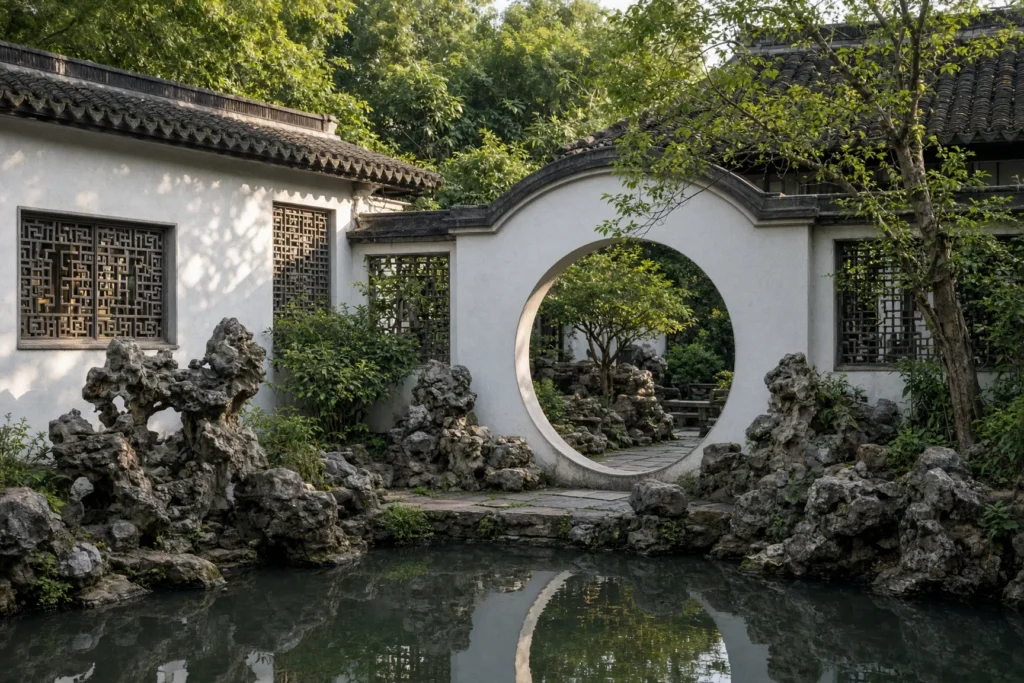
Rockeries, ponds and pavilions in a Ming dynasty garden, then the lanes and teahouses of the old Chinese city around it.
A basket of xiaolongbao, delicate dumplings filled with pork and broth. Nibble the top and sip first.
Stroll plane-tree streets such as Wukang Road, past old villas, lane houses, small boutiques and cafés.
Two very different takes on the shikumen lane house: one a maze of studios, the other a polished dining quarter.
Cross to Pudong and watch the city spread to the horizon from the observation deck as the lights come on.
An evening boat ride between the illuminated Bund and the glowing towers of Lujiazui, the classic Shanghai view.
A few choices make a big difference to how much you enjoy the city. Here is what our team tells travellers when they plan their days.
The waterfront changes completely through the day, and the busiest hours are not the best ones.
The canal towns around Shanghai share stone bridges and whitewashed houses, but they differ in size and pace.
With fast trains in every direction, Shanghai works well as a base or a gateway for eastern China.
The experiences our travellers enjoy most, in order of what we would not miss.
Stroll the riverside promenade past the grand banks and trading houses of the old waterfront, with the full Lujiazui skyline across the river. Come early or late for the best light.
A classical garden of rockeries, ponds, bridges and halls, begun in the Ming dynasty. The surrounding bazaar is busy and colourful, so arrive at opening time for a calmer visit.
One of the finest collections of Chinese art in the country, with ancient bronzes, ceramics, calligraphy and paintings. A good place to understand the long story behind the modern city.
An active Buddhist temple in the city centre, known for its seated and reclining Buddhas carved from white jade. Visit in the morning, when worshippers light incense in the courtyards.
Leafy streets of old villas, apartment blocks and lane houses, best explored slowly on foot or by bicycle. Wukang Road and the streets around it are particularly attractive.
Ride one of the world's fastest lifts to the observation deck of China's tallest building for views across the river, the Bund and the sprawling city beyond.
Two restored shikumen lane-house quarters. Tianzifang is a tangle of small shops and studios, while Xintiandi is smarter and calmer, with restaurants and courtyard cafés.
Taste soup dumplings, pan-fried buns, scallion oil noodles and sweet local snacks with a guide who knows which busy neighbourhood counters are worth the queue.
From around late September to December, Shanghai celebrates the hairy crab, a rich freshwater crab from the lakes nearby. It is a much-loved autumn ritual for local families.
Stone bridges, canals and old houses about an hour from the centre. Take a small boat along the waterways and explore the lanes before the day-trip crowds arrive.
Glide between the illuminated Bund and the light shows of Pudong on an evening boat. It is the easiest way to see both banks of the city at their best.
Shanghai has a long tradition of acrobatics, and an evening show of balance, juggling and daring stunts is a lively way to round off a day of sightseeing.
Plan your private, tailor-made China trip for 2027 now and get $100 off. Tell us your travel dream and we will design it with you.
Customise My TripLocal specialities worth seeking out, and when the locals eat them. Your guide will know the best places to try each one.
Add a food experience →Each neighbourhood has its own rhythm. Pick the one that sounds like you, or let us surprise you.
Grand riverside hotels with views across to Pudong, walking distance from Nanjing Road, Yu Garden and the river cruises.
Boutique hotels and residential streets lined with plane trees, close to cafés, restaurants and lane houses. Quieter at night than the Bund.
International hotels in the skyscrapers, with sweeping views back across the river to the Bund and easier access to Pudong Airport.
Tell us your style and our consultants will hand-pick a stay you would never find on your own.
A restored heritage house, a quiet lakeside villa or a family-run boutique: we match the hidden gem to you, and reveal it with your itinerary.
Ask for a surprise stayPudong International Airport handles most long-haul flights, with direct services from Europe, Australia, North America and across Asia. Hongqiao Airport, closer to the centre, mainly serves domestic and regional routes, and Hongqiao Railway Station next door links Shanghai with Suzhou, Hangzhou, Nanjing and Beijing by high-speed train.
The Bund, the old town and the former French Concession are rewarding on foot, one neighbourhood at a time.
Best for: NeighbourhoodsOne of the largest metro networks in the world, clean and well signed in English, with stations near most sights.
Best for: Crossing the cityApps such as DiDi are widely used and convenient for short hops, though traffic can be slow at rush hour.
Best for: Short hopsIncluded on our journeys for transfers, sights further out and day trips to the water towns.
Best for: Day tripsPlaces that pair well with Shanghai, with approximate travel times.
Spring (March to May) and autumn (September to November) are the most comfortable seasons, with mild temperatures and clearer skies. June and July bring the plum rains, and July and August are hot and humid with the chance of typhoons. Winter is cold and damp, though quieter. Avoid the first week of October and other national holidays if you can, when the main sights are packed.
A general guide. Weather varies from year to year, and we plan each route around the season.
Quick answers from our local team. Anything else, just ask your travel specialist.
Ask us on WhatsAppThree days cover the Bund, Yu Garden, the museums, the former French Concession and the Pudong skyline at a comfortable pace. Four lets you add a water town such as Zhujiajiao or a day in Suzhou. Many of our journeys combine Shanghai with Suzhou, Hangzhou and Beijing for a classic first trip to China.
Spring and autumn are the most pleasant, with mild days and lower humidity. Summer is hot and sticky, with heavy rain in June and July and occasional typhoons later. Winter is cold and damp but quieter. Try to avoid national holidays, especially the first week of October, when the main sights are very crowded.
Start with the Bund at dawn or dusk, Yu Garden and the old town, the Shanghai Museum and the Jade Buddha Temple. Walk the former French Concession and its lane houses, go up the Shanghai Tower in Pudong, take an evening river cruise and add a canal town day trip if you have time.
Shanghai is best known for xiaolongbao soup dumplings and shengjian bao pan-fried buns. Local cooking is gently sweet and rich in soy, with dishes such as red-braised pork, drunken chicken and scallion oil noodles. In autumn, hairy crab is the dish everyone talks about. Busy local counters are often the best places to try them.
The Bund suits first visits and anyone who wants river views and easy walking to the main sights. The former French Concession suits couples and food lovers who prefer leafy streets and a local feel. Lujiazui in Pudong suits skyline lovers and families. Your travel consultant will help you choose the area and hotel that fit your style.
Mobile payments dominate daily life, and Alipay and WeChat Pay now let many international visitors link a foreign card. Set these up before you travel and test them on arrival. International cards work in larger hotels and some shops, but carry a little cash for small purchases and as a backup in case an app fails.
Shanghai is generally a very safe city, including at night. As in any big city, keep an eye on bags and phones in crowded places such as Nanjing Road and the Bund. Be polite but firm with strangers who invite you for tea or to an art gallery, as these invitations are a known scam aimed at visitors.
Pudong International Airport is about an hour from the Bund by car, longer in rush-hour traffic. The maglev train runs from the airport to Longyang Road metro station, where you change to the metro. On our journeys, your travel consultant arranges a private transfer with a name-sign welcome, so you can go straight to your hotel.
Tell us what you have in mind and a local travel specialist will design a private itinerary around you. Free, with no obligation.
Three quick questions and we will match you with the right journeys.