When Traveling Is Caring ❤️

西安North-West China34.26° N · 108.94° E
An ancient capital at the start of the Silk Road, guarded by a clay army and a Ming city wall. Here is how to see it well, what to eat and when to come.
Long before Beijing, the capital of China stood here. Under the name Chang'an, Xi'an served as the seat of many dynasties, and during the Tang it was one of the largest and most cosmopolitan cities in the world. Merchants, monks and envoys set out from its gates along the Silk Road towards Central Asia, and traders brought new goods, ideas and faiths back the other way.
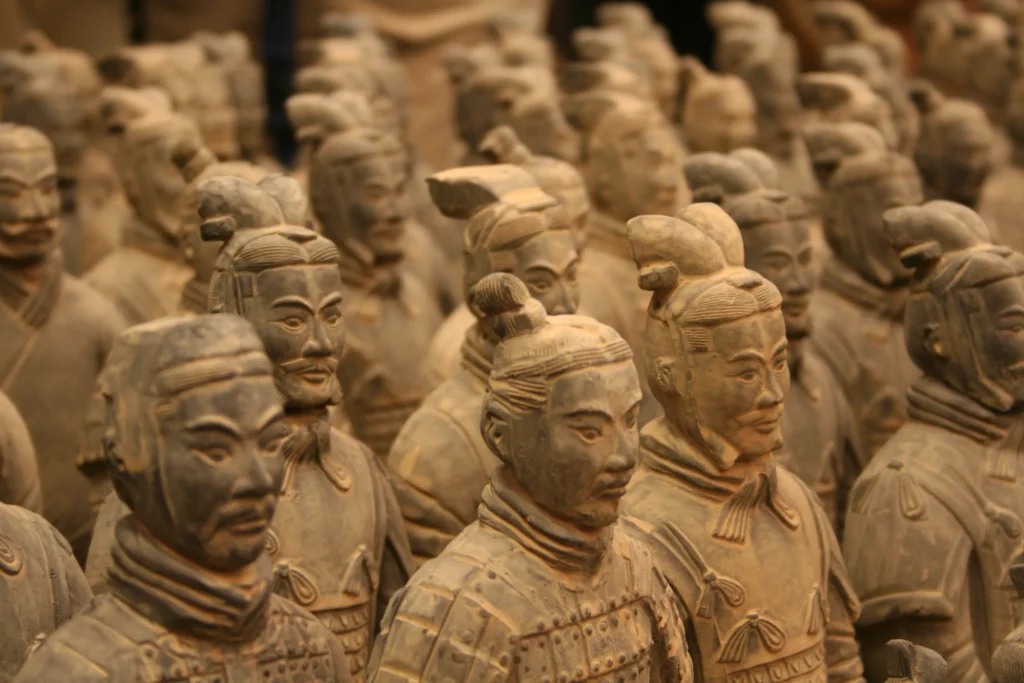
Most travellers come for one extraordinary sight. In 1974 farmers digging a well east of the city found fragments of clay figures, and archaeologists went on to uncover the Terracotta Army, thousands of life-size soldiers buried to guard the tomb of Qin Shi Huang, the first emperor of a unified China. Standing above Pit 1 as the ranks stretch away is an experience few forget.
Xi'an is much more than the warriors. Its Ming city wall is one of the most complete in China and you can cycle all the way round it. Inside, the Bell and Drum Towers frame the lively Muslim Quarter, where the street food is some of the best in the country. Two or three nights is ideal. This guide covers what to see, what to eat, where to stay and when to come.
Every journey below is private and tailor-made, with your own guide and driver, so you can reach the warriors before the crowds and set your own pace in the old city.
We tailor every trip. Want more time in Xi'an, a different pace or a mix of places? Design my trip →
How our local guides would spend one full day in Xi'an, from the first emperor's army to dinner in the Muslim Quarter.
Start like a local with a bowl of spicy hulatang soup and steamed buns before the drive east.
Arrive near opening time to see Pit 1 before the crowds, then Pits 2 and 3 and the bronze chariots.
Lunch on a bowl of hand-pulled or oil-splashed noodles, the pride of Shaanxi cooking.
Visit the Tang imperial hot springs at the foot of Mount Li, or head straight back to the city.
A Tang Dynasty Buddhist pagoda linked to the monk Xuanzang, who brought scriptures back from India.
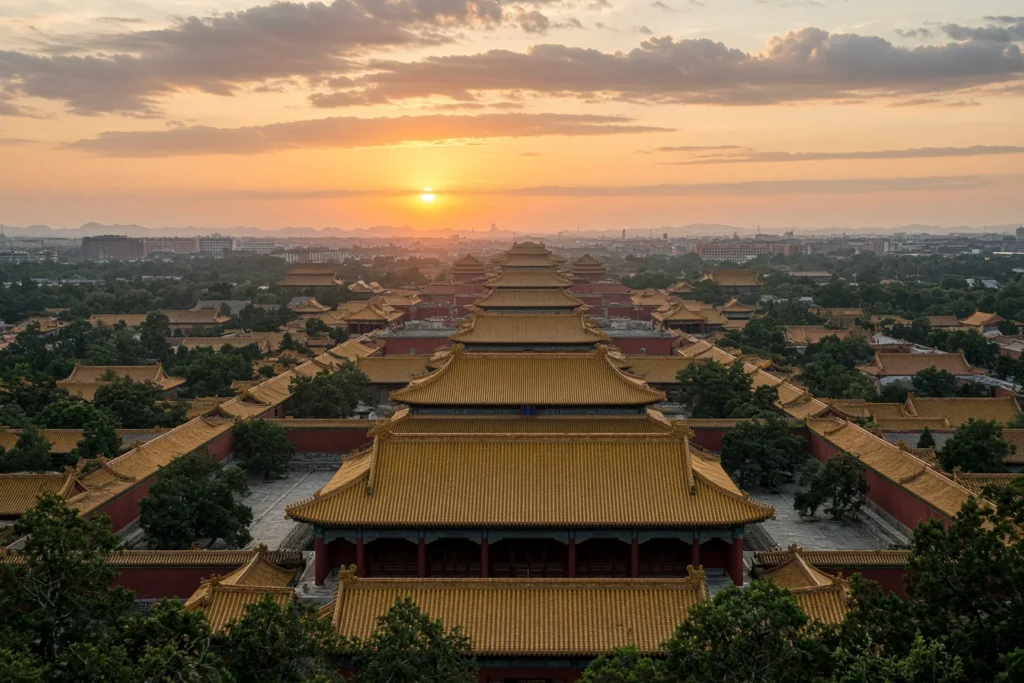
Ride the broad top of the Ming wall as the light turns golden over the rooftops and gate towers.
Roujiamo, lamb skewers, soup dumplings and sweets in the lanes behind the Drum Tower.
Finish with the illuminated Bell and Drum Towers at the heart of the old city.
Our team has visited the warriors many times. These are the choices that make the difference between a crush and a memorable visit.
Tour groups arrive mid-morning. Leave the city early to reach the site near opening time, and avoid Chinese public holidays if you can.
Pit 1 holds the famous ranks of standing soldiers. Pits 2 and 3 are smaller but show kneeling archers, cavalry and the command post up close.
There is little explanation on site. A good guide brings the first emperor's story to life and helps you spot the details in faces, hair and armour.
The experiences our travellers enjoy most, in order of what we would not miss.
Thousands of life-size clay soldiers, horses and chariots buried to guard the first emperor's tomb. A UNESCO site and one of the great archaeological finds of the 20th century.
Rent a bike and ride the top of the Ming city wall, about 14 km around. It takes around two hours at an easy pace, with views over both old and new Xi'an.
A maze of lanes behind the Drum Tower, home to the city's Hui Muslim community and its famous street food: roujiamo, lamb skewers, soup dumplings and sweets.
One of China's oldest mosques, built in the style of a Chinese temple with courtyards, pavilions and gardens. A calm, beautiful escape from the busy lanes nearby.
A Tang Dynasty pagoda linked to the monk Xuanzang and his scriptures from India, now part of the Silk Roads UNESCO listing. The fountain square nearby fills up at night.
One of China's finest museums, with treasures from the Zhou, Qin, Han and Tang dynasties. Book ahead with your passport, as daily visitor numbers are limited.
Two Ming towers at the centre of the walled city. Climb the Drum Tower for views over the Muslim Quarter, and see both lit up after dark.
A quieter Tang pagoda in a leafy park, also on the Silk Roads UNESCO list, with the Xi'an Museum next door. A peaceful morning stop.
A museum of carved stone tablets near the south gate, prized for their calligraphy and classic texts. Pair it with a walk down the old-style street of Shuyuanmen.
Tang Dynasty imperial hot springs and gardens at the foot of Mount Li, close to the Terracotta Army and easy to combine on the same day.
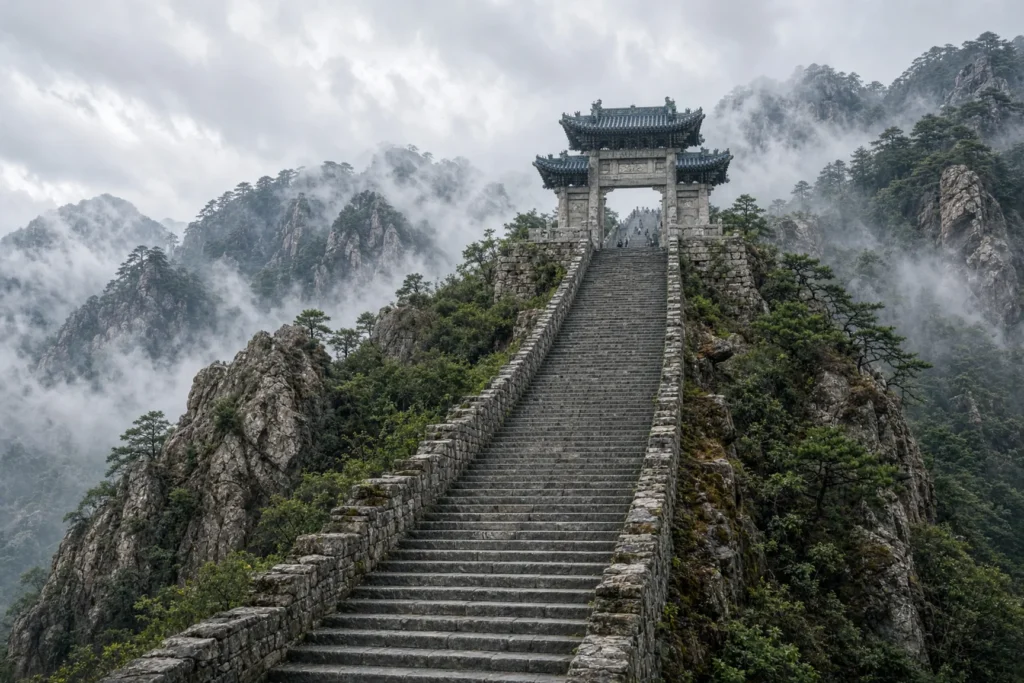
One of China's sacred Taoist mountains, famous for granite peaks, steep stairways and cable cars. A long but memorable day trip east of the city for active travellers.
See the city wall gates lit up, the Big Wild Goose Pagoda fountain show and the Tang-style pedestrian avenue nearby, busy with performers and lanterns.
Plan your private, tailor-made China trip for 2027 now and get $100 off. Tell us your travel dream and we will design it with you.
Customise My TripLocal specialities worth seeking out, and when the locals eat them. Your guide will know the best places to try each one.
Add a food experience →Each neighbourhood has its own rhythm. Pick the one that sounds like you, or let us surprise you.
Inside the city wall at the heart of the old city, within walking distance of the towers, the wall and the street food lanes.
Near the grand South Gate, the Stele Forest and the old-style lanes of Shuyuanmen. Easy access to the wall for cycling.
South of the walled city, around the pagoda, parks and lakes. Calmer and greener, with newer hotels.
Tell us your style and our consultants will hand-pick a stay you would never find on your own.
A restored heritage house, a quiet lakeside villa or a family-run boutique: we match the hidden gem to you, and reveal it with your itinerary.
Ask for a surprise stayXi'an Xianyang International Airport has flights across China and some international routes. Many travellers arrive by high-speed train from Beijing, Shanghai or Chengdu at Xi'an North Station, about 30 to 40 minutes by car from the walled city.
The walled centre is compact enough to explore on foot, especially the Muslim Quarter.
Best for: Old cityBikes for hire on top of the city wall make the best way to see it.
Best for: City wallModern lines link the centre with the railway stations, the airport and the pagodas.
Best for: Getting across townIncluded on our journeys for the Terracotta Army, Huaqing Palace and Mount Hua.
Best for: Day tripsXi'an is a hub of China's high-speed rail network, linking the capital, the south-west and the Silk Road to the west.
April and May and September and October are the best times, with mild, mostly dry weather. July and August are hot, and winter is cold with occasional haze. The Terracotta Army is busiest during Chinese public holidays, especially the first week of October.
A general guide. Weather varies from year to year, and we plan each route around the season.
Quick answers from our local team. Anything else, just ask your travel specialist.
Ask us on WhatsAppTwo full days is ideal: one for the Terracotta Army and Huaqing Palace, and one for the city wall, the pagodas, the museum and the Muslim Quarter. Add a third day for Mount Hua or the Han Yangling Mausoleum. Many of our journeys arrive from Beijing by high-speed train.
The Terracotta Army is about 40 km east of the city centre, around an hour by car depending on traffic. Most visitors spend about three hours at the site, so it fills most of a morning. On our journeys a private car and guide take you there and back, and can add Huaqing Palace nearby.
Yes. It is one of the most remarkable archaeological sites in the world, and seeing the ranks of soldiers in Pit 1 is unforgettable. It is crowded, and there is limited explanation on site, so arrive early and go with a knowledgeable guide to understand what you are looking at.
Yes. Bikes can be hired on top of the wall, and a full loop of about 14 km takes around two hours at a relaxed pace. Late afternoon is the most pleasant time, with softer light and cooler air. You can also simply walk a section between two gates.
Xi'an is known for noodles and breads: oil-splashed noodles, cold liangpi noodles, roujiamo flatbread sandwiches and yangrou paomo, lamb soup with torn bread. The Muslim Quarter adds lamb skewers, soup dumplings and persimmon cakes. Wander the side lanes for the best stalls.
Spring (April and May) and autumn (September and October) are the most comfortable, with mild days. Summer is hot and winter is cold, sometimes with haze. Avoid Chinese public holidays if you can, especially the National Day Golden Week in early October, when the Terracotta Army is extremely crowded.
Inside the city wall near the Bell Tower is the most convenient for first visits and food lovers. The South Gate area is atmospheric and handy for cycling the wall. Qujiang, around the Big Wild Goose Pagoda, is calmer and greener. Your travel consultant will match the area to your style.
The fastest high-speed trains take about 4.5 hours from Beijing West to Xi'an North, and flights take about two hours. The train is comfortable and runs centre to centre, so it is often the easier choice. Your travel consultant can arrange tickets and transfers at both ends.
Tell us what you have in mind and a local travel specialist will design a private itinerary around you. Free, with no obligation.
Three quick questions and we will match you with the right journeys.