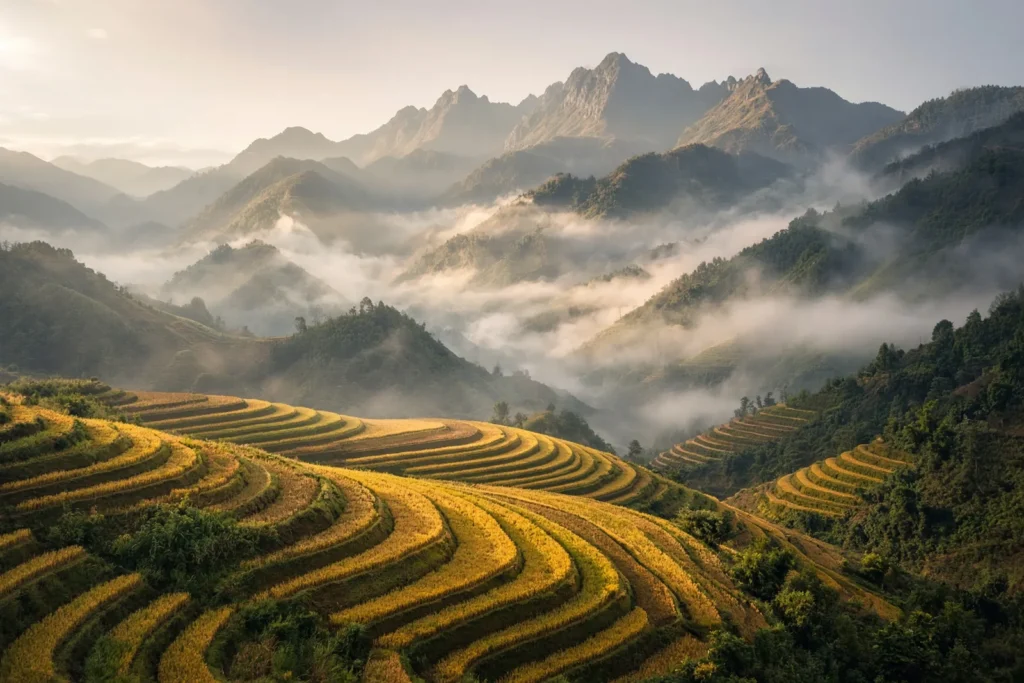
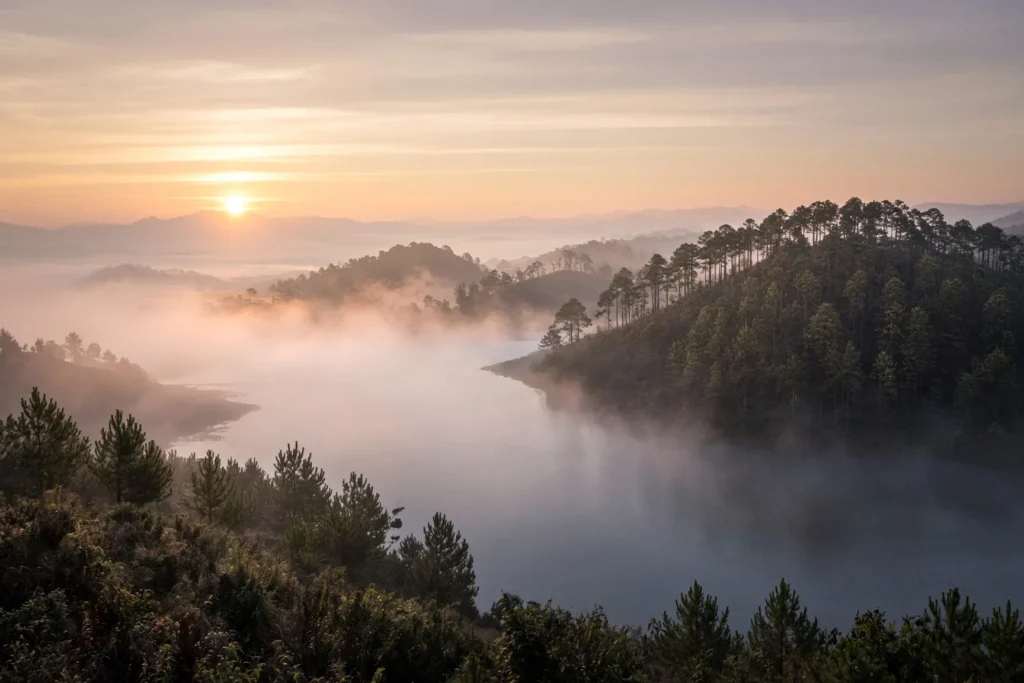
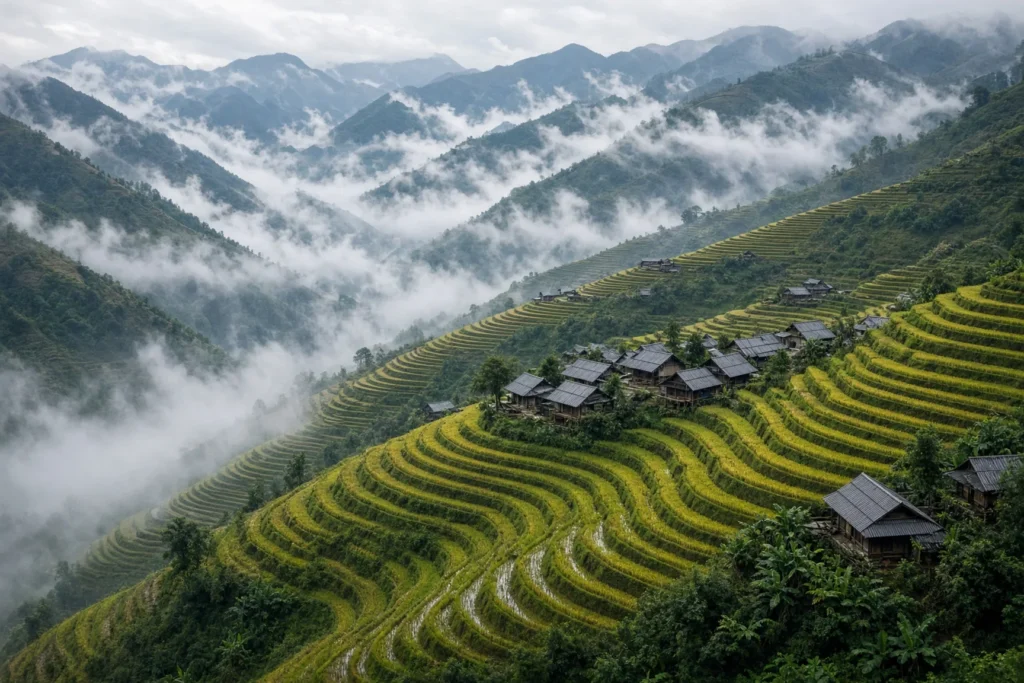
Twelve days in the north of Vietnam, from the lakes of Hanoi into the high mountains of the North West and back down to the sea. The road loops through Sapa, the battlefield of Dien Bien Phu and the valleys of Mai Chau, then slows down among the karsts of Ninh Binh and two nights on the water in Halong Bay.
Here is how the twelve days unfold, from a first evening stroll around Hoan Kiem Lake to a last cave in Bai Tu Long Bay. Every part of it can be adjusted: add a night where you want to linger, swap an activity or change your hotel class, and we will shape the plan around you.
Welcome to Hanoi, a capital of shaded lakes, French colonial boulevards and more than a thousand years of history.
Your driver and guide meet you outside the baggage hall at Noi Bai International Airport and take you into the city to check in at your hotel.
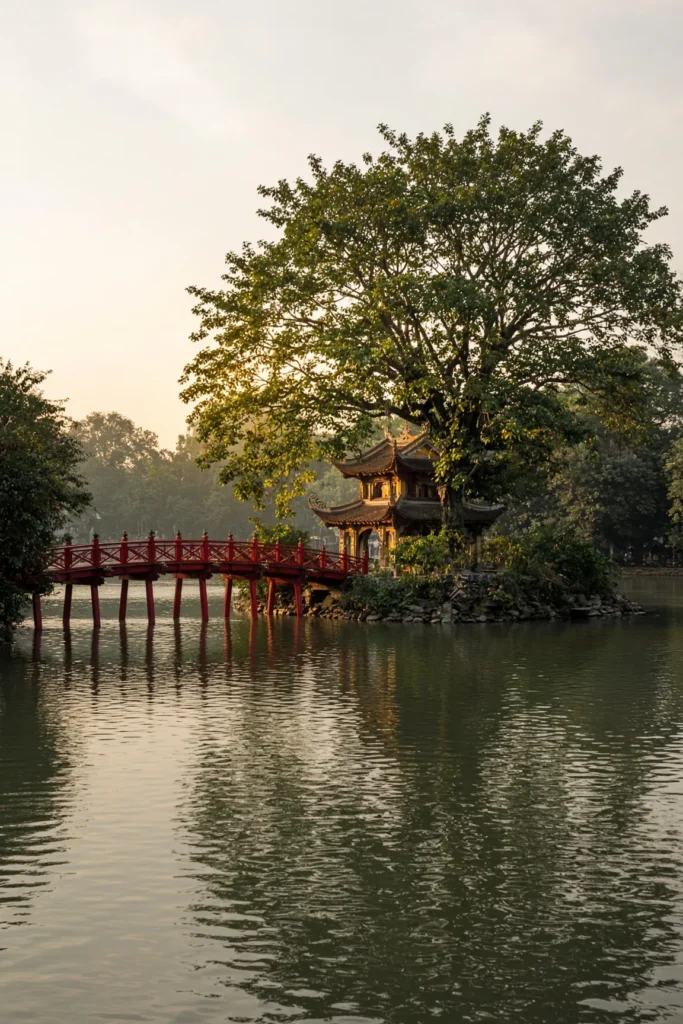
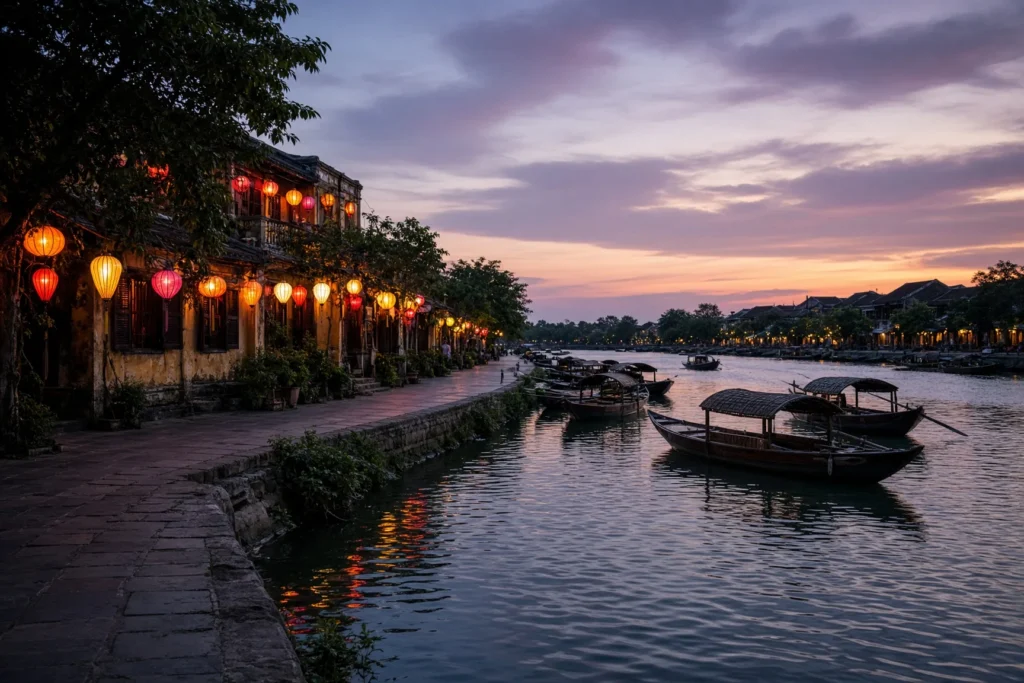
Set off on a gentle first walk to get your bearings. Pass the grand French-built Opera House, then dive into the Old Quarter, a maze of narrow streets where scooters, street food stalls and family shops jostle for space. Finish at Hoan Kiem Lake, the calm heart of the city, and cross the red Huc Bridge to Ngoc Son Temple on its little island.
Celebrate your arrival with a welcome dinner of authentic Vietnamese cooking at one of Hanoi’s best restaurants.
Meals: Dinner. Accommodation: Hotel in Hanoi.
A full day in Hanoi, a city that grew from marshland into a capital through a thousand years of wars, floods and changing dynasties, and still manages to charm at every turn.
Begin at the Ho Chi Minh Complex, where the granite Mausoleum stands near the yellow Presidential Palace and the modest stilt house in which the country’s founding father lived and worked. Close by, the One Pillar Pagoda rises from its pond like a lotus flower. Then stroll along Thanh Nien Street, the tree-lined causeway between West Lake and Truc Bach Lake, with a cool breeze off the water and a Ho Tay ice cream in hand, a treat locals have loved for decades.
Visit the Temple of Literature and Quoc Tu Giam, Vietnam’s first university, one of the oldest sites in the city and a national symbol of learning. Then choose the museum that suits you best: the Museum of Ethnology for the country’s many ethnic cultures, the National History Museum, the Vietnamese Women’s Museum or Hoa Lo Prison, the jail the French built and American pilots later nicknamed the Hanoi Hilton.
Stop for an egg coffee or egg chocolate, rich, creamy and only really found in Hanoi, before a water puppet show, an art form born in the flooded rice paddies of the Red River Delta.
Good to know: the Museum of Ethnology is closed on Mondays.
Meals: Breakfast. Accommodation: Hotel in Hanoi.
Leave the lowlands behind and climb into the mountains of the far north, to the old French hill station of Sapa.
Your guide and driver meet you in the hotel lobby after breakfast for the drive to Sapa, around six hours on one of Vietnam’s longest and most modern highways, with the mountains growing taller as you go.
Once you have checked in, walk down to Cat Cat Village, a Black Hmong community of wooden houses, small waterfalls and rice terraces just below the town. The rest of the afternoon is yours to explore Sapa or simply rest.
If you would like to go higher, the Fansipan Legend cable car glides over the Muong Hoa Valley towards the summit of Fansipan, at 3,143 metres the highest peak in Indochina. A climb that once took two days now takes around 15 minutes by cable car, followed by about 600 steps from the top station to the summit, where on a clear day you stand among nothing but mountains and cloud.
Good to know: the Fansipan cable car is optional and the ticket is not included. The summit is often in cloud, so a clear morning is the best time to go.
Meals: Breakfast. Accommodation: Hotel in Sapa.
A day on foot through the hill country around Sapa, from Black Hmong hamlets high on the mountainside to the river at the bottom of the valley.
After breakfast in the cool mountain air, drive a few kilometres out of Sapa towards Lao Cai, then walk up a hill to the remote village of Sa Seng, where Black Hmong families live much as they have for generations. Look out for old stone wall foundations along the way, the traces of villages once used only in certain seasons.
Enjoy a picnic lunch in Sa Seng, then trek uphill along the flank of Den Thang Mountain for about an hour to Hang Da Village, at around 1,800 metres, with the whole of Muong Hoa Valley spread out below.
Walk on at a steady pace before beginning the descent through Hau Chu Ngai village and on to Hong Den, a hamlet of a few houses scattered over a rocky outcrop with some of the finest views in the area. The trail continues down to Hau Thao village and Ta Van Bridge, where your driver is waiting to take you back to Sapa.
Good to know: this is a full day of walking with steep sections uphill and down. Good walking shoes are essential, and trails can be slippery after rain.
Meals: Breakfast, Picnic lunch. Accommodation: Hotel in Sapa.
Today the road climbs over one of the highest passes in Vietnam and drops into the wild valleys of the North West.
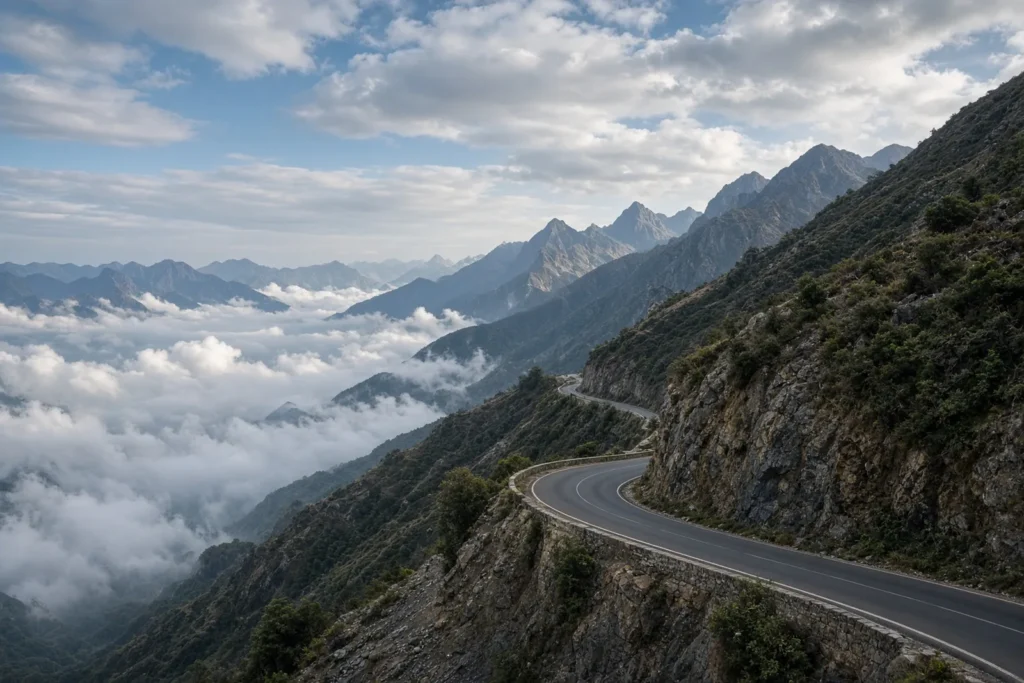
Spend the early morning at leisure in Sapa, then drive out to Silver Waterfall, which tumbles down the mountainside beside the road. Continue through Hoang Lien National Park to Tram Ton Pass, known as Heaven’s Gate, close to 2,000 metres high on the road between Sapa and Lai Chau. On a clear day, the views stretch all the way to the summit of Fansipan.
Wind down the far side of the pass to Lai Chau for lunch at a local restaurant.
Continue for nearly three hours to Muong Lay in Dien Bien Province, a town in a long, narrow valley where the Da River meets the Nam Na River and the Nam Lay Stream. It was rebuilt for the families who gave up their land to the Son La Hydropower Dam downstream, and today it is a gateway to some of the most colourful hill tribe communities in the country.
Good to know: the views from Tram Ton Pass depend on the weather and are often hidden by cloud.
Meals: Breakfast. Accommodation: Hotel in Muong Lay.
A drive through the mountains to Dien Bien Phu, the valley where, in 1954, a single battle changed the course of history.
The road south offers spectacular mountain scenery, and you arrive in Dien Bien Phu around midday. Today it is a quiet town of around 100,000 people and a trading hub for the province, but its name is known around the world. The French defeat here in 1954 ended the First Indochina War, brought about the withdrawal of France from Indochina and led to the division of Vietnam into North and South. It was the first time a colonial independence movement had grown from guerrilla bands into an army able to defeat a Western power in open battle, and it inspired independence movements across Africa and beyond.
After lunch, visit the Dien Bien Phu Victory Museum and the cemetery nearby, then climb A1 Hill, which saw some of the fiercest fighting of the battle. Finish at the French command bunker on the west bank of the river, where the battle ended.
Good to know: some sections of today’s road may be under construction or affected by landslides, especially in the rainy season.
Meals: Breakfast. Accommodation: Hotel in Dien Bien Phu.
A long and beautiful drive east, over a historic mountain pass and across the tea hills of Moc Chau to the green valley of Mai Chau.
Set off after breakfast. The most spectacular stretch of the day is Pha Din Pass, around 1,300 metres high, a key supply route during the First Indochina War. Its name is said to mean the place where heaven meets earth, and the views more than live up to it.
Stop for lunch in Son La, about 150 kilometres from Dien Bien Phu.
Continue east with stops along the way at villages of the Thai, Muong and Dao peoples, at an orchard and at a tea farm on the Moc Chau Plateau, one of the country’s finest tea-growing regions.
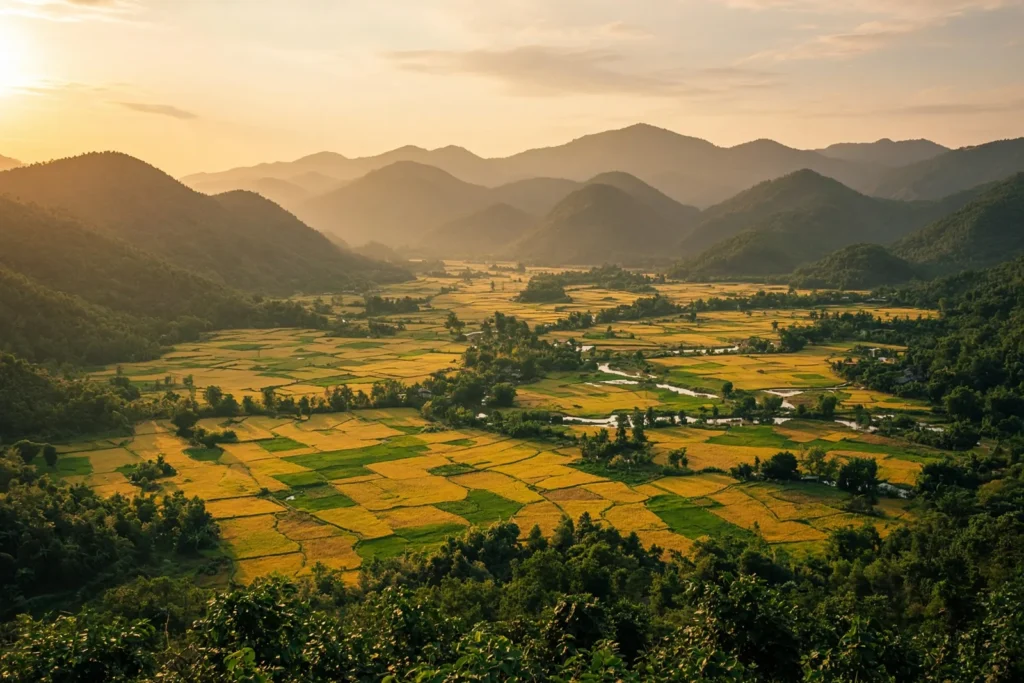
Arrive in Mai Chau, a small town surrounded by emerald rice fields, late in the afternoon and settle into your homestay in a Thai village, where dinner is shared with your host family.
Good to know: homestays are simple and comfortable, usually with mattresses and mosquito nets in a shared stilt house and a shared bathroom.
Meals: Breakfast. Accommodation: Homestay in Mai Chau.
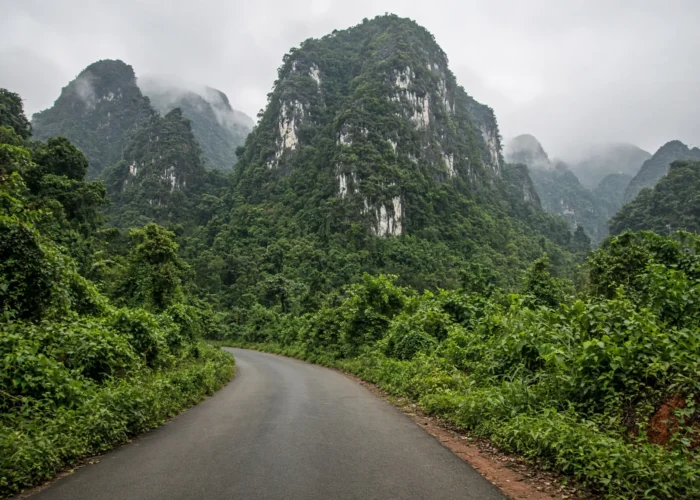
About 150 kilometres from Hanoi, the Mai Chau Valley is a patchwork of villages, rice fields and limestone cliffs, with bamboo groves, forest and waterfalls in the hills around it.
After breakfast, walk through the Thai villages near your homestay, then set out on an easy trek of two to four hours to Xa Linh and Pa Co, home to the Green Hmong. Along the way you may stop to chat with villagers out gathering firewood, working in the fields or tending their animals.
Enjoy a picnic lunch along the trail, with the valley below you.
Back in the valley, take a leisurely walk through the Thai villages of Van Mai, Mai Hich, Cum and Xam Khoe, where life still moves at the pace of the rice harvest.
Join your host family for dinner, followed by a performance of traditional Thai songs and dances.
Meals: Breakfast, Picnic lunch. Accommodation: Homestay in Mai Chau.
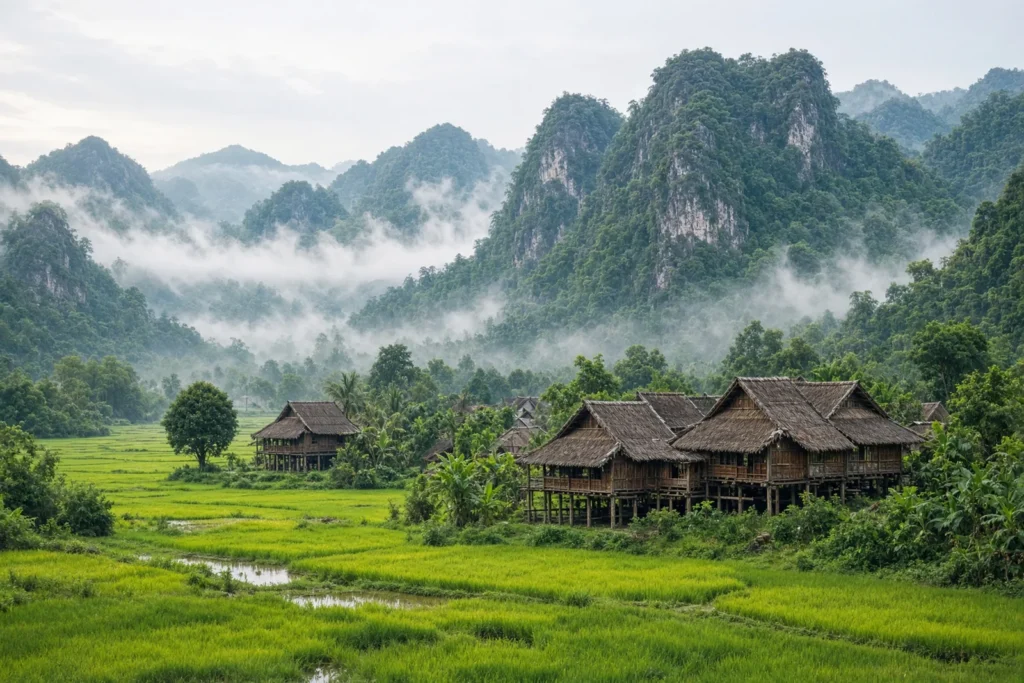
From the hills to the karsts: today you drive down to Ninh Binh, where limestone peaks rise straight out of the rice paddies and lazy rivers.
Leave Mai Chau after breakfast for a countryside drive, breaking the journey with a visit to Cuc Phuong National Park, a vast area of old forest and limestone hills.
Check in at your hotel in Tam Coc and take a few hours to relax.
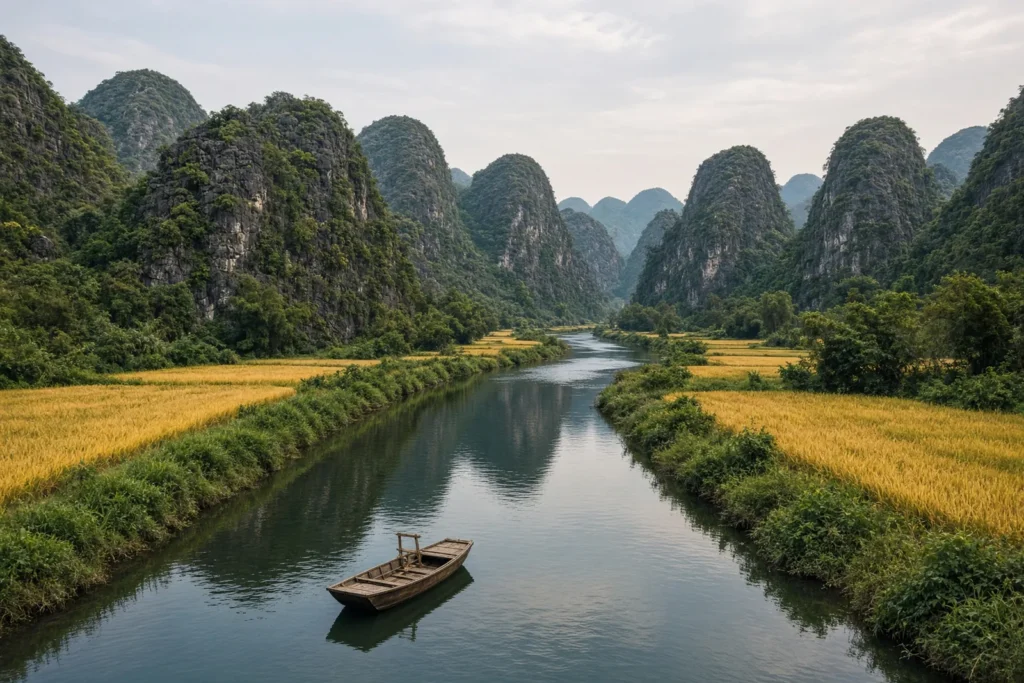
As the day cools, board a small sampan for a gentle ride along the Ngo Dong River, rowed by a local boatwoman, often with her feet. You glide beneath towering rock and through three low caves, the Tam Coc that gives the area its name, in a landscape known as Halong Bay on land. Afterwards, take a short walk through the limestone hills to Thai Vi Temple, dedicated to the kings of the Tran dynasty in the 13th century, a simple and peaceful place in the shadow of the cliffs.
Meals: Breakfast. Accommodation: Hotel in Tam Coc (Ninh Binh).
Through the Red River Delta to Halong Bay, a UNESCO World Heritage Site of limestone islands rising from emerald water, for the first of two nights on board.
After breakfast, your driver takes you through the countryside of the delta to the coast, a drive of about four hours.
Step aboard your cruise for a welcome briefing, then settle in over lunch as the boat sails out among the limestone islands of Bai Tu Long Bay, a quieter corner of the gulf.
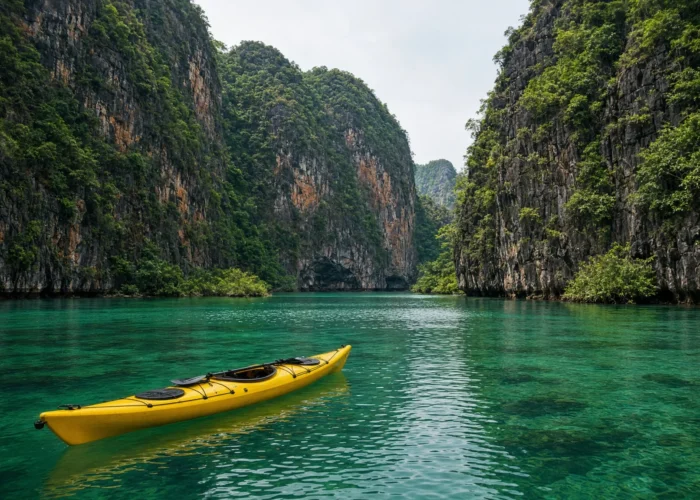
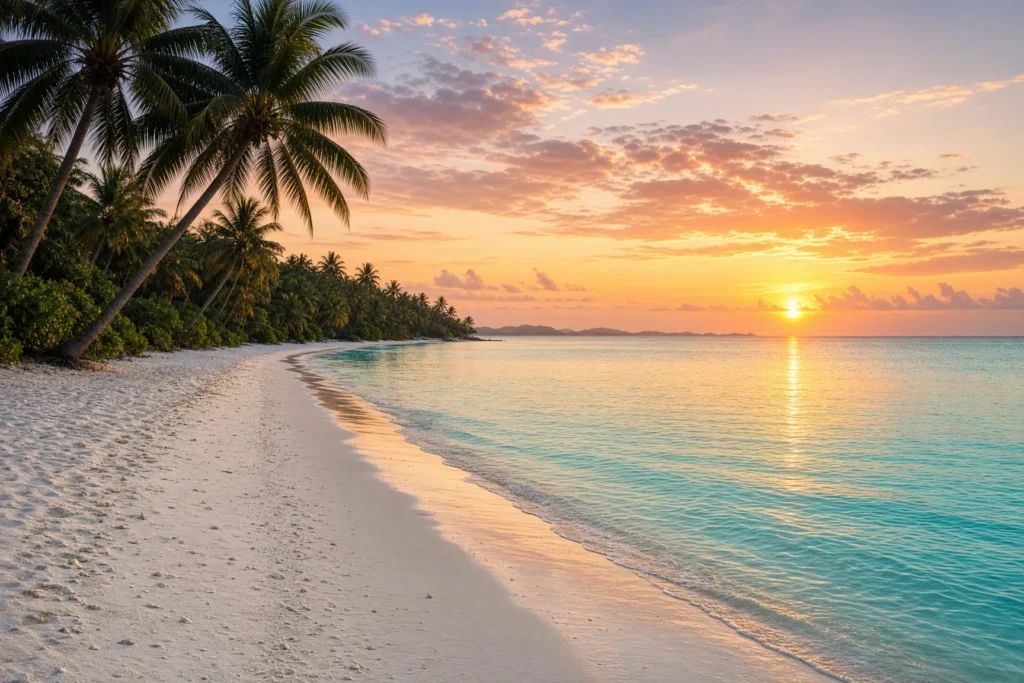
Choose how to spend the afternoon. Glide by bamboo rowing boat around Vung Vieng, one of the largest fishing villages in the bay, set in a sheltered lagoon ringed by mountains, to see how the fishing families live on the water. Or take the tender to Ban Chan Beach to swim, relax on the sand and paddle a kayak through the clear, still water.
Back on board, freshen up and watch the sun go down from the deck with a drink from the bar, then join the chef for a cooking class. After dinner, try your hand at squid fishing or simply relax under the stars as the boat lies at anchor in the Cong Do area.
Good to know: this is our standard 3-star cruise. Luxury cruises with different routes are available on request, and swimming and kayaking depend on the weather.
Meals: Breakfast, Lunch, Dinner. Accommodation: Overnight on the cruise.
A full day on the water, with a day boat into Lan Ha Bay, kayaking and a long, lazy afternoon on the beach.
Greet the day with tai chi on the sundeck, then enjoy breakfast as the sun rises over the islands.
Transfer to a day boat and cruise into Lan Ha Bay, where the islands are smaller, the water clearer and the boats fewer. Paddle by kayak around the Dark and Light Cave, slipping from shadow into sunlight as you pass beneath the rock, then return on board for lunch.
Cruise on to Three Peaches Beach, a little crescent of sand among the karsts, to swim, kayak or simply do nothing at all. Later, rejoin the main boat for dinner and a second night at anchor in the Cong Do area.
Good to know: swimming and kayaking depend on the weather.
Meals: Breakfast, Lunch, Dinner. Accommodation: Overnight on the cruise.
One last sunrise over the bay before the journey home.
Start the day with tai chi on the sundeck, then take in the seascape with a cup of tea or coffee and breakfast as the boat cruises towards Thien Canh Son Cave.
Explore Thien Canh Son, a cave of modest size and one of the less visited in Bai Tu Long Bay. Back on board, check out of your cabin and enjoy an early lunch as the boat heads back to the harbour.
Leave the boat at Halong wharf around midday, where your driver is waiting for the transfer to Hanoi’s Noi Bai International Airport and your flight home.
Meals: Breakfast, Early lunch.
Accommodation (3 star in average).
Breakfast & meals per mentioned in the itinerary.
Transportation by private car with A/C.
English-speaking guides.
Halong Bay cruise package (3 days/ 2 nights).
All entrance fees, performances, boat trips & excursions.
International flight.
Travel insurance.
Vietnam Visa.
Gratuities for tour guides/drivers.
Beverages & other personal expenses.
Indulge in a vivid, sensory panorama of our cherished destinations, carefully curated to ignite your wanderlust and craft a tantalizing prelude to your forthcoming journey!
Free quote, no obligation
Are you looking for an unforgettable experience in Southeast Asia? Look no further! Our company offers tours that will take you on a journey through the beautiful landscapes and rich cultures of this region. Join us for an adventure of a lifetime!

“The journey with Orient Charm and the Team was impeccably organized from dawn till dusk, turned our adventure into a breezy, carefree escapade.”
“...everything showcased online was even better in reality. Outstanding service, delectable food, splendid hotel rooms, and the highlight was the personnel.”
“Our travel maestro, Khunie, delivered a performance par excellence, presenting us with an exquisite welcome gift right on day one in the bustling metropolis of Hanoi.”
Tailor-made
Tailor-made
Tailor-made
Tailor-made
Tailor-made
Tailor-made
Tailor-made
Tailor-madeThree quick questions and we will match you with the right journeys.