When Traveling Is Caring ❤️

Vịnh Hạ LongNorthern Vietnam20.91° N · 107.18° E
Thousands of limestone islands rising from green water, a few hours from Hanoi. Here is how to choose your bay, your boat and how long to stay, plus the best time to go.
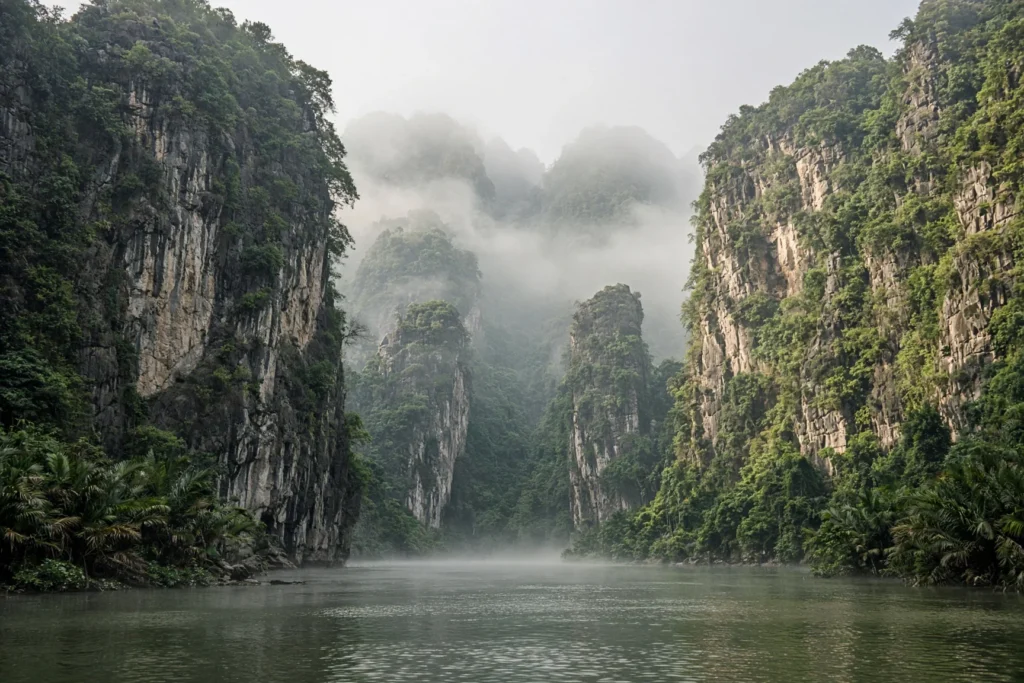
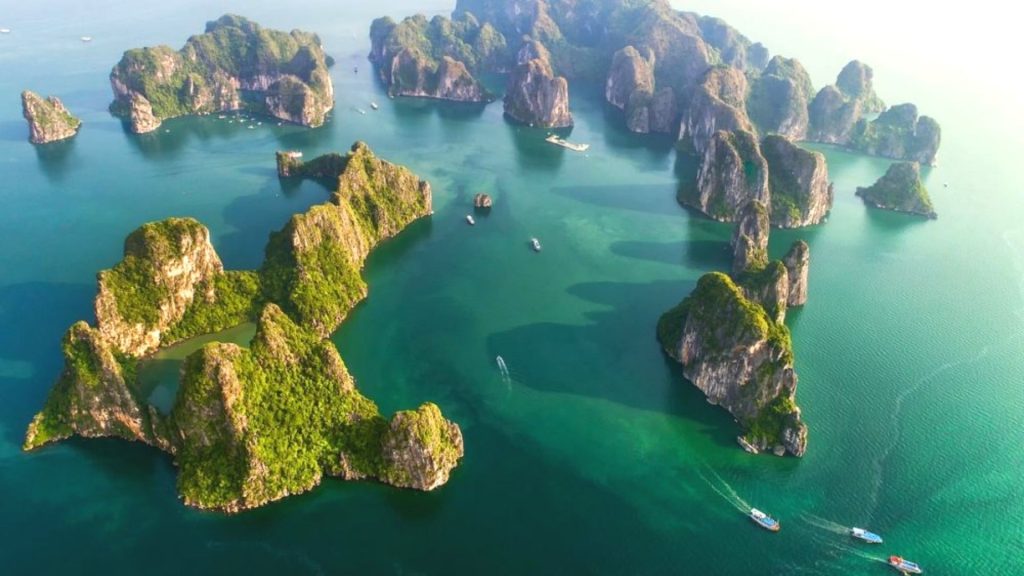
Ha Long means "descending dragon", and the legend says a dragon sent to defend Vietnam spat jewels into the sea that became the islands. Whatever you believe, the view is the same one that has drawn travellers for generations: roughly 1,600 limestone islands and islets rising sheer from calm green water, many still uninhabited and wrapped in forest. UNESCO first listed the bay in 1994 and recognised its geology again in 2000.
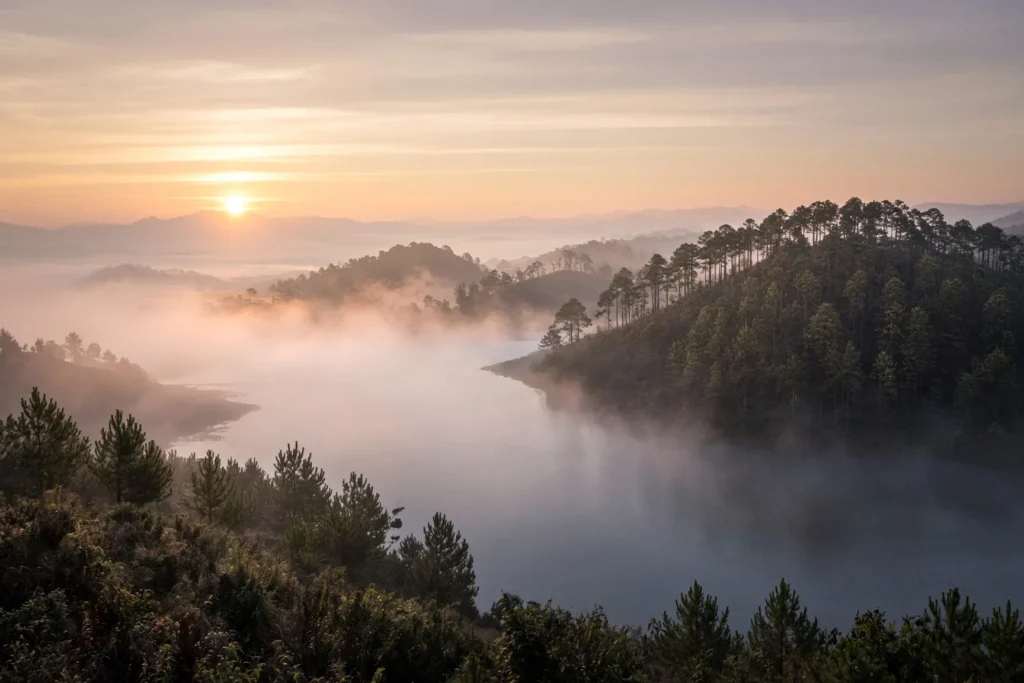
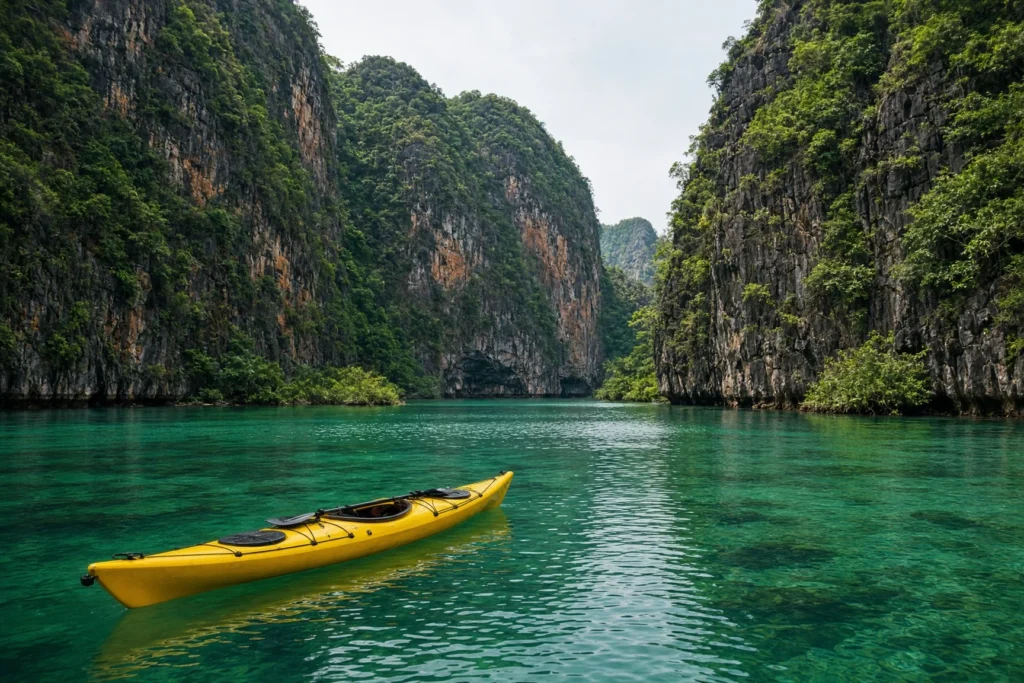
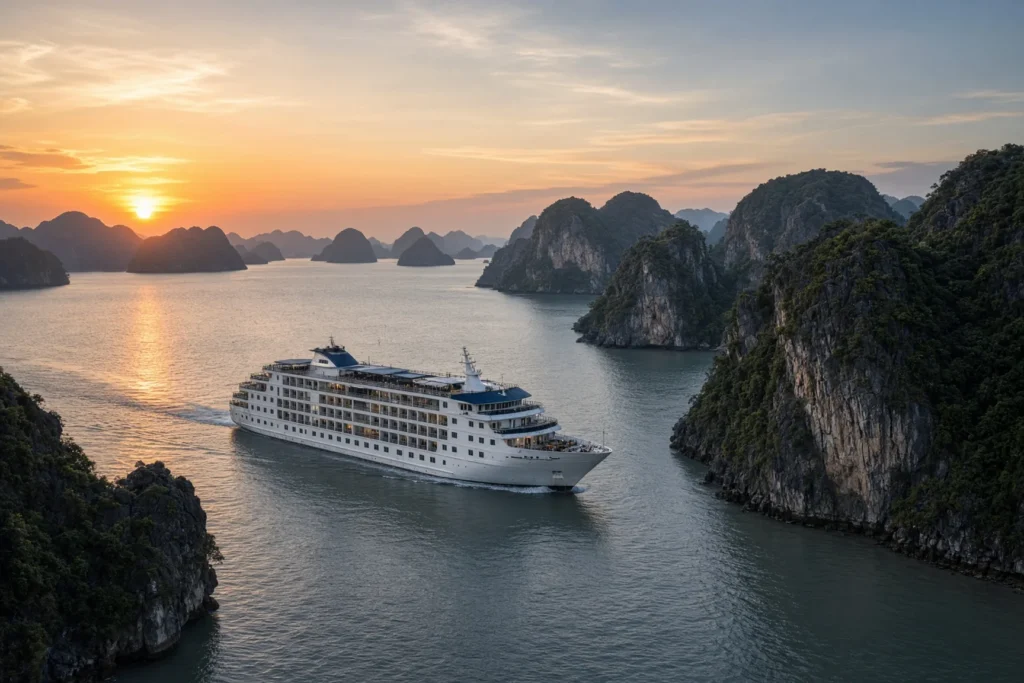
The way to see it is from the water. Most visitors board a wooden-style cruise boat at Tuan Chau or Bai Chay, sail out among the karsts, climb to a viewpoint, walk through a cave, paddle a kayak and spend the night at anchor. Waking up to mist lifting off the islands, with the engines off and a coffee in hand, is the moment most people remember.
Ha Long is also Vietnam's busiest bay, and that matters when you plan. Next door, Lan Ha Bay and Bai Tu Long Bay share the same scenery with fewer boats. This guide explains the honest differences, how long to stay, what to do on board and when the weather is kindest.
Every journey below is private and tailor-made: we help you choose the bay, the route and the boat, then take care of the drive from Hanoi in a private car.
We tailor every trip. Want more time in Ha Long Bay, a different pace or a mix of places? Design my trip →
"Ha Long Bay" is often used for the whole limestone seascape of the northeast, but there are three distinct areas, each with its own routes and character. Choose the area first, then the length of your trip. Here is our honest take.
The original UNESCO bay, with the best-known caves and viewpoints and the widest choice of boats. It is the busiest of the three, but the sights are famous for a reason.
South of Ha Long, off Cat Ba Island, with smaller bays, little sandy beaches and some of the best kayaking in the region. Fewer boats and a more relaxed feel.
Northeast of Ha Long, with the same karst scenery and far fewer boats. It has fewer famous sights and the choice of cruises is smaller, but on a good day you may have a bay almost to yourself.
A day trip works if time is tight, but you spend more time on the road than on the water. One night is the sweet spot for most travellers. Two nights lets the boat reach quieter corners and slows the pace right down. Staying on land in Bai Chay or Tuan Chau is fine for budget or seasickness worries, but you miss sunset and sunrise among the islands.
The experiences our travellers enjoy most, in order of what we would not miss.
Sleep at anchor surrounded by karsts, with sundeck time, a sunset drink and the quietest hours of the day. It is the single best way to experience the bay.
Surprise Cave is one of the largest in the bay, with huge chambers and lit rock formations. It is popular and well paved, so go early or late to avoid the crowds.
Climb a few hundred steps for the classic panorama over the bay and its boats, then cool off on the small beach below. Sunset visits are the most crowded.
Paddle through a low limestone arch into an enclosed lagoon where monkeys are sometimes seen on the cliffs. Bamboo rowing boats are offered if you would rather not paddle.
Two neighbouring caves near the harbour with dramatic formations and colourful lighting. Often included on day trips, as they are close to the piers.
Visit communities that have lived on the water for generations, usually by bamboo boat. Many families have moved ashore in recent years, so ask what you will actually see.
Most overnight boats offer a gentle tai chi session at dawn. Even if you skip the exercise, get up for the soft light and stillness on the water.
Many cruises teach you to roll fresh spring rolls or make a simple Vietnamese dish. Light and fun, and a good way to meet the crew.
If you stay on land, try squid, clams and grilled fish at the seafood restaurants of Ha Long. Choose busy places where locals are eating.
A striking modern building on the Ha Long waterfront covering the region's history, geology and coal mining heritage. Worth an hour on a rainy day.
In the warmer months many cruises stop for a swim in a quiet bay. The water is calm, though not always as clear as in the south.
Plan your private, tailor-made Vietnam trip for 2027 now and get $100 off. Tell us your travel dream and we will design it with you.
Customise My TripLocal specialities worth seeking out, and when the locals eat them. Your guide will know the best places to try each one.
Add a food experience →Most travellers come by road from Hanoi on the expressway, arriving in time for a midday boarding. Van Don International Airport has some domestic flights and is about an hour from the piers. Ninh Binh is about 3 hours away by road, so the two pair well.
Your floating hotel and transport around the islands, with meals and excursions on board.
Best for: Overnight staysSingle or double kayaks are offered on most cruises for paddling into lagoons and under arches.
Best for: Exploring up closeLocal rowers take you through caves and floating villages at a gentle pace.
Best for: Relaxed visitsTakes you between Hanoi, the piers and Ninh Binh.
Best for: TransfersPlaces that pair well with Ha Long Bay, with approximate travel times.
March to May and September to November usually bring the best mix of clear skies and comfortable temperatures. June to August is hot and good for swimming, but it is also storm season, and the authorities suspend sailings when a storm approaches. December to February is cool and often misty, which can be atmospheric but limits the views.
A general guide. Weather varies from year to year, and we plan each route around the season.
Quick answers from our local team. Anything else, just ask your travel specialist.
Ask us on WhatsAppYes, for most travellers. The scenery is among the most striking in Asia, and an overnight cruise is a relaxing way to see it. The main caveat is crowds on the classic routes, so many travellers now choose Lan Ha or Bai Tu Long for a quieter experience of the same landscape.
It can work if you only have one day, but you will spend around five hours on the road and about four on the water, mostly on the busiest routes. If you can spare one night, you get sunset, sunrise and quieter bays, which is when the place feels special.
One night suits most itineraries and covers the main highlights. Two nights lets the boat reach quieter corners, adds more kayaking or a beach stop, and makes the trip far less rushed. Choose two if relaxing on the water is a highlight for you.
They share the same limestone scenery and sit side by side. Ha Long has the famous caves and the most boats. Lan Ha, off Cat Ba Island, is quieter, with small beaches and better kayaking. Since 2023 both are part of the same UNESCO World Heritage listing.
March to May and September to November usually offer the best weather. Summer is hot and good for swimming but brings the risk of storms. Winter is cool and often misty. Cruises run all year except when sailings are suspended for bad weather.
By road, about 2.5 hours on the expressway to the piers at Tuan Chau or Bai Chay. We arrange a private car with driver so you can leave at a comfortable time and stop in Ninh Binh or Hai Phong on the way if you like.
When a storm is forecast the authorities suspend sailings for safety, sometimes at short notice. Cruise operators then usually reschedule or offer an alternative. We keep an eye on the forecast in storm season and help rework your plans if the bay is closed.
Yes. Children usually love the caves, kayaking and sleeping on a boat. Choose a cruise with family cabins, keep an eye on little ones on deck, and consider one night rather than two for younger children.
Tell us what you have in mind and a local travel specialist will design a private itinerary around you. Free, with no obligation.
Three quick questions and we will match you with the right journeys.