When Traveling Is Caring ❤️

กรุงเทพฯCentral Thailand13.75° N · 100.50° E
Gilded temples, a working river and some of the best street food on earth, all in one loud, generous capital. Here is what to see, what to eat, where to stay and how to get around.
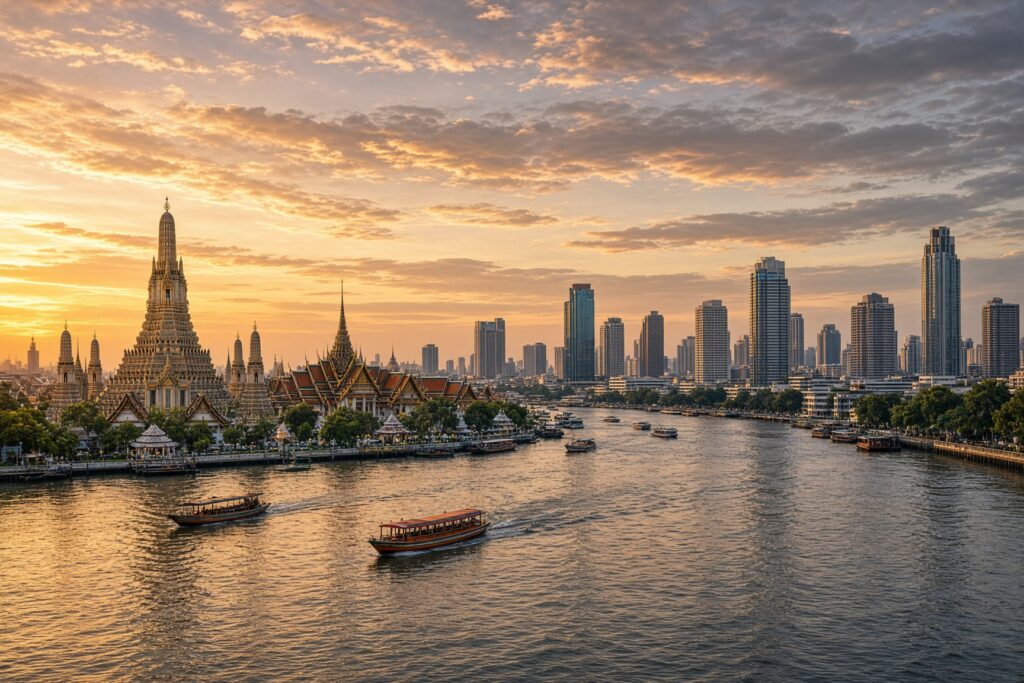
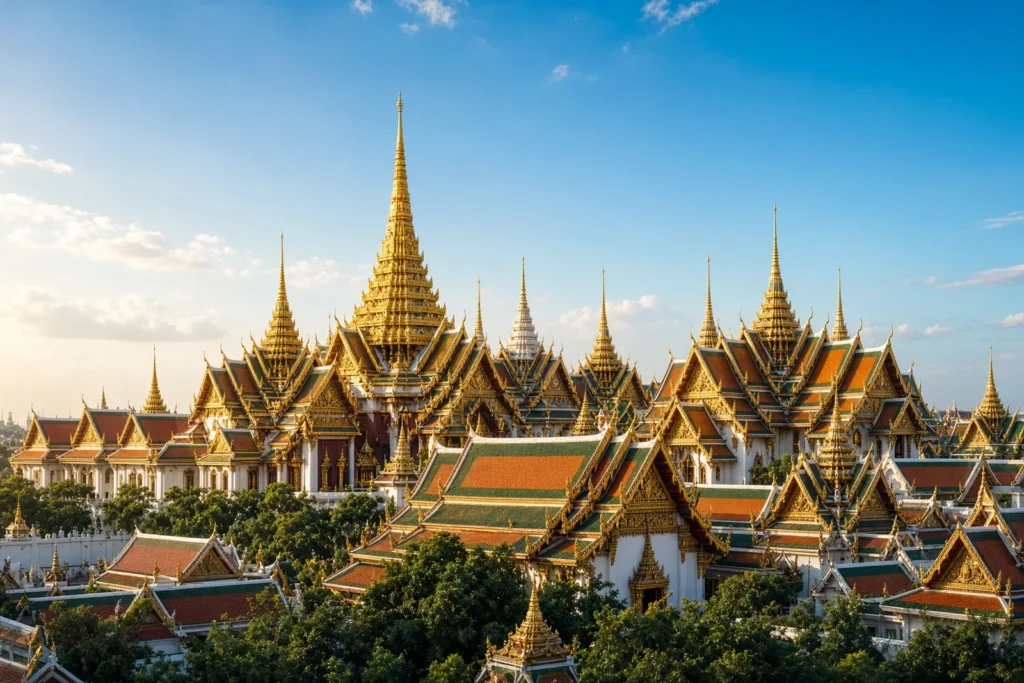
Bangkok became the capital of Siam in 1782, when King Rama I built a new royal city on the east bank of the Chao Phraya River. The Grand Palace and Wat Phra Kaew still stand at the heart of that old island of Rattanakosin, with Wat Pho next door and Wat Arun rising on the opposite bank. Thais call the city Krung Thep, the City of Angels, and the old town still feels like the ceremonial centre of the kingdom.
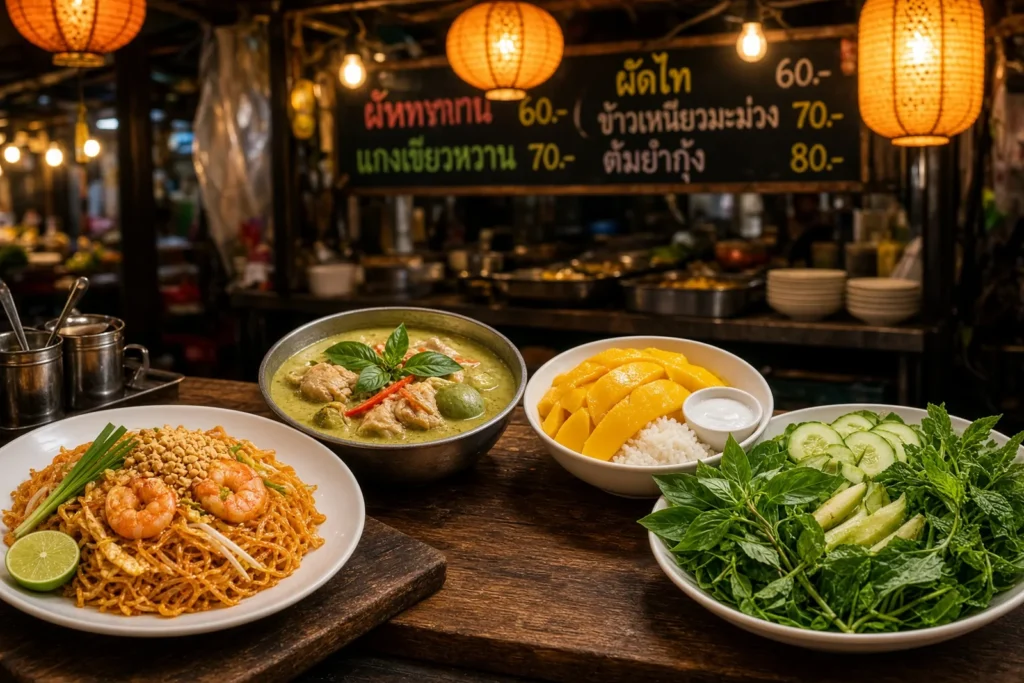
Around that historic core sprawls one of the biggest cities in Asia: glass towers along Sukhumvit and Silom, the lanes of Chinatown, canals on the Thonburi side where life still happens on the water, and markets that run from dawn flower stalls to giant weekend bazaars. Food is the thread that ties it all together. You can eat superbly from a street cart, a shophouse or a market stall at almost any hour.
Bangkok can be hot, noisy and overwhelming at first, but it rewards a little planning. Use the river and the trains instead of sitting in traffic, see the big temples early in the morning, and leave the evenings for Chinatown and the food. Most travellers spend three or four nights here before heading north to Chiang Mai or south to the islands.
Every journey below is private and tailor-made, so you can spend longer in Bangkok, add a day trip, or head straight on to the north or the beaches.
We tailor every trip. Want more time in Bangkok, a different pace or a mix of places? Design my trip →
How our local guides would spend one full day in the capital, keeping to the river to beat the heat and the traffic.
Mountains of marigolds and jasmine garlands being threaded for temple offerings, at their freshest early in the morning.
Arrive at opening time to see the Emerald Buddha and the palace courtyards before the tour groups.
The giant golden Buddha, quiet cloisters lined with statues, and a traditional Thai massage if your feet need it.
Small, intensely flavoured bowls of noodle soup, ordered several at a time the way locals do.
Wooden houses on stilts, small temples and canal-side life on the quieter side of the river.
Cross on the ferry to climb the steep central prang, then watch the temple glow as the light fades.
Yaowarat Road fills with neon signs and food stalls: seafood, noodles, dumplings and sweet desserts.
Finish high above the river on Silom or Sathorn, with the lights of the city spread out below.
Bangkok's traffic can turn a short distance into a long, hot hour. The secret is to match each part of the day to the right transport. Here is how our team moves around the city.
The river links the Grand Palace, Wat Pho, Wat Arun, Chinatown and the riverside hotels. The orange-flag express boats are a local commuter service, and small cross-river ferries connect the two banks.
Air-conditioned elevated and underground lines run above and below the jams, covering Sukhumvit, Silom, Siam and Chatuchak. They meet the river at Saphan Taksin, and the MRT now reaches Chinatown.
Useful late at night, in the rain, or for places away from the lines. Ask meter taxis to use the meter, and expect slow progress between about 7 and 9 in the morning and 4 and 8 in the evening.
A tuk-tuk ride is noisy, hot and memorable, so agree the fare first and ignore offers of shopping stops. The Saen Saep canal boat is a fast, splashy local shortcut through the city centre.
The experiences our travellers enjoy most, in order of what we would not miss.
The former royal residence and Thailand's most sacred temple, home to the Emerald Buddha. Go at opening time, and cover shoulders and knees, as the dress code is strictly checked.
A 46 metre golden Buddha with mother-of-pearl feet, plus hundreds of statues in quiet cloisters. Wat Pho is also a famous centre for traditional Thai massage.
A tall riverside prang covered in pieces of coloured porcelain, just across the river from Wat Pho. Climb its steep steps, then see it lit up after dark from the opposite bank.
Explore the khlongs of Thonburi, where wooden houses, small temples and gardens line the water. It is the best way to see how Bangkok once lived.
By day, gold shops, herbal stores and shrines; after dark, one of Asia's great street food streets. Wander into the side lanes and the older Talat Noi neighbourhood nearby.
A huge weekend market of clothes, crafts, homewares, plants and snacks. Go early on Saturday or Sunday before the heat builds, and agree on a meeting point, as it is easy to get lost.
Traditional Thai teak houses collected by the American who revived Thai silk after the Second World War, then disappeared in Malaysia in 1967. A calm, green stop in the city centre.
Climb a spiral path past bells and small shrines to a gilded chedi with wide views over the old town. Quieter than the riverside temples and lovely in the late afternoon.
Taste dishes you might never order alone, from crab omelettes to herbal soups, with someone who knows which stalls are worth the queue.
Bangkok's rooftop bars on Silom, Sathorn and the riverside are a classic way to end the day. Check the dress code first; many do not allow shorts or flip-flops.
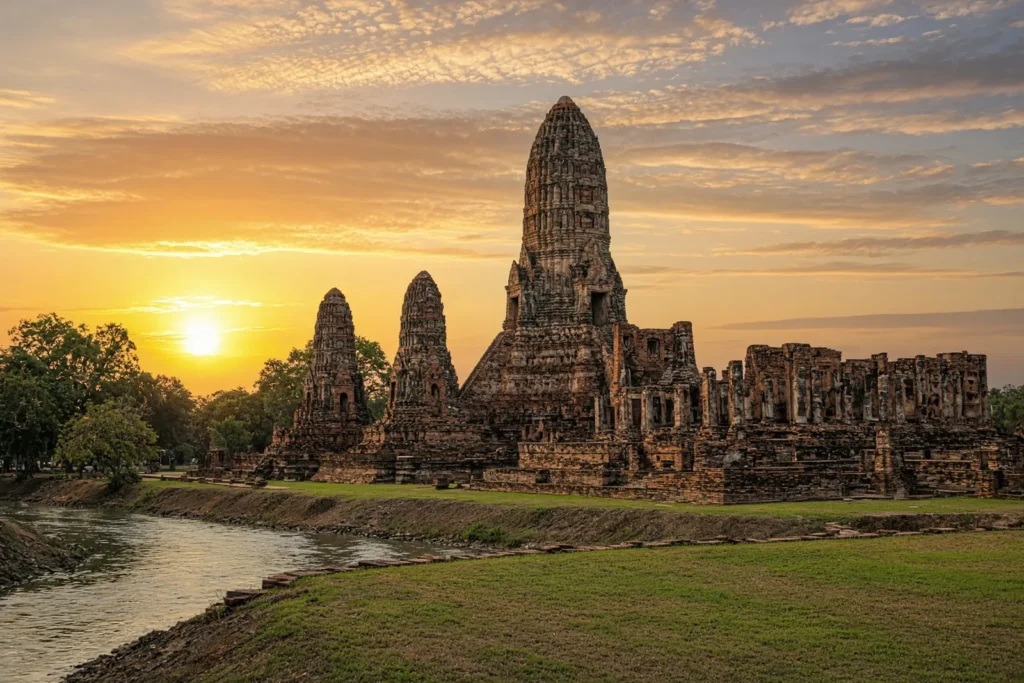
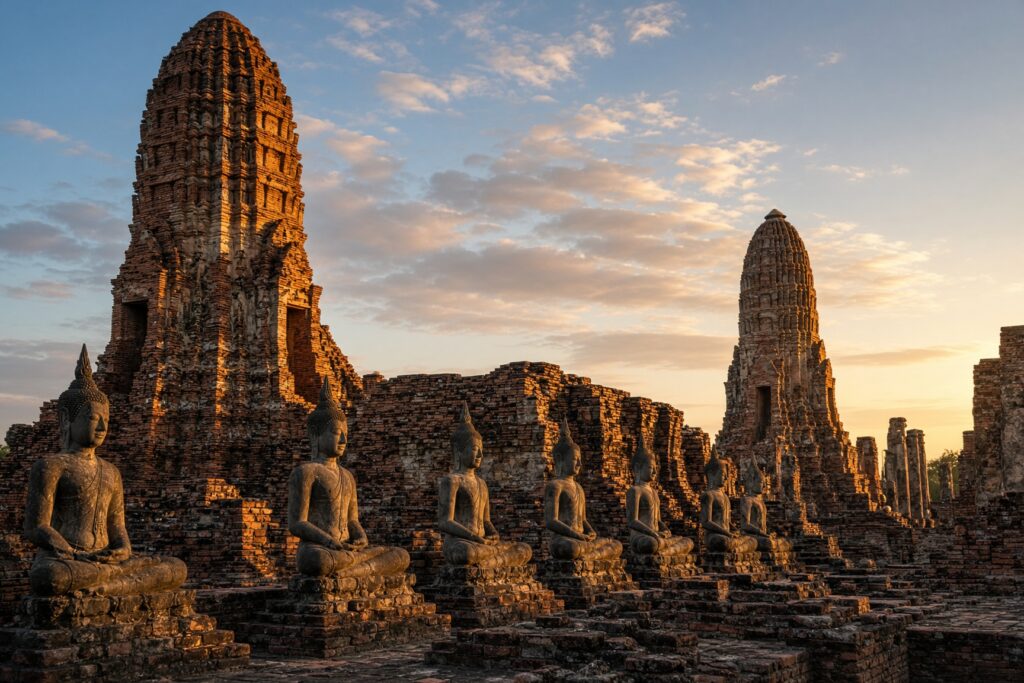
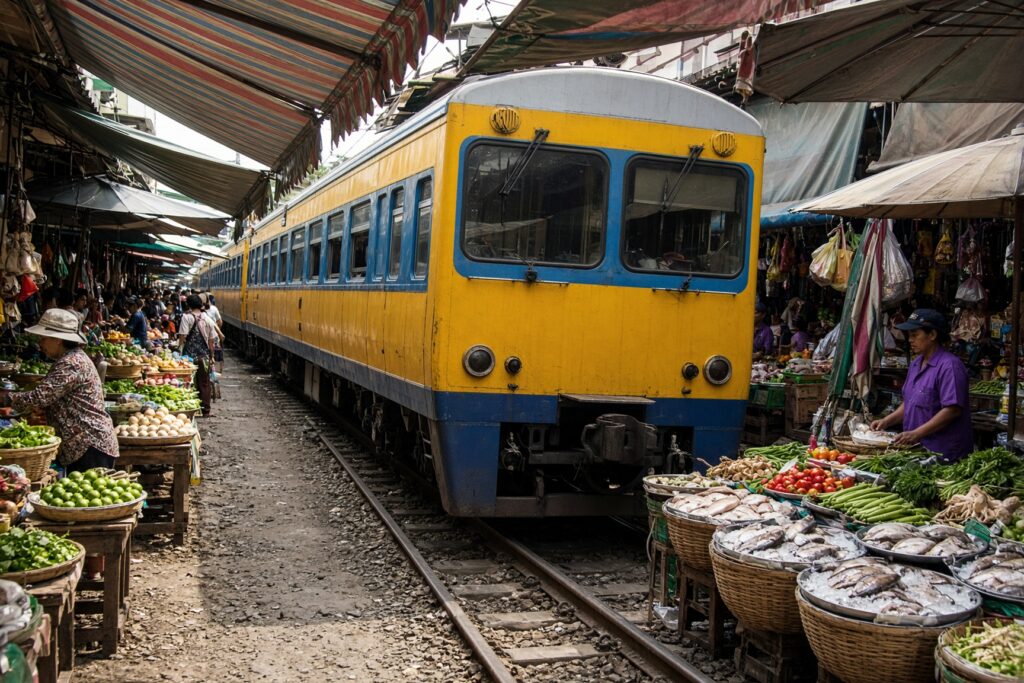
Ayutthaya's temple ruins make the best day trip. The Damnoen Saduak floating market and the Maeklong railway market are fun, but go knowing they are very touristy.
Watching Thailand's national sport live, with the music, the rituals and the crowd, is an intense and very local evening out.
Plan your private, tailor-made Thailand trip for 2027 now and get $100 off. Tell us your travel dream and we will design it with you.
Customise My TripLocal specialities worth seeking out, and when the locals eat them. Your guide will know the best places to try each one.
Add a food experience →Each neighbourhood has its own rhythm. Pick the one that sounds like you, or let us surprise you.
Hotels along the Chao Phraya around Charoen Krung and the Thonburi bank, with boats to the temples and sunset views over the water.
Close to the Grand Palace, Wat Pho and the Golden Mount, with small boutique hotels and lively streets around Khao San Road nearby.
A long avenue of hotels, malls, restaurants and nightlife on the BTS line. Easy to get around, but far from the old town.
The business district, with green Lumphini Park, rooftop bars and both BTS and MRT stations. A good balance between the river and the modern city.
Tell us your style and our consultants will hand-pick a stay you would never find on your own.
A restored heritage house, a quiet lakeside villa or a family-run boutique: we match the hidden gem to you, and reveal it with your itinerary.
Ask for a surprise stayMost international flights land at Suvarnabhumi, east of the city, while many regional low-cost flights use Don Mueang to the north. Bangkok is also linked by train with Chiang Mai, Ayutthaya and the south, and by flights of about an hour to Chiang Mai, Phuket, Krabi, Siem Reap and Hanoi.
Express boats and ferries link the temples, Chinatown and riverside hotels.
Best for: Old townAir-conditioned trains that skip the traffic across the modern city.
Best for: Crossing townRide-hailing and metered taxis for door-to-door trips, best outside rush hour.
Best for: EveningsIncluded on our journeys for airport transfers and day trips out of the city.
Best for: Day tripsPlaces that pair well with Bangkok, with approximate travel times.
November to February is the most comfortable time, with drier weather and slightly cooler evenings. March to May is very hot. The rainy season runs from about June to October, usually with heavy afternoon downpours rather than all-day rain, and September and October tend to be the wettest months.
A general guide. Weather varies from year to year, and we plan each route around the season.
Quick answers from our local team. Anything else, just ask your travel specialist.
Ask us on WhatsAppThree nights is a good first visit: one day for the Grand Palace, Wat Pho and Wat Arun, one for Chinatown, the canals and a market, and one for a day trip to Ayutthaya. Four nights lets you slow down, which helps in the heat.
November to February is the most pleasant, with drier days and slightly cooler evenings. March to May is very hot, and June to October brings heavy afternoon showers. Bangkok works all year round if you plan indoor breaks in the middle of the day.
Cover your shoulders and knees: no sleeveless tops, shorts, short skirts or see-through clothes. Long trousers or a long skirt and a T-shirt with sleeves are fine. The dress code is checked at the gate, so it is easier to dress for it from the start.
Bangkok is generally safe and friendly. The common problems are scams rather than crime: strangers telling you the Grand Palace is closed today, tuk-tuk drivers offering cheap tours with gem shop stops, and taxis refusing the meter. Politely walk away and use Grab or the meter.
Use the Chao Phraya river boats for the old town and temples, and the BTS Skytrain and MRT for the modern city. Taxis and Grab are useful, but traffic is slow at rush hour. For day trips, a private car with driver saves a lot of time.
The riverside suits first visits and couples, the old town and Banglamphu suit temple lovers, Sukhumvit suits shopping and nightlife, and Silom and Sathorn offer a central, practical base. Your travel consultant will match the area to your style.
They are colourful and fun for photos, but the best-known ones, such as Damnoen Saduak, are now mainly for visitors and take a long drive. If you want canal life, a longtail boat through the Thonburi khlongs is closer and more authentic.
The Airport Rail Link runs to Phaya Thai, where it meets the BTS. By car it takes from about 45 minutes to over an hour depending on traffic. Your travel consultant will arrange a private transfer with a name-sign welcome as part of your journey.
Tell us what you have in mind and a local travel specialist will design a private itinerary around you. Free, with no obligation.
Three quick questions and we will match you with the right journeys.