Explore Southeast Asia: Vietnam, Myanmar, Cambodia And Laos
- Hotels
- Local guide
- Transfers
- Meals

ရန်ကုန်Southern Myanmar16.80° N · 96.16° E
A golden stupa on a hill, faded colonial streets and a tea shop on every corner. Here is everything you need to know about Myanmar's largest city before you go.
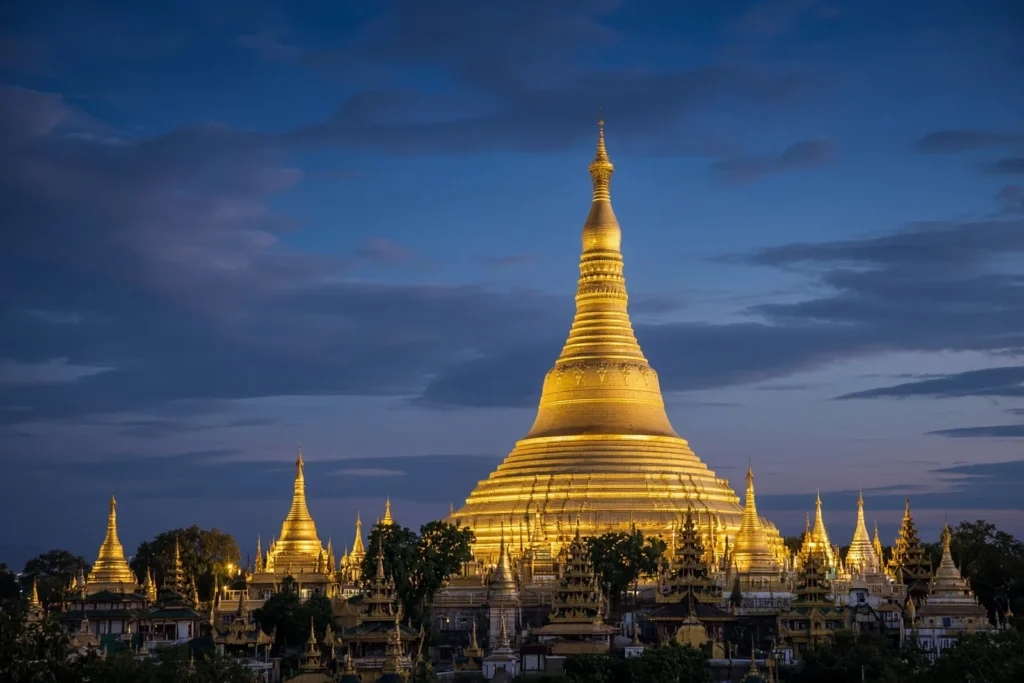
Yangon is Myanmar's largest city and, for most visitors, the first and last stop on a journey through the country. It grew up around the Shwedagon Pagoda, the most sacred Buddhist site in Myanmar, whose gilded stupa still rises over the city from its hilltop. Local tradition says the pagoda enshrines relics of the Buddha and dates back more than 2,500 years.
Down by the river, the downtown grid was laid out in the British colonial era, and it keeps an unusual collection of grand old buildings, some restored and many slowly fading. Between them runs the everyday life of the city: street stalls, mosques, Hindu and Chinese temples, churches, markets and the tea shops where people meet over sweet milky tea and snacks.
Two nights is enough for most travellers to see the Shwedagon at sunset, walk the downtown streets, ride a stretch of the Circle Line train and eat well. This guide covers what to see, what to eat, where to stay and how to get around, along with honest advice on traffic and heat.
Every journey below is private and tailor-made, so you can spend a little longer in Yangon or use it as a short gateway to Bagan, Mandalay and Inle Lake.
We tailor every trip. Want more time in Yangon, a different pace or a mix of places? Design my trip →
How our local guides would spend one full day in the city, from a quiet lakeside morning to the Shwedagon after dark.
Walk the lakeside boardwalk while it is cool, with the Shwedagon glinting in the distance.
Myanmar's favourite breakfast, a fish and rice noodle soup, eaten at a busy street stall.
Strand Road, the old banks and courts, and the streets around Sule Pagoda with a guide who knows the stories.
Browse longyi cloth, lacquerware and jade under the high colonial roof. It is usually closed on Mondays.
Rice noodles in a light tomato and meat sauce, with pickles on the side.
A huge reclining Buddha with painted eyes, then sweet tea and snacks on low stools.
Arrive before sunset and stay as the lamps are lit and the gold glows against the evening sky.
Street barbecue and evening stalls in the busy streets of Chinatown.
The Shwedagon is the reason many people come to Yangon, and a little planning makes a big difference. Here is how we would do it.
Arrive about an hour before sunset. The marble is cooler underfoot, the stupa turns gold then glows under lights, and the terrace fills with families.
At dawn the platform is calm, with monks and devotees sweeping and praying. A good choice if you dislike crowds or heat.
Shoulders and knees must be covered, and shoes and socks come off at the entrance. Sarongs or longyi are available if you need them.
Around the stupa are planetary posts for each day of the week. A guide can find yours and explain the rituals, which brings the whole place to life.
The experiences our travellers enjoy most, in order of what we would not miss.
Myanmar's most sacred site, a gilded stupa nearly 100 metres tall surrounded by shrines and pavilions. Best in the late afternoon into the evening.
The golden pagoda at the heart of the colonial grid, ringed by traffic. Start here for a walk past City Hall, the old courts and Maha Bandula Garden.
Grand old banks, offices and shipping company buildings along the river, some restored and many fading. A guide brings the stories out.
A huge, serene reclining Buddha with painted eyes and detailed soles, under a simple shed. Easy to combine with the Shwedagon.
A riverside pagoda with an unusual hollow interior, where you walk through a mirrored, gilded maze around a relic chamber.
A slow local train loop around the city through suburbs, markets and rice fields. Ride a section rather than the full three hours.
A colonial-era covered market for longyi cloth, lacquerware, jade, puppets and gems. Usually closed on Mondays.
Sweet milky tea, samosas, paratha and noodles at a busy tea shop: the best way to see everyday Yangon.
In the evening the streets fill with barbecue stalls, skewers and cold drinks. Lively, smoky and very local.
A wooden boardwalk around a large lake, with views of the Shwedagon and the golden replica royal barge on the water.
A short crossing of the Yangon River to a slower, rural township. The ferry itself is a lively slice of local life.
A relaxed lakeside walk in the north of the city, popular with students and couples in the evening.
Plan your private, tailor-made Myanmar trip for 2027 now and get $100 off. Tell us your travel dream and we will design it with you.
Customise My TripLocal specialities worth seeking out, and when the locals eat them. Your guide will know the best places to try each one.
Add a food experience →Each neighbourhood has its own rhythm. Pick the one that sounds like you, or let us surprise you.
Close to Sule Pagoda, the colonial buildings, the market and the river. Busy, noisy and full of character.
Hotels near the pagoda and the lake, a short drive from downtown, with calmer streets.
Quiet residential streets and lakeside hotels in the north, closer to the airport.
Tell us your style and our consultants will hand-pick a stay you would never find on your own.
A restored heritage house, a quiet lakeside villa or a family-run boutique: we match the hidden gem to you, and reveal it with your itinerary.
Ask for a surprise stayYangon International Airport is the main international gateway to Myanmar, with flights from several Asian hubs. Domestic flights connect it with Bagan, Mandalay, Heho for Inle Lake and Thandwe for Ngapali. Traffic is the main variable, so leave plenty of time.
Downtown's grid of streets is best explored slowly on foot, early or late in the day.
Best for: DowntownApps such as Grab offer cars around the city at fixed prices.
Best for: Short hopsA slow local train around the city, more an experience than transport.
Best for: Local lifeIncluded on our journeys, for the Shwedagon, the airport and sights further out.
Best for: SightseeingPlaces that pair well with Yangon, with approximate travel times.
November to February is the best time, dry and relatively cool. March to May gets very hot before the rains. The monsoon from June to October brings heavy daily downpours, though the city is green and the Shwedagon still beautiful between showers.
A general guide. Weather varies from year to year, and we plan each route around the season.
Quick answers from our local team. Anything else, just ask your travel specialist.
Ask us on WhatsAppTwo nights is the sweet spot: one afternoon and evening for the Shwedagon, and one full day for downtown, the market, a tea shop and a short ride on the Circle Line. Most journeys then fly on to Bagan, Mandalay or Inle Lake.
Late afternoon into the evening is our favourite: the marble is cooler, the gold glows at sunset and the terrace fills with families. Early morning is the quietest time if you prefer calm and cool air.
Cover your shoulders and knees, and remove shoes and socks at the entrance. Loose, light clothing and slip-on sandals are the easiest choice. A longyi can be provided if you need one.
Mohinga for breakfast, tea leaf salad, Shan noodles, coconut chicken noodles and a Myanmar curry with all its side dishes. Spend at least one morning in a busy tea shop with sweet tea and samosas.
Downtown suits first visits and walkers, the area around the Shwedagon and Kandawgyi Lake is central but calmer, and Inya Lake suits families and early flights. Your travel consultant will match the area to your plans.
Yes, for a slice of local life, but ride a section of an hour or so rather than the full loop of about three hours. The trains are slow and basic, which is part of the experience.
Travel advice for Myanmar changes often, and many governments advise against travel to some or all of the country. Check your government's latest advice and your travel insurance before planning. We only suggest routes our local team considers safe at the time, and we will tell you plainly if a place is not a good idea right now.
About 45 minutes in light traffic and well over an hour at busy times. Your travel consultant will arrange a private transfer with a name-sign welcome as part of your journey.
Tell us what you have in mind and a local travel specialist will design a private itinerary around you. Free, with no obligation.
Three quick questions and we will match you with the right journeys.