When Traveling Is Caring ❤️

HuếCentral Vietnam16.46° N · 107.59° E
Vietnam's last imperial capital, with a walled citadel, royal tombs in the hills above the Perfume River and some of the country's most refined food. Here is how to see it well and what to know before you go.
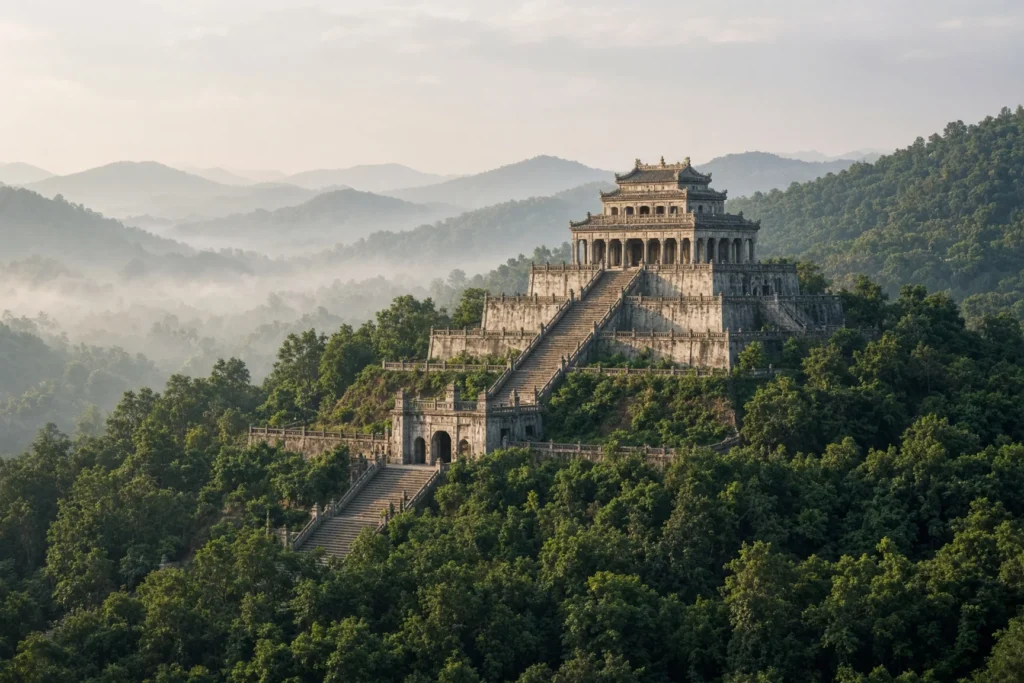
From 1802 to 1945, Hue was the seat of the Nguyen dynasty, the last royal family to rule Vietnam. Thirteen emperors reigned from here, building a vast walled citadel on the north bank of the Perfume River and, inside it, an Imperial City and a Forbidden Purple City modelled on the courts of China. In 1993 the Complex of Hue Monuments became Vietnam's first UNESCO World Heritage site.
Much of the citadel was damaged in the wars of the 20th century, above all in 1968, and today it is a mix of restored halls, gateways and quiet lawns where palaces once stood. In the pine-covered hills to the south lie the tombs the emperors designed for themselves, each a landscaped garden of lakes, pavilions and courtyards. Hue is gentler and slower than Hanoi or Saigon, a city of students, pagodas, boats and river views.
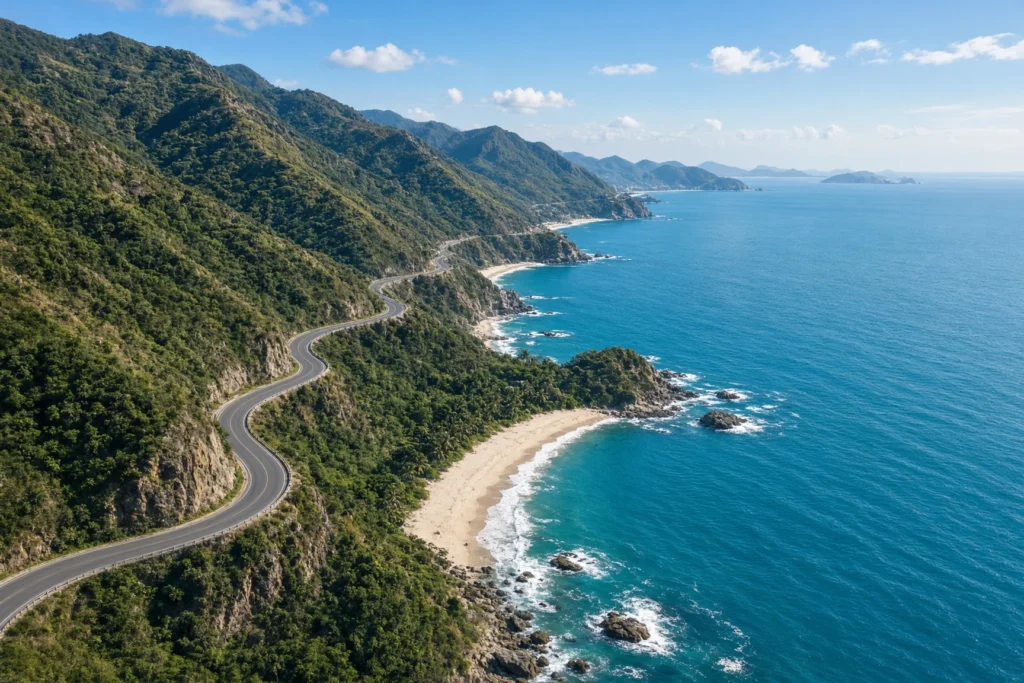
Two nights is enough for most travellers: one day for the citadel and Thien Mu Pagoda, one for the tombs and the countryside. Add a day for the DMZ if you are interested in the war years. Then drive over the Hai Van Pass to Hoi An, one of the most scenic roads in Vietnam. This guide covers the sights, the food, where to stay and how to choose your tombs.
Every journey below is private and tailor-made, so you can spend a slow day among the tombs, add the DMZ or continue over the Hai Van Pass to Hoi An.
We tailor every trip. Want more time in Hue, a different pace or a mix of places? Design my trip →
How our local guides would spend one full day in the old capital, from the citadel at opening time to dinner by the river.
Start the way Hue does, with a spicy, lemongrass-scented bowl of beef noodle soup.
Walk through the Ngo Mon Gate to the Thai Hoa Palace, the Forbidden Purple City and the restored galleries while it is still cool.
A lively look at the city's main market by the river, piled with conical hats, dried goods and snacks.
Banh beo, banh nam and banh loc, the small steamed rice cakes Hue is famous for, then a crispy banh khoai.
Two emperors, two very different visions: a calm garden of lakes and courtyards, then an ornate hillside monument.
The pagoda founded in 1601, with its seven-storey tower on a bluff above the river, quiet in the late afternoon.
Drift back towards the city on a dragon boat as the light turns gold over the water.
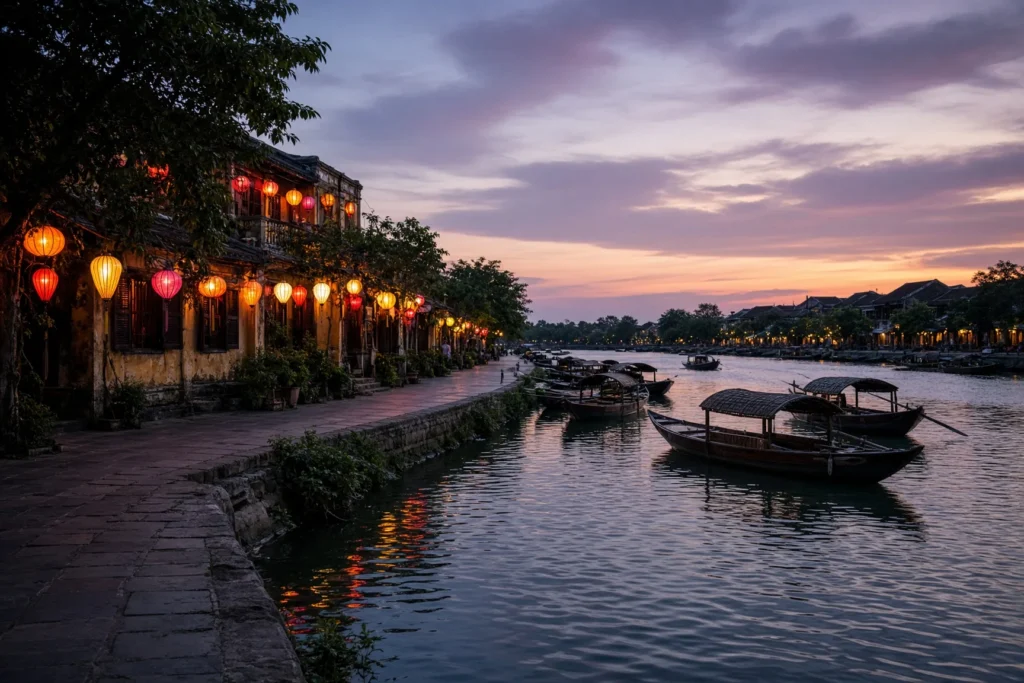
Try com hen or nem lui for dinner, then stroll the riverbank and the lit-up Truong Tien Bridge.
Several emperors' tombs are scattered through the hills around Hue, and few travellers need to see them all. Here is how the big three compare, and when it is worth going further.
Laid out along a single axis of gates, courtyards, pavilions and lakes, built in the early 1840s, it is the most balanced and peaceful of the tombs. It sits about 12 km south of the city.
Emperor Tu Duc used this pine-shaded park of lotus lakes and pavilions as a retreat in his lifetime, writing poetry by the water. It is the closest of the big three to the city.
Begun in 1920 for one of the last emperors, it climbs a hillside in weathered concrete and ends in a hall covered in mosaics of porcelain and glass. Smaller, steeper and more ornate than the others, and the busiest.
The founder of the dynasty lies in a remote, rural setting that sees few visitors. Worth it if you have a second day and like having places to yourself.
The experiences our travellers enjoy most, in order of what we would not miss.
The heart of the citadel, entered through the great Ngo Mon Gate. Restored palaces, temples and galleries sit among open grounds where war destroyed what once stood.
The most harmonious of the royal tombs, a symmetrical sequence of courtyards, pavilions and lakes in the hills south of the city.
A shady park of lotus ponds and pavilions where a poet emperor spent much of his time. The closest of the major tombs to the city.
A hillside monument begun in the 1920s, with stone mandarins and a dazzling mosaic hall. The most photographed tomb, and the busiest.
Founded in 1601 on a bluff above the Perfume River, with its seven-storey tower. Still a working monastery, so dress modestly and visit quietly.
Walk or cycle beside the moat and the old ramparts to the Flag Tower facing the river. Locals fly kites and fish here in the late afternoon.
Slow, colourful boats link the city with Thien Mu Pagoda and some of the tombs. Pleasant if a little touristy, and best in the late afternoon.
Cycle out to a village with an old covered bridge and green rice paddies, a gentle half day away from the monuments.
Traditional family homes set in walled fruit gardens, built by court officials and their descendants. Some welcome visitors for tea and a quiet look around.
Hue's cooking grew up around the court and its Buddhist pagodas. A tasting walk takes in small rice cakes, spicy noodles and sweet soups.
Evening boat performances of Hue's traditional songs and music. Some are atmospheric, others rushed and commercial, so ask your guide which to choose.
The former demilitarised zone, the Vinh Moc tunnels and Khe Sanh make a long but rewarding day north of Hue for travellers interested in the war.
Plan your private, tailor-made Vietnam trip for 2027 now and get $100 off. Tell us your travel dream and we will design it with you.
Customise My TripLocal specialities worth seeking out, and when the locals eat them. Your guide will know the best places to try each one.
Add a food experience →Each neighbourhood has its own rhythm. Pick the one that sounds like you, or let us surprise you.
Most hotels are here, a short walk from the Perfume River, restaurants and the riverside walks, and a quick ride over the bridge to the citadel.
A few small hotels and homestays sit among the residential lanes inside the old walls, close to the Imperial City.
Garden-style retreats along the river and among the hills near the tombs, a 15 to 20 minute drive from the centre.
Tell us your style and our consultants will hand-pick a stay you would never find on your own.
A restored heritage house, a quiet lakeside villa or a family-run boutique: we match the hidden gem to you, and reveal it with your itinerary.
Ask for a surprise stayPhu Bai Airport has daily flights from Hanoi and Ho Chi Minh City. Many travellers arrive by road from Hoi An or Da Nang over the Hai Van Pass, or by train on the main north to south line, which is especially scenic between Hue and Da Nang.
The Imperial City and the riverbank are pleasant on foot, though the citadel is larger than it looks.
Best for: CitadelFlat roads lead to the countryside, garden houses and the tiled bridge, best early or late in the day.
Best for: CountrysideSlow boats on the Perfume River to Thien Mu Pagoda and some of the tombs.
Best for: River viewsIncluded on our journeys for the tombs, the DMZ and the Hai Van Pass.
Best for: Tombs and day tripsPlaces that pair well with Hue, with approximate travel times.
February to April is the most comfortable time, warm and mostly dry. May to August is dry but hot, often very hot, so sightsee early and late. Hue's rainy season runs from about September to December, with heavy, persistent rain and floods most likely in October and November. January can be cool and drizzly.
A general guide. Weather varies from year to year, and we plan each route around the season.
Quick answers from our local team. Anything else, just ask your travel specialist.
Ask us on WhatsAppYes, especially if you enjoy history and food. Hue is quieter than Hanoi or Hoi An, and its royal tombs and citadel are some of the most rewarding sights in Vietnam. Go with a good guide, as much of the citadel needs its stories told to come to life.
Two full days is ideal: one for the citadel, Thien Mu Pagoda and the river, and one for the royal tombs and the countryside. Add a third day if you want to visit the DMZ.
If you only see three, choose Minh Mang for its harmonious gardens, Tu Duc for its peaceful lakes and pavilions, and Khai Dinh for its dramatic mosaics. With only an afternoon, pair Minh Mang and Khai Dinh.
February to April is the most pleasant. Summer is dry but very hot, so plan sightseeing for early morning and late afternoon. September to December is the rainy season, with the heaviest rain and floods usually in October and November.
By private car it takes about 3 to 4 hours with stops, over the Hai Van Pass and past Lang Co lagoon, one of the most scenic drives in the country. The train to Da Nang is another scenic option, followed by a short drive to Hoi An.
Hue is famous for bun bo Hue, a spicy beef noodle soup, and for small steamed dishes such as banh beo, banh nam and banh loc. Also try banh khoai, com hen with baby clams and nem lui pork skewers.
Cover your shoulders and knees, especially at Thien Mu Pagoda and the temples inside the citadel. Wear comfortable shoes, as the grounds are large, and bring a hat and water in summer.
It is worthwhile for those with a real interest in the American War, but it is a long day on the road and many sites are now quiet fields and memorials. The Vinh Moc tunnels are the most tangible stop. See our Khe Sanh guide for more.
Tell us what you have in mind and a local travel specialist will design a private itinerary around you. Free, with no obligation.
Three quick questions and we will match you with the right journeys.