When Traveling Is Caring ❤️

Central Bali8.51° S · 115.26° E
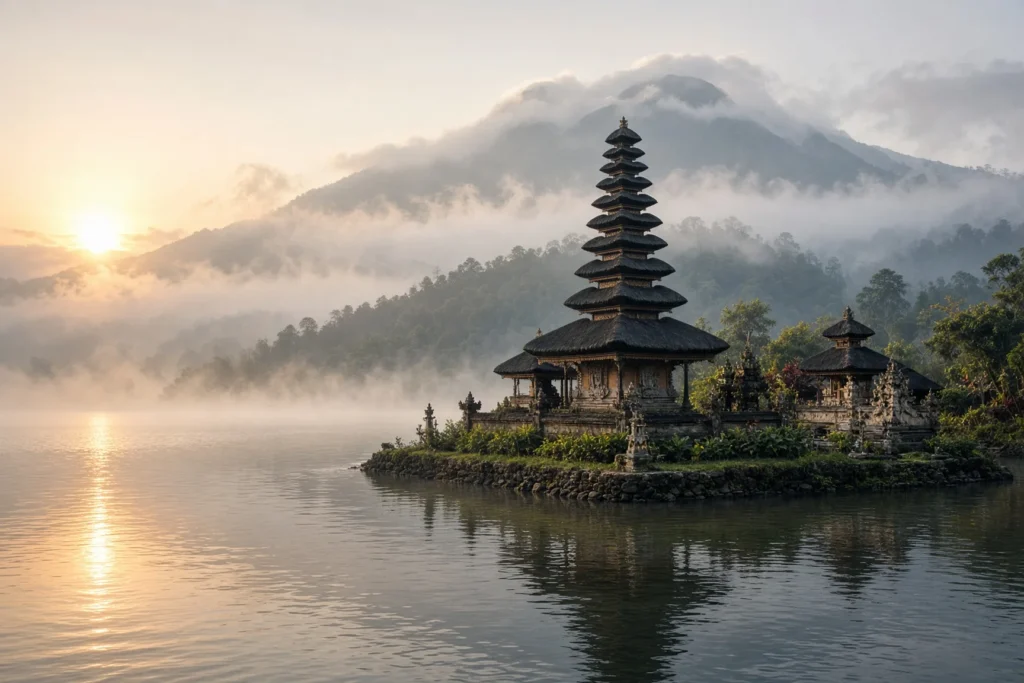
Bali's cultural heart, where rice terraces, temples, dance and art meet in the green hills. Here is what to see, eat and skip, where to stay and how to visit a ceremony respectfully.
Ubud sits in the green hills of central Bali, surrounded by river gorges and rice fields. For a long time it was the seat of a local royal family and a centre for painting, carving and dance, and in the 20th century it drew artists from around the world. That creative past still shapes the town: there are dance performances most evenings, galleries in every lane, and whole villages nearby devoted to a single craft.
Modern Ubud is busy. The main streets are lined with cafés, yoga studios and shops, and traffic around the market and the Monkey Forest can crawl. But step a few minutes off Jalan Raya and you are walking along irrigation channels between rice paddies, past family compounds where offerings are laid out each morning. That contrast is the key to enjoying Ubud: stay slightly out of the centre and come in for the culture and the food.
Ubud is also the most practical base in Bali for day trips. Tegallalang, Tirta Empul, Goa Gajah, Mount Batur, Sidemen and Besakih are all within reach. Three or four nights lets you see the town, take a walk or two and add a couple of day trips without rushing.
Our Ubud journeys are private and tailor-made, so you can mix temples, walks and a ceremony with plenty of time simply to slow down.
We tailor every trip. Want more time in Ubud, a different pace or a mix of places? Design my trip →
How our local guides would spend one unhurried day in and around Ubud, from misty rice terraces to a dance under the stars.
Walk the terraces in soft early light, when the valley is quiet and the farmers are starting work.
See the purification ritual at the holy springs, and join in with a sarong if you wish.
The carved Elephant Cave and its bathing pools, a short drive back towards town.
Crackling, spiced pork and rice at a busy local warung.
Visit a woodcarving or painting village, or retreat to the pool during the hottest hours.
A gentle walk along a grassy ridge between two river valleys, best as the heat drops.
Wander the paths around the edge of town as the light turns gold over the paddies.
A Legong or Barong performance in a temple courtyard, accompanied by a live gamelan orchestra.
Around Ubud you will almost certainly pass a ceremony: a procession on the road, a temple anniversary or a cremation. Visitors are usually welcome to watch, as long as they follow a few simple customs.
Wear a sarong and a sash around the waist in any temple, and cover your shoulders. Many temples lend them; buying your own is easy and useful all trip.
Stay behind worshippers and never stand higher than a priest. Ask before photographing people praying, and switch off the flash. Never step on or over offerings on the ground.
Bali follows a 210-day pawukon cycle alongside a lunar calendar. Galungan and Kuningan, when bamboo penjor poles line the streets, are the most festive time to visit.
A guide from the area will know which ceremonies welcome visitors, explain what is happening and help you join appropriately. Some inner areas are for worshippers only.
The experiences our travellers enjoy most, in order of what we would not miss.
A terraced valley about 20 minutes north of town. Arrive soon after sunrise; by mid-morning it is crowded with swings, photo platforms and tour groups.
A spring-fed water temple near Tampaksiring where Balinese come to purify themselves. Visitors may join the ritual in a sarong; ask your guide about the order of the spouts.
Moss-covered temples and huge trees in a forest full of long-tailed macaques. Lovely, but the monkeys snatch things, so carry nothing loose and bring no food.
An easy, mostly shaded ridge path starting near the river confluence west of town. Go early or late, as there is little shelter at midday.
The former royal residence in the centre of town, with Legong, Barong and Kecak performances on many evenings in its courtyard and nearby temples.
The Elephant Cave, a carved demon-mouthed entrance and ancient bathing pools set in a ravine, a short drive east of Ubud.
Shrines carved into a cliff above a river, reached down a long flight of steps through rice fields. Quieter than most temples nearby.
Mas for woodcarving, Celuk for silver, Batuan and Penestanan for painting. Watch the artisans at work, but buy only what you love.
Ubud is one of Asia's best-known yoga centres, with classes for all levels, and traditional massage is easy to find.
Shop at a local market, then learn to make spice paste, sate lilit and sambal in a family kitchen.
Paths along the irrigation channels lead out between paddies, past small cafés and village shrines. A lovely way to see subak farming close up.
A small temple in the centre fronted by a lotus pond, dedicated to the goddess of learning and the arts, with dance performances in the evening.
Plan your private, tailor-made Indonesia trip for 2027 now and get $100 off. Tell us your travel dream and we will design it with you.
Customise My TripLocal specialities worth seeking out, and when the locals eat them. Your guide will know the best places to try each one.
Add a food experience →Each neighbourhood has its own rhythm. Pick the one that sounds like you, or let us surprise you.
Close to the palace, the market, dance performances and restaurants. Convenient, but noisy and congested in the day.
Villages such as Penestanan and the lanes north of town, a short ride from the centre, with views over the paddies.
Resorts and villas above the Ayung and other rivers, with jungle views and pools. You will rely on transfers to reach town.
Tell us your style and our consultants will hand-pick a stay you would never find on your own.
A restored heritage house, a quiet lakeside villa or a family-run boutique: we match the hidden gem to you, and reveal it with your itinerary.
Ask for a surprise stayAlmost everyone arrives by road from Ngurah Rai International Airport near Denpasar. Ubud is also about 1.5 hours from Canggu and the Bukit peninsula, and about 1 to 1.5 hours from Sidemen, depending on traffic.
Good for the centre and rice-field paths, though pavements are narrow and uneven.
Best for: Rice-field walksThe easiest way to reach temples and terraces outside town; included on our journeys.
Best for: Day tripsDownhill cycling tours from the Kintamani area pass through villages and rice fields.
Best for: Village sceneryApps such as Grab are useful for short hops, though some pick-up points in town are restricted.
Best for: Short hopsPlaces that pair well with Ubud, with approximate travel times.
April to October is the dry season and the most comfortable time, with clear mornings for walks and sunrise trips. Ubud sits a little higher than the coast, so evenings are slightly cooler. From November to March expect heavy afternoon rain, but the rice fields are vivid green and the town is quieter.
A general guide. Weather varies from year to year, and we plan each route around the season.
Quick answers from our local team. Anything else, just ask your travel specialist.
Ask us on WhatsAppThree or four nights is ideal. That gives you a day for the town, a day for Tegallalang and the water temples, and time for a walk, a cooking class or a sunrise trip to Mount Batur. Most travellers then head to the coast or to Sidemen.
Yes, for culture, rice terraces and food it is the heart of Bali. Be ready for crowds and traffic in the centre. If you stay on the quieter edges of town, you get the best of both: easy access and peaceful evenings.
It is generally safe if you follow the rules. Do not bring food, keep sunglasses and phones put away, avoid eye contact and never touch the monkeys. If you are bitten or scratched, staff can help and you should seek medical advice.
Central Ubud suits short stays without a car. The rice-field outskirts suit couples and walkers who want quiet nights, and the river valleys suit honeymooners looking for privacy and a spa. Your travel consultant will help you choose.
Often, yes. Visitors are usually welcome to watch temple festivals and processions if they dress correctly in a sarong and sash, stay quiet and stand behind worshippers. A local guide can find a ceremony and explain what you are seeing.
April to October is the dry season and best for walks and day trips. Around Galungan and Kuningan, villages are decorated with tall penjor poles and there are many ceremonies. The wet season is greener and quieter, with heavy afternoon rain.
Ubud is about one to one and a half hours from Ngurah Rai International Airport by road, longer in traffic. Your travel consultant will arrange a private transfer with a name-sign welcome.
It is beautiful, but very busy after about 9 in the morning, with swings and photo stops taking over parts of the valley. Go at sunrise, or visit Jatiluwih or Sidemen for wider, quieter terraces.
Tell us what you have in mind and a local travel specialist will design a private itinerary around you. Free, with no obligation.
Three quick questions and we will match you with the right journeys.