When Traveling Is Caring ❤️

Lai ChâuNorth-West Vietnam
A mountain province on the road from Sapa to Dien Bien Phu, crossed by some of Vietnam's highest passes. Here is what to see along the way and how long to stay.
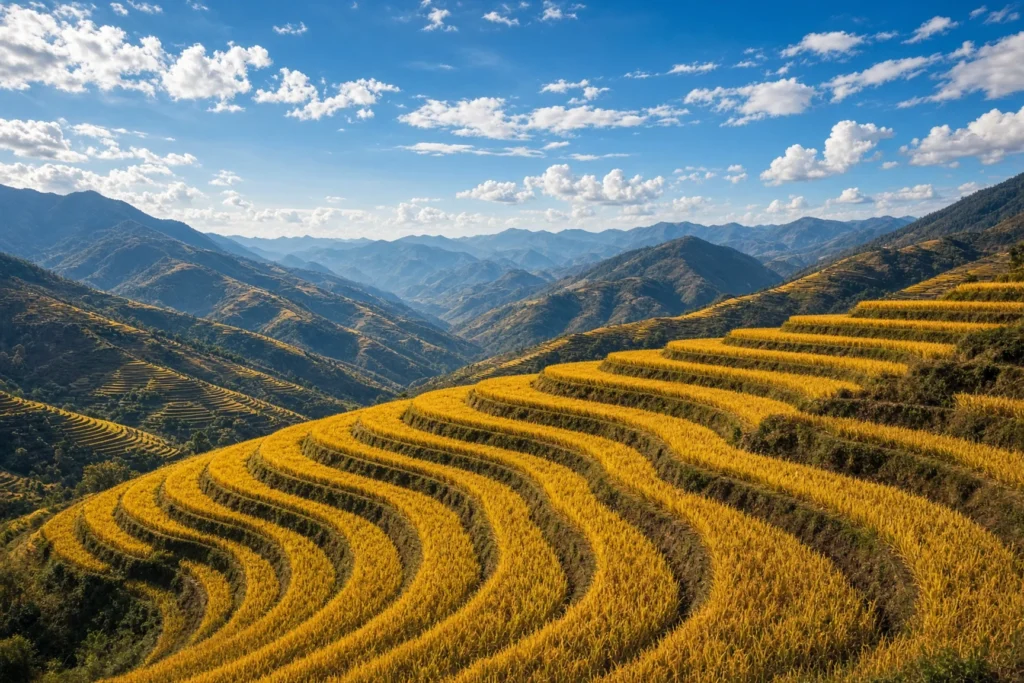
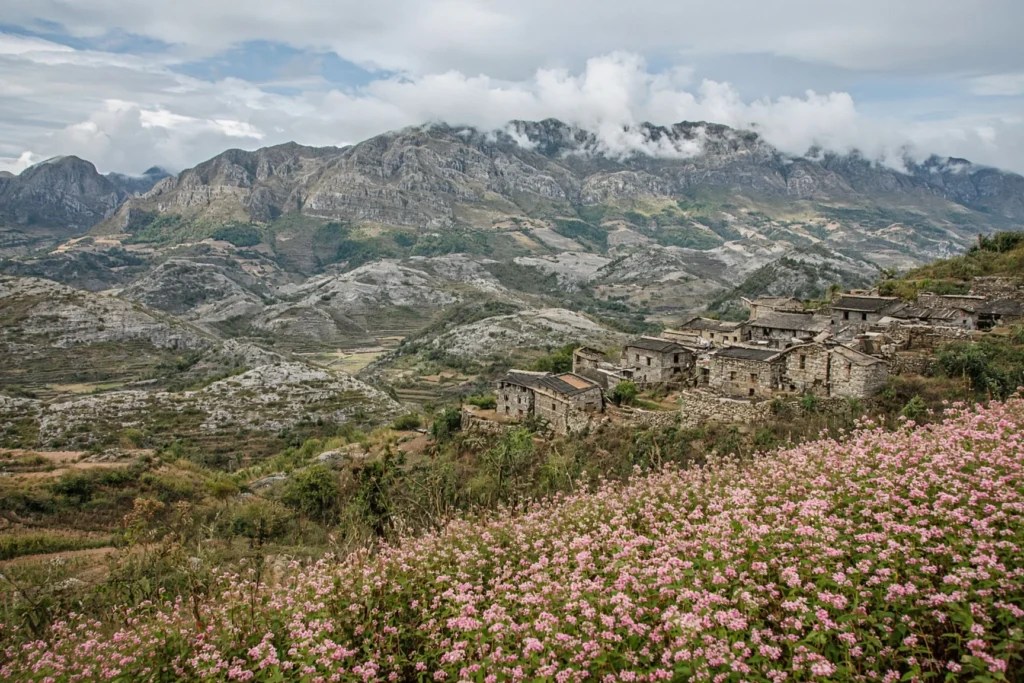
Lai Chau is one of Vietnam's most mountainous and least visited provinces, stretching from the Hoang Lien range near Sapa towards the borders with China and Laos. Its landscape is all ridges, river valleys and terraced slopes, home to Hmong, Dao, Thai, Lu and other communities whose villages see few outsiders.
Most travellers meet Lai Chau on the road between Sapa and Dien Bien Phu, starting with O Quy Ho Pass, which climbs over the Hoang Lien range from Sapa with huge views. The provincial town is modern and quiet, and makes a practical overnight stop. Those with more time can head up to the Sin Ho plateau or explore villages off the main road.
Our private, tailor-made north-west journeys pass through Lai Chau with a local guide and private car, stopping wherever the views are best.
We tailor every trip. Want more time in Lai Chau, a different pace or a mix of places? Design my trip →
The experiences our travellers enjoy most, in order of what we would not miss.
One of Vietnam's great mountain passes, climbing over the Hoang Lien range from Sapa. Stop at the top for views back towards Fansipan when the cloud allows.
A high plateau of terraces and villages reached by a winding mountain road, with a weekly market and very few tourists.
Short walks into Hmong, Dao and Thai villages off the main road, where daily life carries on much as it always has.
Rolling tea plantations and rice valleys around Tam Duong, a gentle contrast to the high passes.
Plan your private, tailor-made Vietnam trip for 2027 now and get $100 off. Tell us your travel dream and we will design it with you.
Customise My TripThere is no airport in Lai Chau. Most travellers arrive by road from Sapa over O Quy Ho Pass and continue to Dien Bien Phu, or the reverse. Lao Cai, below Sapa, has the nearest railway station, with connections to Hanoi.
Places that pair well with Lai Chau, with approximate travel times.
September to November brings clear skies and golden rice, and March to April is mild with spring blossom. Summer is wet, with a risk of landslides on mountain roads. December to February is cold at altitude, with fog on the passes.
A general guide. Weather varies from year to year, and we plan each route around the season.
Quick answers from our local team. Anything else, just ask your travel specialist.
Ask us on WhatsAppAs part of a north-west road journey, yes, mainly for O Quy Ho Pass and the mountain villages. It is not worth a special trip on its own, and the town itself has few sights.
By road over O Quy Ho Pass, about 2 hours. It is the usual first leg of a loop from Sapa towards Dien Bien Phu and back to Hanoi via Son La.
One night is enough for most travellers, breaking the drive between Sapa and Dien Bien Phu. Add a night if you want to visit the Sin Ho plateau and its villages.
Tell us what you have in mind and a local travel specialist will design a private itinerary around you. Free, with no obligation.
Three quick questions and we will match you with the right journeys.