When Traveling Is Caring ❤️

珠穆朗玛峰Tibet27.99° N · 86.93° E
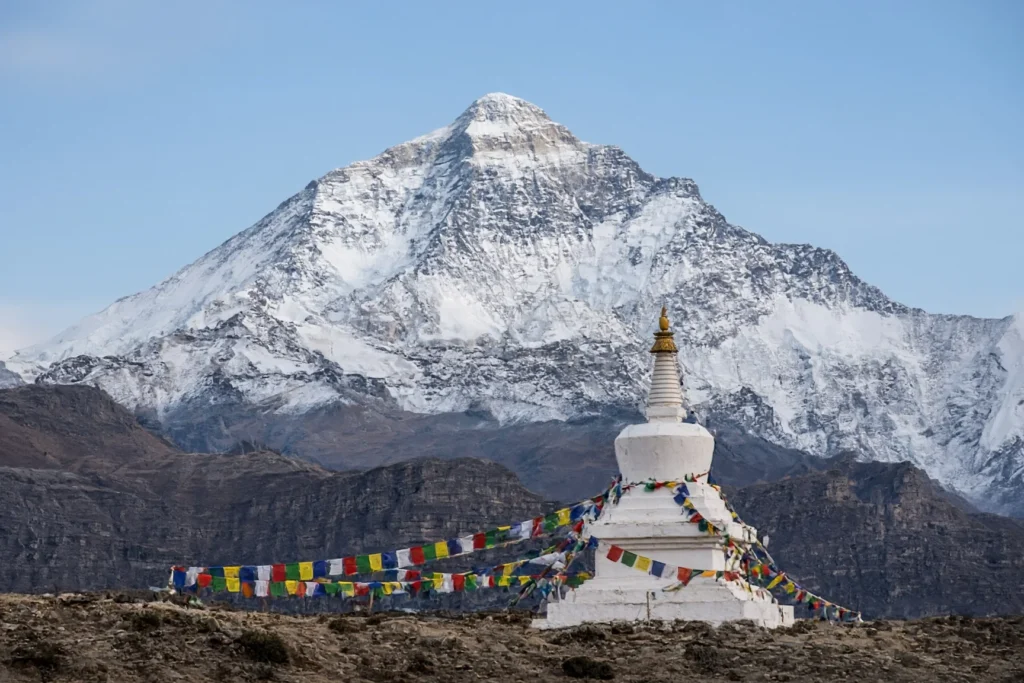
The north face of the world's highest mountain, seen across the Rongbuk Valley from Tibet. Here is how the journey from Lhasa works, what to see on the way, and the honest truth about altitude, permits and conditions.
From the Tibetan side, Mount Everest, known locally as Qomolangma, rises at the head of the Rongbuk Valley in a single great pyramid of rock and ice. The view from the north is one of the most complete anywhere: on a clear day the whole face stands in front of you, from the moraine to the summit plume. Unlike the Nepal side, you can reach the base camp area by road, without a long trek.
That does not make it easy. The journey from Lhasa takes at least two days by road, passing through Shigatse and high passes with views of the Himalaya, and the base camp area sits at around 5,000 metres. Accommodation along the way is simple, and the last part of the road is reached on park buses. Rongbuk Monastery and the plain around Tingri add Tibetan culture and wide mountain views to the journey.
We plan Everest as part of a longer Tibet journey, with time in Lhasa first to acclimatise. Most travellers spend one night close to Everest, ideally to catch sunset and sunrise on the north face, when the clouds are most likely to clear. The usual route continues back to Lhasa, though some journeys carry on west towards Mount Kailash where permits allow. Whatever the plan, we keep the days flexible, because weather, road conditions and how each traveller feels at altitude can change the pace.
Our Everest journeys are private and tailor-made, always with a licensed Tibetan guide and driver, and paced to give you time to adjust to the altitude.
We tailor every trip. Want more time in Mount Everest, a different pace or a mix of places? Design my trip →
Everest is the highest point of most Tibet journeys. These are the principles we build every itinerary around.
Talk to your doctor about travel at high altitude, especially if you have heart, lung or blood pressure conditions. Travel insurance should cover high altitude.
We spend at least two or three days in Lhasa and stop in Shigatse or Tingri on the way, so your body can adjust step by step.
Drink plenty of water, avoid alcohol, walk slowly and tell your guide about any symptoms. If they worsen, the answer is to go down.
The experiences our travellers enjoy most, in order of what we would not miss.
The visitor area at the head of the Rongbuk Valley faces the north face directly. Walk slowly, take your time with photographs and stay to see the light change towards evening.
A small Tibetan Buddhist monastery at around 5,000 metres, with chortens and prayer flags in front of a perfect view of Everest. Be respectful during prayers and ask before photographing people.
On the winding road into the national nature reserve, this high pass offers one of the great Himalayan views, with several of the world's highest peaks lined up on clear mornings.
A wide, windswept plain dotted with villages and herds, with Cho Oyu and the Everest massif on the horizon. A good place to break the journey and adjust to altitude.
A great grey-walled monastery off the road between Shigatse and Everest, the seat of the Sakya school of Tibetan Buddhism, with an important library and murals inside.
Thin, dry air and no city lights make the night sky near Everest exceptional. Wrap up very warmly: nights are freezing, even in summer.
A long drive over high passes and through farming valleys, with stops at villages, viewpoints and prayer-flag cairns. Part of the experience, not just the transfer.
Plan your private, tailor-made China trip for 2027 now and get $100 off. Tell us your travel dream and we will design it with you.
Customise My TripMost travellers fly or take the train to Lhasa, spend a few days acclimatising, then drive to Everest via Shigatse. The last stretch into the Rongbuk Valley is on park buses. Rules on how far visitors can go change from time to time, and we confirm them before you travel.
The only way to make this journey as a visitor, always with your licensed guide; included on our journeys.
Best for: The whole routeShort, slow walks at the viewpoint and around Rongbuk. Pace yourself carefully at this altitude.
Best for: ViewpointsPlaces that pair well with Mount Everest, with approximate travel times.
April, May and October usually bring the clearest views of Everest and settled weather. June to September is the monsoon season, when cloud often hides the mountain, though the valleys are greener. Winter is bitterly cold and some services close, and Tibet can be closed to international visitors for periods in spring.
A general guide. Weather varies from year to year, and we plan each route around the season.
Quick answers from our local team. Anything else, just ask your travel specialist.
Ask us on WhatsAppYes, international visitors can reach the base camp visitor area on the north side, as part of an organised journey with a Tibet Travel Permit, other area permits and a licensed guide. Access to the climbers' camp beyond is restricted to expeditions. Rules change from time to time, so we confirm them before you book.
The north base camp area lies at around 5,000 to 5,200 metres, higher than most travellers have ever been. Altitude sickness is a real risk, so we always plan several days in Lhasa first and a gradual ascent via Shigatse or Tingri. Speak to your doctor before travelling.
At least two days by road, usually with a night in Shigatse and often another in Tingri or near Rongbuk. A typical journey from Lhasa to Everest and back takes about seven to nine days including acclimatisation, and it can be extended towards Nepal or Mount Kailash where routes allow.
April, May and October usually give the clearest skies. In the summer monsoon the mountain is often hidden by cloud. Winter can be very clear but is extremely cold. Note that Tibet sometimes closes to international visitors for periods, most often in spring, and permits can be suspended at short notice.
Options near Everest are very basic, typically simple guesthouses close to Rongbuk with shared facilities and limited heating. Many travellers prefer slightly more comfortable rooms in Tingri and visit at sunset or sunrise from there. Bring warm layers and a good sleeping bag liner, whatever the season.
Tell us what you have in mind and a local travel specialist will design a private itinerary around you. Free, with no obligation.
Three quick questions and we will match you with the right journeys.