When Traveling Is Caring ❤️

桂林Southern China25.27° N · 110.29° E
Limestone peaks rising from green rivers, the landscape Chinese painters have chased for centuries. Here is what to see, eat and plan in Guilin, from the Li River to the rice terraces.
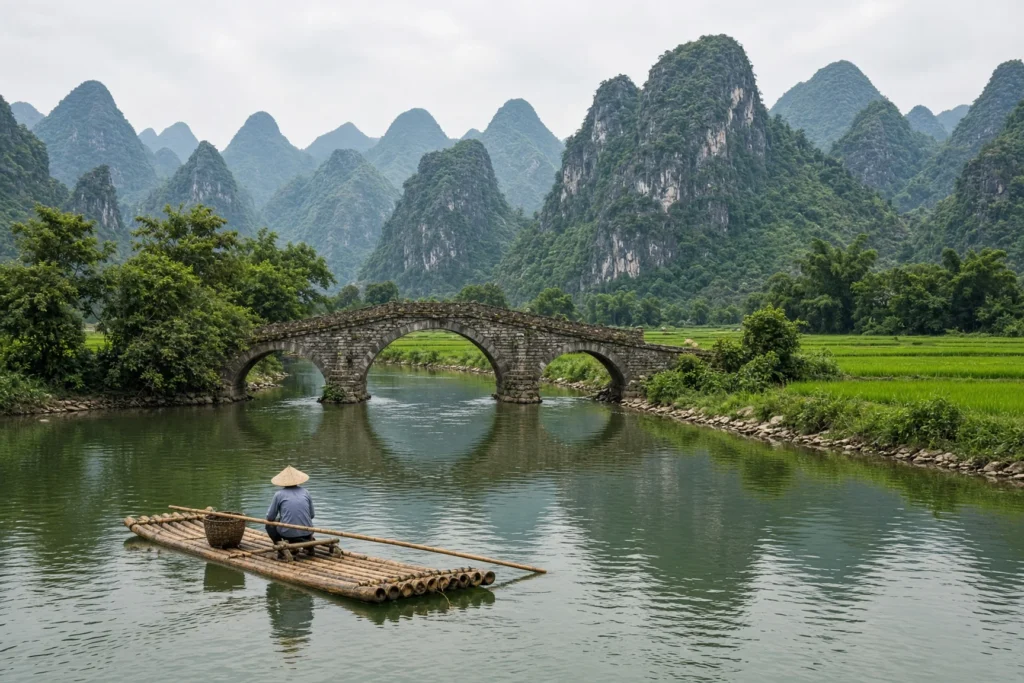
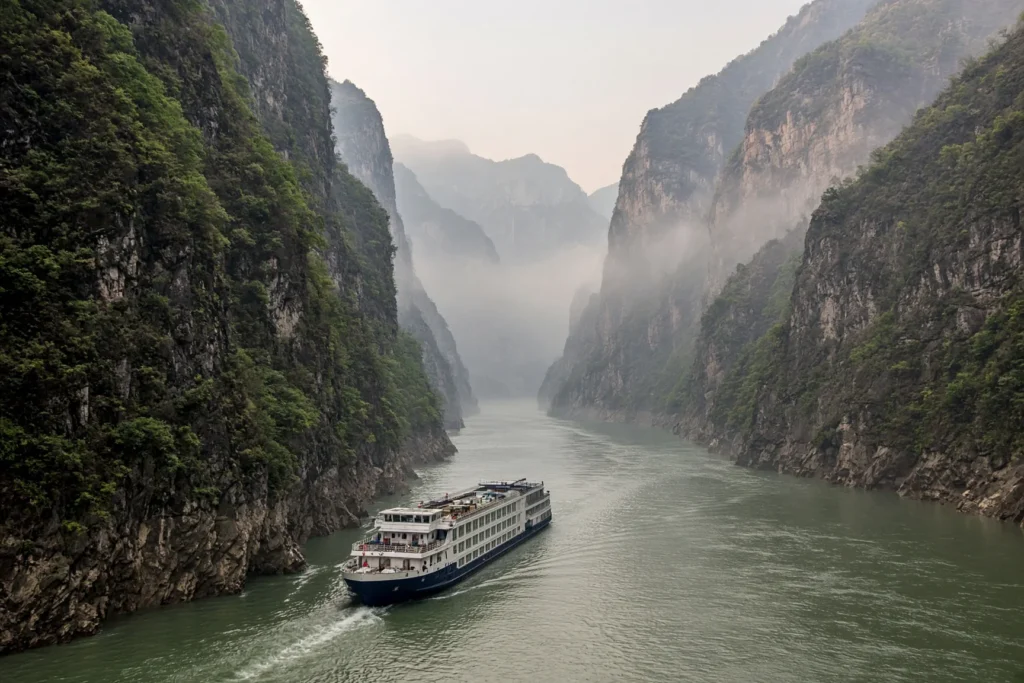
Guilin sits in the north of Guangxi, in southern China, among some of the most famous scenery in the country. Thousands of steep limestone peaks rise straight out of the plain, and the Li River winds between them past bamboo groves, water buffalo and fishing villages. The name means forest of sweet osmanthus, and in autumn the scent of the little yellow flowers drifts through the streets. For more than two thousand years poets and painters have tried to capture this place.
The city itself is compact and green. Hills such as Elephant Trunk, Folded Brocade and Solitary Beauty rise between the houses, linked by a ring of rivers and lakes known as the Two Rivers and Four Lakes. In the evening the Sun and Moon Pagodas light up on Shan Lake, and the riverside paths fill with walkers. It is a gentle, easy city to explore, with a steaming bowl of Guilin rice noodles never far away.
Most travellers use Guilin as the gateway to the Li River cruise to Yangshuo and to the Longji Rice Terraces, a couple of hours into the hills. Two or three nights here, plus time in Yangshuo, gives you the city, the river and the countryside at a relaxed pace. Use this guide to plan what to see, what to eat, where to stay and when to come.
Every journey below is private and tailor-made, so you can linger on the Li River, add a night in the rice terraces or move on to Yangshuo at your own pace.
We tailor every trip. Want more time in Guilin, a different pace or a mix of places? Design my trip →
How our local guides would spend one unhurried day in the city, from a riverside dawn to a boat ride under the lit pagodas.
Stroll the quiet Li River banks as fishermen set out and the hill's stone arch catches the first light.
Join locals at a busy noodle counter for the city's favourite breakfast, dressed with pickles, peanuts and chilli.
Walk through a large limestone cave of stalactites and stone pillars, lit in bright colours, before the tour groups arrive.
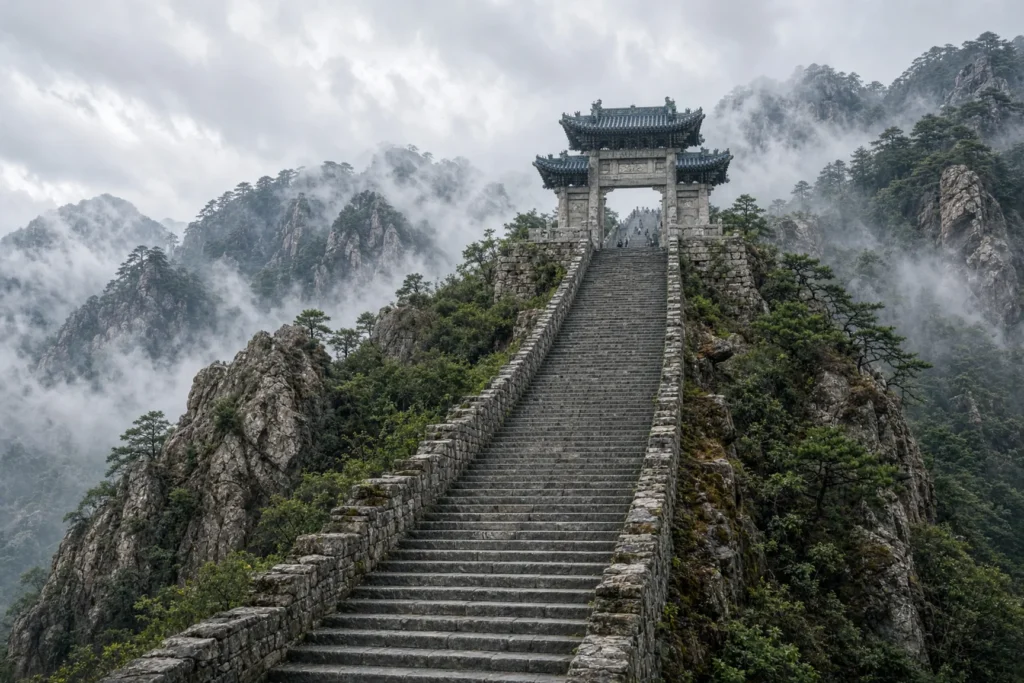
Climb the steps for one of the best views over the city, the river and the peaks beyond.
Try taro steamed with pork belly, a Guangxi classic, alongside local greens and river fish.
Explore the Ming dynasty princes' palace and climb Solitary Beauty Peak for views over the rooftops.
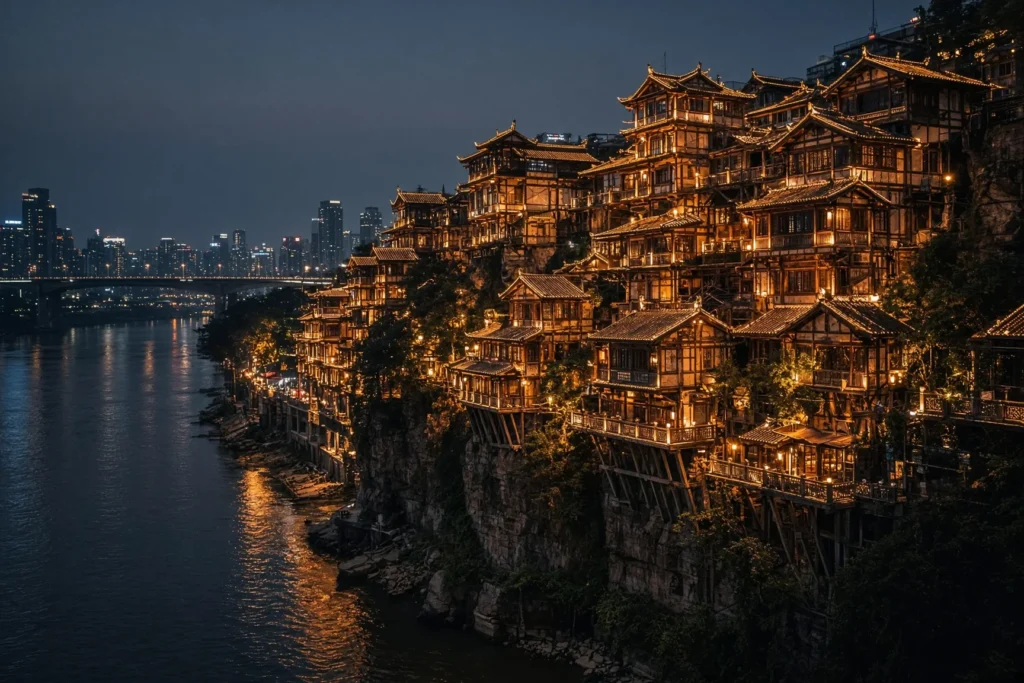
Walk the lakeside paths as the bronze and glass pagodas glow in the evening light.
Glide through the lit lakes and bridges of the old city moat, then wander the East and West Lanes.
The Li River is the reason most people come to Guilin, but there is more than one way to see it. Here is how we help travellers choose.
A relaxed day on a river boat from near Guilin to Yangshuo, with the peaks sliding past and lunch on board.
Smaller rafts cover the most scenic stretch, including the view printed on Chinese banknotes, closer to the water and quieter.
Sections of footpath follow the river between villages, crossing by small ferry, for travellers who like to see a landscape on foot.
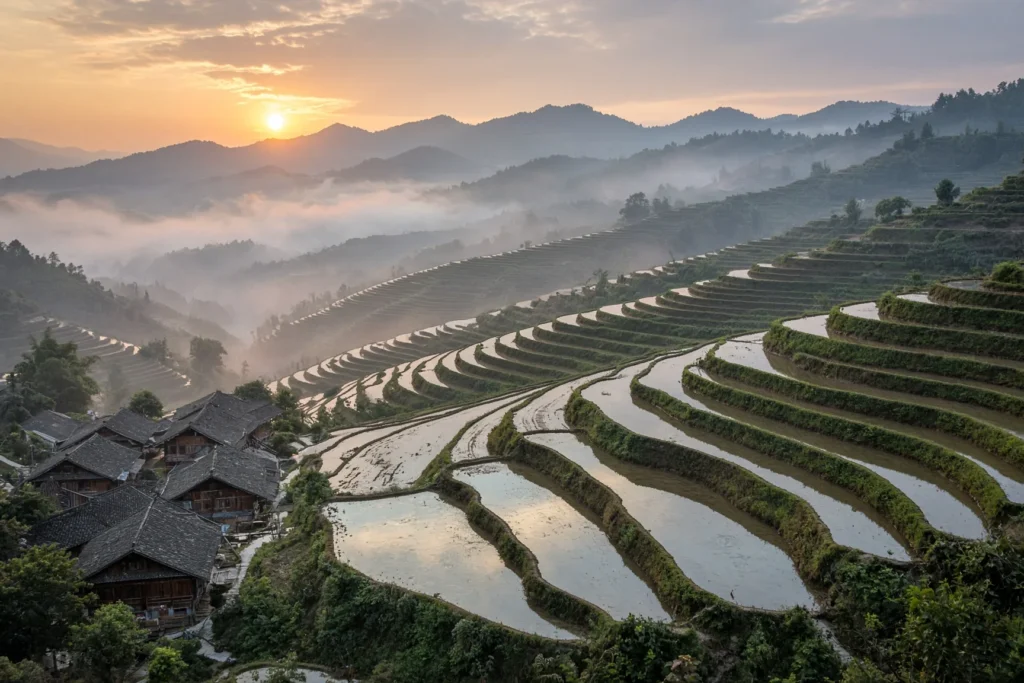
Ping'an is easier and closer, with classic viewpoints. Dazhai is higher, larger and quieter, reached by cable car or a longer hike.
The experiences our travellers enjoy most, in order of what we would not miss.
A full day drifting past karst peaks, bamboo groves and riverside villages. The classic Guilin experience, and the best introduction to the landscape that made the region famous.
The most scenic stretch of the Li River, including Nine Horse Fresco Hill and the view shown on Chinese banknotes. Quieter and closer to the water than the big cruise boats.
Terraces carved up the hillsides by Zhuang and Yao villagers over centuries. Walk between Ping'an and the viewpoints, and stay overnight for sunrise over the curving fields.
A large limestone cave on the edge of the city, with stalactites, stone curtains and pools lit in vivid colours. Easy paths make it suitable for almost everyone.
The city's emblem, a hill whose stone arch looks like an elephant drinking from the river. Lovely at dawn or from the opposite bank at dusk.
A walled Ming dynasty palace complex built for a line of princes, with a steep climb up Solitary Beauty Peak for wide views over Guilin.
Layers of rock like stacked silk, carved inscriptions and a climb to one of the best panoramas of the city, the river and the peaks around it.
Old stone lanes beside the Li River, and a short but steep climb up Laozhai Hill for sunset over the river bends and peaks.
A large green park east of the river with hills, caves, old inscriptions and shady paths. A pleasant place to walk with local families.
A quiet riverside town of Ming and Qing era shophouses, stone streets and an old arched bridge, less visited than the famous stops downstream.
Taste Guilin rice noodles at several local counters with your guide, learning how each family makes its own braised broth and toppings.
An evening boat trip through the city's lit lakes and bridges, past the Sun and Moon Pagodas on Shan Lake. Gentle and atmospheric after dinner.
Plan your private, tailor-made China trip for 2027 now and get $100 off. Tell us your travel dream and we will design it with you.
Customise My TripLocal specialities worth seeking out, and when the locals eat them. Your guide will know the best places to try each one.
Add a food experience →Each neighbourhood has its own rhythm. Pick the one that sounds like you, or let us surprise you.
Close to the Sun and Moon Pagodas, the East and West Lanes and the lakeside paths. Easy for evening strolls and the night boat.
Hotels along the river near Elephant Trunk Hill, with morning walks on the banks and views over the water.
Wooden guesthouses in the terrace villages, reached on foot with luggage carried by porters. Simple, but the sunrise is worth it.
Tell us your style and our consultants will hand-pick a stay you would never find on your own.
A restored heritage house, a quiet lakeside villa or a family-run boutique: we match the hidden gem to you, and reveal it with your itinerary.
Ask for a surprise stayGuilin Liangjiang International Airport has domestic flights from across China and some regional international routes. High-speed trains reach Guilin North and Guilin West stations from Guangzhou, Shenzhen, Hong Kong and other cities, and your guide and driver will meet you at the station or airport.
The centre, the lakes and the riverside paths are compact and pleasant to explore on foot.
Best for: City centreCruise boats and bamboo-style rafts carry you along the Li River, the best way to see the peaks.
Best for: Li RiverApps such as DiDi work well for short hops around town, though drivers rarely speak English.
Best for: Short hopsIncluded on our journeys for the terraces, river piers, Yangshuo and day trips.
Best for: Day tripsPlaces that pair well with Guilin, with approximate travel times.
April to May and September to October are the most comfortable months, with mild weather and good river levels. Summer is hot, humid and green, with heavy showers that can occasionally pause river trips. Winter is cool and often grey, but quiet. Avoid Golden Week in early October and the Spring Festival if you can, when crowds are at their peak.
A general guide. Weather varies from year to year, and we plan each route around the season.
Quick answers from our local team. Anything else, just ask your travel specialist.
Ask us on WhatsAppTwo or three nights in the Guilin area is ideal. One day for the city, one for the Li River cruise or raft, and one for the Longji Rice Terraces. Most of our travellers then add two nights in Yangshuo for cycling and countryside, so four to five nights in the region is a comfortable total.
April to May and September to October are the most pleasant, with mild temperatures and fresh greenery. Summer brings heat, humidity and heavy showers, though the river is full and the landscape lush. Winter is cool and quiet. Try to avoid Chinese public holidays, when the river and the caves are very crowded.
Yes. The Li River between Guilin and Yangshuo is one of the most beautiful river landscapes in Asia. The full cruise takes about four hours and is easy for all ages. If you prefer a quieter, closer view, a bamboo raft between Yangdi and Xingping covers the most scenic stretch in a shorter time.
Ideally both. Guilin is the transport hub and has the city sights, the night boat and easy access to the rice terraces. Yangshuo is smaller and more rural, better for cycling, walking and countryside stays among the peaks. Many travellers spend one or two nights in each, linked by the Li River cruise.
The terraces are about two hours from Guilin by road. The last stretch climbs through the hills, and the villages themselves are reached on foot, with porters available for luggage. You can visit as a long day trip, but we suggest a night in Ping'an or Dazhai to see sunrise over the terraces.
Guilin rice noodles are the signature dish, eaten for breakfast all over the city. Also try beer fish, Lipu taro with pork belly, stuffed river snails and, in the hill villages, bamboo tube rice and oil tea. Osmanthus cake is a sweet souvenir that reflects the city's name.
Most payments in China are made through mobile apps. Alipay and WeChat Pay now accept many foreign cards, so it is worth setting one up before you travel. Larger hotels take international cards, but carry some cash for village stalls, small restaurants and markets.
Guilin Liangjiang International Airport is about 30 km west of the city, roughly 45 minutes by car. Your guide and driver will meet you at arrivals with a name sign as part of your private journey, and take you straight to your hotel.
Tell us what you have in mind and a local travel specialist will design a private itinerary around you. Free, with no obligation.
Three quick questions and we will match you with the right journeys.