When Traveling Is Caring ❤️

苏州Eastern China31.32° N · 120.62° E
Scholar gardens, canal lanes and silk, half an hour from Shanghai by fast train. Here is which gardens to choose, what to eat and how to time your visit.
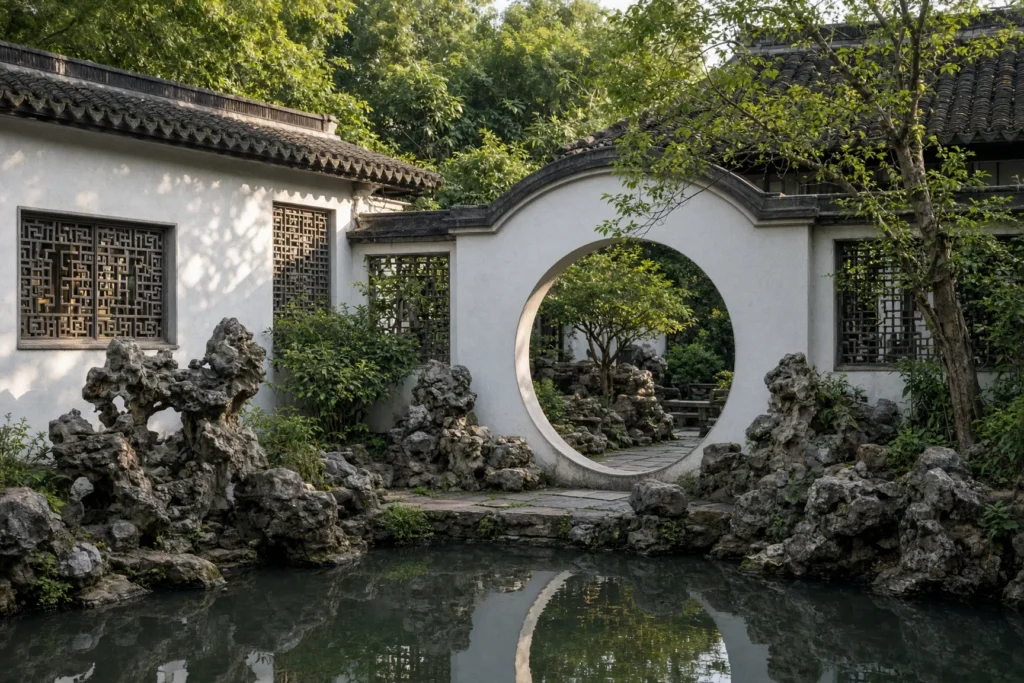
Suzhou is one of the oldest cities in the Yangtze delta, and for centuries it was where retired officials, scholars and merchants built private gardens to escape the world without leaving town. Rock, water, plants and buildings are arranged so that every window frames a new scene. Nine of these gardens were inscribed by UNESCO in 1997, with more added in 2000, and they are still the main reason to visit.
Around the gardens, the old city keeps a grid of canals crossed by stone bridges, with whitewashed houses and black-tiled roofs along lanes such as Pingjiang Road. Suzhou is also known for silk, fine embroidery and Kunqu, one of China's oldest opera forms. The modern city has grown far beyond the old walls, but the historic core is compact and best explored slowly, on foot or by canal boat.
Our Suzhou journeys are private and tailor-made, often a night or two between Shanghai and Hangzhou, with your own guide in the gardens.
We tailor every trip. Want more time in Suzhou, a different pace or a mix of places? Design my trip →
Most travellers have time for two or three gardens. These are the ones we choose most often, and why.
The largest classical garden in Suzhou, built around ponds, lotus and pavilions. Grand and beautiful, but rarely quiet.
Small, intimate and perfectly balanced, showing how much a garden can do in a tiny space.
Long covered walkways, fine halls and a famous upright Taihu stone, a little outside the busiest area.
The experiences our travellers enjoy most, in order of what we would not miss.
Suzhou's largest and best-known garden, with lotus ponds, islands and pavilions linked by zigzag bridges. Book ahead and arrive at opening time to see it before the crowds.
A compact family garden around a single pond, often considered a perfect example of the form. It takes about an hour and feels intimate even when busy.
A modern building by I. M. Pei that reinterprets garden ideas in white walls, grey stone and water. The collection of paintings, ceramics and jade is excellent. Reserve entry in advance.
A canalside lane in the old city with stone bridges, teahouses and small shops. Wander the quieter side alleys, or take a short boat ride along the canal.
A wooded hill crowned by the leaning Yunyan Pagoda, more than a thousand years old. Paths pass legends, stone terraces and old trees, and it is lovely in spring and autumn.
Admired for its long corridors, refined halls and the tall Crown of Cloud Peak stone. Slightly away from the centre, it is often calmer than the busiest gardens.
Canal villages of arched bridges and old merchant houses, about an hour from Suzhou. Tongli tends to feel more lived-in; early mornings are best in either.
Walk the lantern-lit Shantang canal street in the evening, and if you can, see a short Kunqu or Pingtan performance, Suzhou's own storytelling with music.
Plan your private, tailor-made China trip for 2027 now and get $100 off. Tell us your travel dream and we will design it with you.
Customise My TripLocal specialities worth seeking out, and when the locals eat them. Your guide will know the best places to try each one.
Add a food experience →Suzhou is on the main high-speed line between Shanghai and Nanjing, so trains are frequent. Suzhou station is just north of the old city. Shanghai Hongqiao and Pudong airports are the nearest big airports.
The old city lanes and canals are best on foot, with gardens a short walk or ride apart.
Best for: Old townSaves time between gardens, Tiger Hill and the water towns; included on our journeys.
Best for: Day tripsShort boat rides on the old city canals give a different view of houses and bridges.
Best for: CanalsPlaces that pair well with Suzhou, with approximate travel times.
Spring, from April to May, is mild and green, and autumn, from September to November, is clear and comfortable, with hairy crab season from around October. Summer is hot and humid, with June plum rains, though lotus flowers in the ponds are lovely in July. Winter is cool and quiet. Avoid national holidays, when the gardens are packed.
A general guide. Weather varies from year to year, and we plan each route around the season.
Quick answers from our local team. Anything else, just ask your travel specialist.
Ask us on WhatsAppYes, if you enjoy gardens, architecture and old streets. The classical gardens are unlike anything else and show a very refined side of Chinese culture. If you prefer big landscapes or nightlife, a day trip from Shanghai may be enough.
The Humble Administrator's Garden is the largest and most famous, but it is often crowded. Many garden lovers prefer the small Master of the Nets Garden or the Lingering Garden. Two or three gardens in a day is plenty to take them in properly.
Yes. The high-speed train takes about 30 minutes, so a guided day can cover two gardens, the Suzhou Museum and Pingjiang Road. Staying one night lets you see the canals in the evening and reach the gardens at opening time.
For the busiest gardens and the Suzhou Museum, booking ahead is strongly advised, especially at weekends and holidays, and passport details are usually needed. When you travel with us, your guide arranges this in advance. Weekday mornings are usually the calmest time to visit.
Tongli and Zhouzhuang are both about an hour away. Tongli often feels more lived-in and relaxed, while Zhouzhuang is better known and busier. Arriving early in the morning makes the biggest difference in any water town. Both are easy to combine with a Suzhou stay or a drive to Shanghai.
Tell us what you have in mind and a local travel specialist will design a private itinerary around you. Free, with no obligation.
Three quick questions and we will match you with the right journeys.