When Traveling Is Caring ❤️

กาญจนบุรีWestern Thailand14.02° N · 99.53° E
A quiet riverside town with a painful wartime story, surrounded by forested hills and waterfalls. Here is how to visit the bridge, the railway and the war cemeteries respectfully, and what else to see nearby.
During the Second World War, the Japanese army forced Allied prisoners of war and many tens of thousands of Asian labourers to build a railway from Thailand into Burma, through jungle and rock, in brutal conditions. So many died that it became known as the Death Railway. Kanchanaburi, where the line crossed the Khwae Yai River, is where most visitors come to understand that story.
The Bridge on the River Kwai, made famous by the 1957 film, still carries trains, and you can walk across it. In town, the immaculate war cemetery and the museums tell the human side of the story, and further up the line Hellfire Pass, a cutting dug by hand through solid rock, is one of the most moving memorials in Asia.
Kanchanaburi is not only about the war. The province is green and hilly, with rivers to float on, raft houses to sleep in and the turquoise pools of Erawan Falls. One or two nights lets you combine history and nature without rushing.
Every journey below is private and tailor-made, so you can stay on the river, add Hellfire Pass and Erawan Falls, and travel at a thoughtful pace.
We tailor every trip. Want more time in Kanchanaburi, a different pace or a mix of places? Design my trip →
The experiences our travellers enjoy most, in order of what we would not miss.
Walk across the famous bridge, still in use by trains, and look for the original curved spans. Go early in the morning, before the tour coaches arrive.
Thousands of Allied prisoners of war lie here in neat rows of graves among lawns and flowers. A quiet, deeply moving place, right in town.
A clear, well-designed museum next to the war cemetery that explains how the railway was built and what it cost. A good place to start.
A cutting dug through solid rock largely by hand, with a memorial museum and a walking trail along the old railway bed. About 1.5 hours from town, and essential if you can go.
Take the train along the surviving section of the line, including the wooden viaduct that hugs the cliff above the river at Wang Pho.
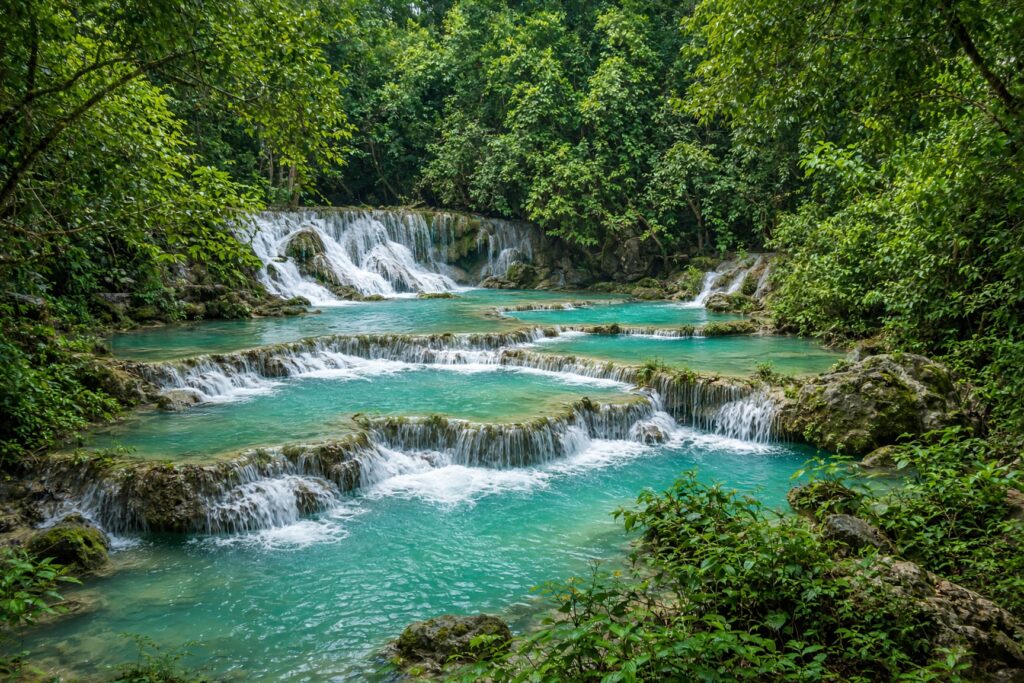
Seven tiers of turquoise pools in a forested national park, about 1.5 hours from town. Swim in the lower pools and walk up to the top if you are fit.
Sleep in a floating house on the river, wake to birdsong and mist, and swim or kayak from your door.
A smaller, quieter cemetery on the riverbank, on the site of a former prison camp. Often reached by boat.
Plan your private, tailor-made Thailand trip for 2027 now and get $100 off. Tell us your travel dream and we will design it with you.
Customise My TripMost travellers come by car from Bangkok, which takes about two and a half to three hours depending on traffic. Slow local trains from Bangkok's Thonburi station are scenic but take longer. A private car makes it much easier to reach Hellfire Pass and Erawan Falls.
Included on our journeys, and the best way to link the town, Hellfire Pass and Erawan.
Best for: Day tripsRide part of the old line to the Wang Pho viaduct and Nam Tok.
Best for: HistoryShort trips on the river to riverside sights and raft houses.
Best for: The riverPlaces that pair well with Kanchanaburi, with approximate travel times.
November to February is the best time, with dry, sunny weather and cooler evenings. March to May is very hot. The rainy season from June to October brings green hills and fuller waterfalls, with showers most afternoons.
A general guide. Weather varies from year to year, and we plan each route around the season.
Quick answers from our local team. Anything else, just ask your travel specialist.
Ask us on WhatsAppYes, especially if you are interested in history. The bridge, the war cemeteries and Hellfire Pass give real meaning to a story many people only know from films. Add Erawan Falls and a night on the river and it becomes a rewarding two-day trip.
It is possible, but long, with five or six hours on the road. You will see the bridge and the cemetery but probably miss Hellfire Pass and Erawan. We suggest at least one night.
It is the railway between Thailand and Burma that the Japanese army built in 1942 and 1943, using Allied prisoners of war and many Asian labourers. Huge numbers died from overwork, disease and cruelty. Part of the line still runs today.
About 80 km, or roughly 1.5 hours by road. The memorial museum and walking trail need around two hours. It combines well with a train ride on the railway or a stop at Sai Yok.
Yes, if you enjoy peace and nature. Floating raft houses on the river are simple to comfortable, with swimming and kayaking from the deck and quiet evenings. They are usually some way out of town, so they suit travellers with a car and driver.
Dress modestly, keep your voice low and do not sit or climb on graves. Photographs are fine, but take them quietly. Many visitors come to find relatives, so please be respectful of others.
Tell us what you have in mind and a local travel specialist will design a private itinerary around you. Free, with no obligation.
Three quick questions and we will match you with the right journeys.